Guide details
Best time to visit
November to February
How to get there
Central Chennai, easily reached by metro and auto
Highlights
Marina Beach, Kapaleeshwarar Temple, Fort St. George and the Government Museum
Good for
First-time visitors to the city
Price range
Most sights are free or inexpensive
Chennai does not hand you its charms on a plate. It is a big, hot, coastal city that spreads out for miles along the Bay of Bengal, and the good stuff, temples, beaches, colonial forts, museums and markets, is scattered across neighbourhoods that can take a while to get between. Once you know where to look, though, it adds up to one of the most rewarding city breaks in South India.
This guide is a starting point, not the whole story. We have grouped Chennai’s best places into sensible categories below, with a short, honest take on each one and a link through to our full guide if you want the details, timings and practical tips for a specific spot. Read it end to end if this is your first visit, or skip straight to whichever section matches the time you actually have.
The beaches
Marina Beach is the city’s most famous stretch of sand, one of the longest urban beaches in the world, and it is as much a social institution as a beach. Locals come for the evening promenade, the lighthouse, the statues and the street food stalls that light up after sunset, rather than for a swim. And that is the key point to make early: the currents along this coast are strong and unpredictable, and Marina is not a safe place to go into the water beyond wading at the edge.
Further south, Besant Nagar Beach, also known as Elliot’s Beach, is the calmer, more manageable cousin. It has a shorter promenade, a cluster of decent cafes nearby and a generally more relaxed pace, which makes it popular with families and with anyone who finds Marina’s crowds a bit much. The same swimming warning applies here too. Both beaches are best enjoyed as places to walk, eat and watch the city unwind, not as places to cool off, and sunset is the best time to visit either one, when the heat has eased and the crowds turn a plain stretch of sand into proper local theatre.
The temples
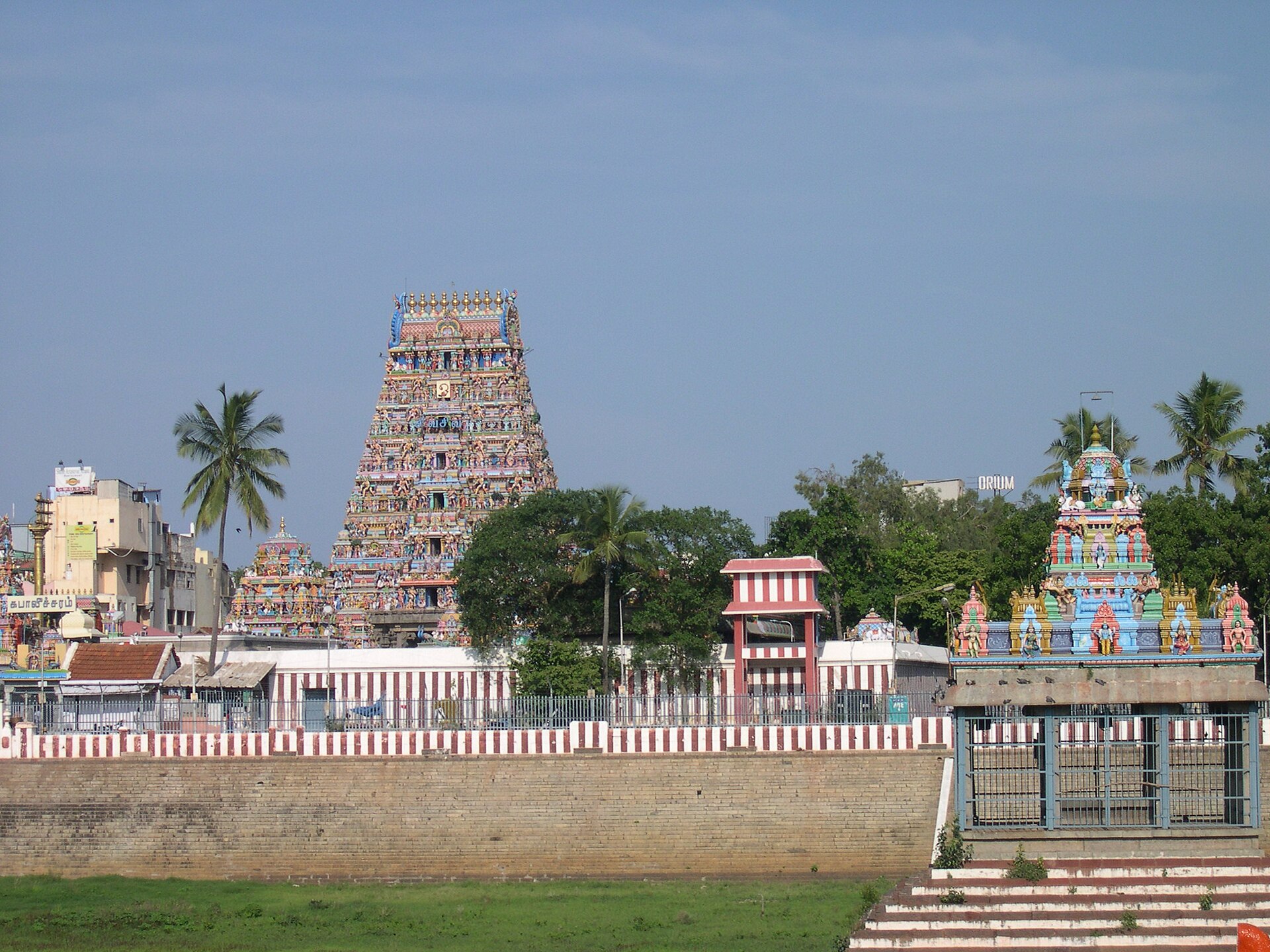
Chennai’s temple scene is centred on Mylapore, and its centrepiece is the Kapaleeshwarar Temple, dedicated to Shiva, with a towering, brightly painted gopuram that you can spot from several streets away and a large temple tank at its heart. It is the city’s most visited temple and a proper working place of worship, not a museum piece, so expect crowds, ritual and noise in equal measure.
Worth a brief mention too is the Parthasarathy Temple in Triplicane, one of the oldest temples in the city and dedicated to Vishnu in his form as Krishna the charioteer. It gets far fewer foreign visitors than Kapaleeshwarar but rewards anyone interested in older Dravidian temple architecture. Both temples are still active places of worship rather than heritage sites frozen in time, so visits are best planned around the rhythms of daily puja rather than treated as pure sightseeing.
Colonial and Christian heritage
Fort St George is where the whole city effectively began. Built in the 1600s, it was the first English fortress in India, and the settlement that grew up around it eventually became Madras and then Chennai. Today the fort compound houses the Tamil Nadu legislative assembly, the old St Mary’s Church and a museum with a good collection of colonial-era artefacts, uniforms and documents. It is one of the few places in the city where you can feel the layers of history stacked directly on top of each other, from the original ramparts to the flags and offices of present day Tamil Nadu government.
On the coast near Mylapore stands San Thome Basilica, a striking white neo-Gothic church built over what is believed to be the tomb of St Thomas the Apostle. It is one of only a handful of churches anywhere in the world built directly over an apostle’s tomb, which gives it real significance for Christian visitors and pilgrims well beyond Chennai. The interior is calm and the stained glass is worth slowing down for, a nice contrast after the noise of the temples, and the small museum in the crypt fills in the story of St Thomas’s arrival on this coast for anyone curious about the details.
Museums, science and monuments
The Government Museum in Egmore is one of the oldest museums in India, and while the building itself and some of the galleries feel a little dated, the collection more than makes up for it. Its Chola bronze gallery in particular is genuinely world class, with exquisite Nataraja figures and other South Indian bronzework that give you a real sense of the artistic tradition this region is famous for. Give it at least an hour, more if you have any interest in archaeology, numismatics or old Tamil inscriptions, since the museum’s holdings run well beyond the bronzes.
For something lighter, especially with children in tow, the Birla Planetarium runs sky shows alongside a small science centre, and it makes a good break from temple hopping and heat.
And for a monument that is unlike anything else in the city, Valluvar Kottam is a memorial to the great Tamil poet and philosopher Thiruvalluvar, built in the shape of a temple chariot with a single towering stone shrine. It is more of a striking photo stop than a place you need hours for, but it is distinctive and very Chennai.
Parks, gardens and wildlife
Chennai is not an especially green city at street level, which makes its parks feel more valuable when you find them. Semmozhi Poonga is a proper botanical garden right on Cathedral Road in the city centre, and it is a genuinely pleasant, quiet spot to escape the traffic for an hour.
Slightly further out, Guindy National Park is a rare thing, a national park sitting inside a major Indian city. We will be honest with you though: the core reserve is restricted and not something the general public can simply wander into. Most visitors instead head for the attached Children’s Park and Snake Park, which are enjoyable enough but a different experience from a wildlife safari, so keep your expectations in check. Treat it as a pleasant green pause on a longer day out rather than the main event.
For a proper full day out with wildlife, Vandalur Zoo, officially the Arignar Anna Zoological Park, sits on the southern edge of the city and is one of the largest zoos in India. It needs a full day and a fair amount of walking, so it works best as a dedicated trip rather than something you squeeze in alongside other sights.
Neighbourhoods and shopping
T Nagar is Chennai’s shopping heartland, famous across the state for its silk saree shops and gold jewellers, and it is genuinely one of the busiest commercial districts in India. It is not a relaxing stroll, the crowds and traffic are intense at almost any hour, but if you want a proper immersion in how Chennai actually shops, this is it. Come with comfortable shoes, patience and, ideally, no vehicle of your own, since parking and traffic here are notoriously difficult.
Mylapore, by contrast, is the city’s old heritage neighbourhood, built up around the Kapaleeshwarar Temple, with narrow lanes, traditional houses, small eateries and a slower, more residential feel. Pairing a temple visit with a wander through Mylapore’s back streets is one of the better ways to spend a morning in Chennai.
Just outside the city
If you have an extra day, two places outside the city limits are well worth the trip. DakshinaChitra, on the East Coast Road, is a living-history heritage museum where traditional South Indian houses from different states have been relocated and rebuilt, giving a hands-on sense of the region’s architecture and craft traditions that no city museum can quite match. Craftspeople often demonstrate traditional skills on site, which makes it a good stop if you enjoy seeing things being made rather than just looking at them behind glass.
Further down the same coast, about 55 to 60 kilometres south of Chennai, Mahabalipuram is a UNESCO World Heritage Site and arguably the single best day trip from the city. Its Shore Temple, Pancha Rathas and the wider collection of Pallava era rock cut monuments are remarkable, and honestly deserve a full day of their own rather than a rushed afternoon. Many visitors combine the trip with a relaxed seafood lunch by the shore before heading back into the city.
If you only have one day
If your time is genuinely limited, do not try to see everything on this page. Start early at Kapaleeshwarar Temple and wander Mylapore’s lanes while it is still cool, move on to San Thome Basilica nearby, then take a short drive to Fort St George and its museum before the midday heat sets in. Break for lunch, rest through the hottest hours, then head to Marina Beach or Besant Nagar Beach for the evening promenade and street food as the temperature drops. We have laid this out in more detail, with timings and transport notes, in our dedicated guide to spending one day in Chennai.
Best time to visit and getting around
The comfortable window for visiting Chennai runs roughly from November to February, when temperatures and humidity are at their most bearable. From March through June the heat becomes genuinely punishing, and even in the cooler months, mornings and evenings are far kinder than the middle of the day, which is worth building into any itinerary.
Getting around the city means choosing between the Chennai Metro, suburban trains, buses, autos and app based cabs. Traffic is heavy across most of the city for large parts of the day, and the metro is by far the least stressful way to cover longer distances when your route allows for it. For everything else, autos and app cabs fill the gaps, though journey times can vary a lot depending on the hour, so it pays to build some slack into any plan that involves crossing the city during rush hour.
Practical tips
- Plan around the heat: aim for early mornings and early evenings for outdoor sightseeing, and treat the middle of the day as rest time rather than fighting through it.
- Many temples, including Kapaleeshwarar, close for a few hours around midday, so check timings before you plan a visit around lunchtime.
- Dress modestly at temples and churches, covering shoulders and knees, and be prepared to remove footwear before entering temple grounds.
- Do not swim at Marina Beach or Besant Nagar Beach. The currents along this stretch of coast are strong, and both beaches are for walking and eating, not for going in the water.
- Group your sightseeing by area rather than jumping across the city. Chennai’s traffic will eat your day if you zigzag between neighbourhoods.
Chennai rewards patience more than most Indian cities. Give it a proper few days, work with the heat rather than against it, and you will come away with a far better impression than a rushed weekend would ever give you.