Venue details
Best time to visit
Weekday mornings, November to February, to avoid crowds and heat
How to get there
Pantheon Road, Egmore, a short walk from Egmore Railway Station and close to Egmore Metro
Highlights
Bronze Gallery of Chola era sculptures including a celebrated Nataraja, archaeology wing, natural history section, Indo Saracenic architecture
Good for
History and art lovers, families, students, anyone curious about South Indian art and archaeology
Price range
Roughly Rs 15 for Indian adults, higher for foreign visitors, with an additional small camera fee
Most people walk past the Government Museum on their way to somewhere else in Egmore, which is a shame, because this is one of the best museums in India and most visitors to Chennai never set foot inside. If you only have time for one indoor stop on your trip, this is the one we would send you to.
It is a sprawling campus rather than a single hall, so give yourself a proper morning here rather than a rushed half hour. Some corners feel like they have not been touched since the 1970s, and that is part of the charm as much as it is a fair criticism. But the centrepiece galleries, especially the bronzes, are genuinely world class and worth the trip on their own.
One of India’s oldest museums
The Government Museum, Chennai, often called the Madras Museum or simply the Egmore Museum, was founded in 1851. That makes it the second oldest museum in India after the Indian Museum in Kolkata, and it has been collecting and displaying South Indian art, archaeology and natural history for well over 170 years. Walking through it, you are not just seeing objects, you are seeing one of the oldest continuously run museum institutions in the country, built up gallery by gallery through the colonial and post independence periods.
For a city as historic as Chennai, this museum is where a lot of that history actually lives, from Chola era bronzes to Buddhist stone carvings that are centuries older than the city itself.
The buildings and the complex
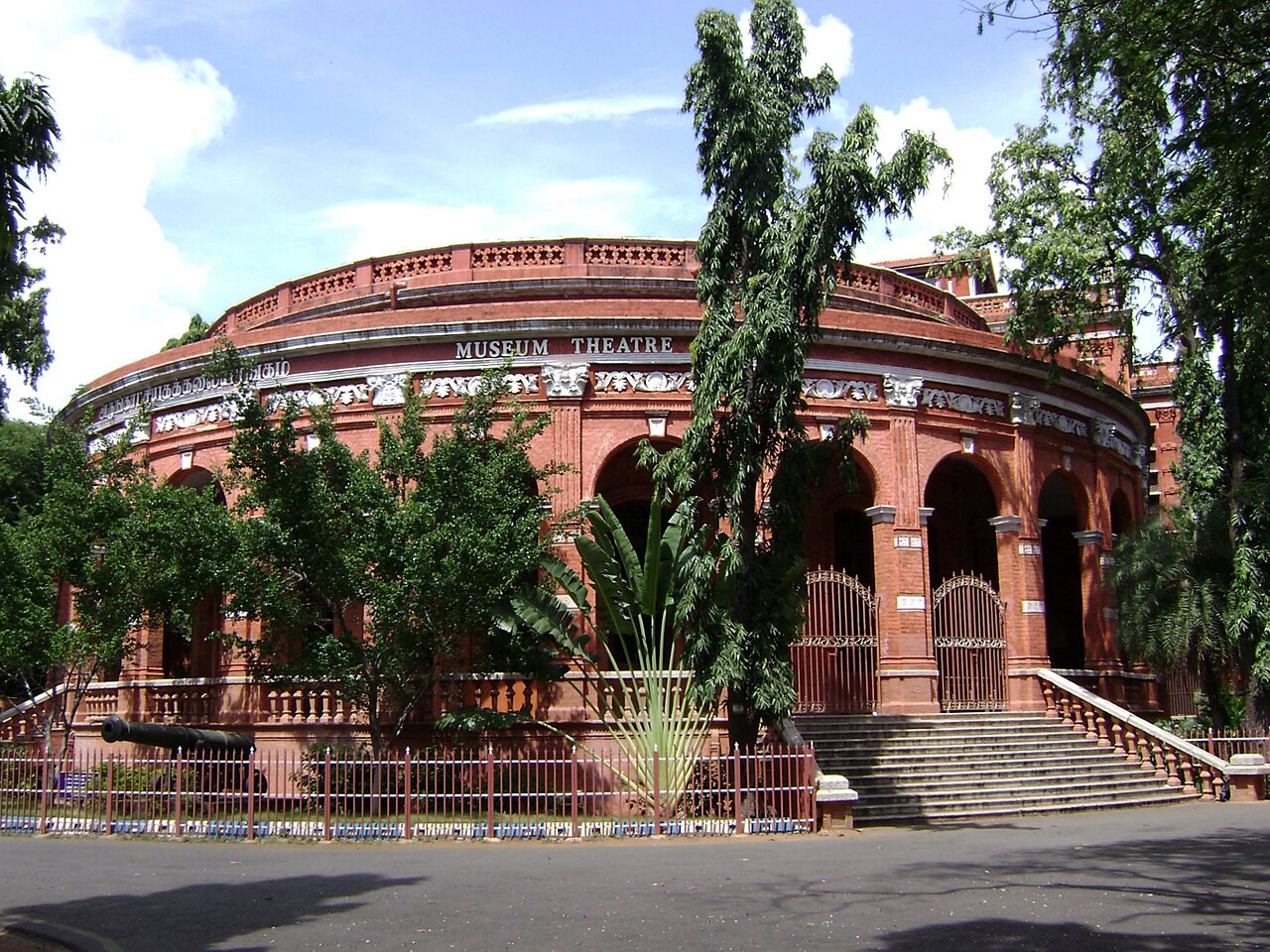
Part of what makes a visit here memorable is the setting. The Government Museum sits within a wider heritage complex, sometimes called the Pantheon Complex, built largely in deep red brick and terracotta in the Indo-Saracenic style. Much of it was designed by Henry Irwin, the same architect behind several of Chennai’s other landmark colonial buildings, and the domes, arches and verandahs are worth slowing down for even if you are not usually one for architecture.
The complex includes the main museum buildings arranged around courtyards, the Museum Theatre, a wonderfully atmospheric Victorian era theatre still used for performances, the National Art Gallery building in red sandstone, which was originally built as the Victoria Memorial Hall, and the Connemara Public Library next door. It is a proper campus, and you will do a fair amount of walking between blocks, so wear comfortable shoes.
The Bronze Gallery
This is the reason to come. The Bronze Gallery holds one of the finest collections of South Indian bronze sculpture anywhere in the world, and the Chola era bronzes, cast between the 9th and 13th centuries, are the highlight of the entire museum. The lost wax casting technique the Chola artisans used produced figures of extraordinary grace, and nowhere is that clearer than in the gallery’s Nataraja sculptures, the dancing form of Shiva, along with fine examples of Ardhanarishvara, the half male half female form combining Shiva and Parvati.
Photographs online do not prepare you for standing in front of these in person. The fluidity of the poses, the detail in the jewellery and drapery, the sheer age of some of these pieces, it is museum going at its best. Even visitors who normally move quickly through galleries tend to slow right down here. If you see nothing else at the Government Museum, see this room.
The Amaravati gallery and archaeology
Close behind the bronzes in importance is the museum’s collection relating to Amaravati, a Buddhist site in Andhra Pradesh that once had a great stupa decorated with intricately carved limestone panels. Many of those panels and sculptures, along with related archaeological material, made their way into this museum’s collection, and it is one of the most significant holdings of Amaravati era Buddhist art in India.
The wider archaeology galleries sit alongside this, with sculpture spanning many centuries and different South Indian dynasties. It is dense material and the labelling can be patchy in places, but if you have any interest in early Indian art or Buddhist history, this section rewards a slow look rather than a quick walkthrough.
Other galleries worth your time
Beyond the headline collections, the Government Museum has a genuinely wide spread of sections, and which ones are open can vary since parts of the complex periodically close for renovation. On a good day you can expect to find:
- A numismatics gallery with coins spanning different dynasties and periods of South Indian history
- A natural history section covering zoology and geology, including a well known articulated whale skeleton that is a favourite with children
- An anthropology section looking at the people and communities of Tamil Nadu and beyond
- A children’s museum aimed at younger visitors, with more hands on and visual displays
- Art galleries with Tanjore paintings, Rajput and Mughal miniatures, and the broader painting collection housed in the National Art Gallery building
Not every gallery will be firmly lit or freshly labelled, and a few genuinely do feel dated. We would rather tell you that honestly than oversell it. But taken together, this is still one of the richest single collections of South Indian material culture you will find anywhere.
The Connemara Public Library
Right next to the museum, and part of the same historic campus, is the Connemara Public Library, one of only four National Depository Libraries in India, meaning it receives a copy of everything published in the country. The reading room itself is a beautiful piece of heritage architecture and worth a look even if you are not planning to sit down and read, though access to certain areas may be limited to members. If you are already on the grounds for the museum, it is worth poking your head in.
Timings, tickets and how long you need
There is a modest entry ticket for the Government Museum, with a separate and higher rate for foreign nationals, and an extra small charge if you want to carry a camera inside. The museum is usually closed on Fridays and on public holidays, so it is worth checking the current day and timings before you set out, since these details do shift from time to time.
Plan on spending two to three hours here if you want to do the bronzes and Amaravati galleries justice along with a reasonable look at the rest. It is largely an indoor visit, but there is real walking involved between buildings, so it is not a quick five minute stop the way some other Chennai attractions are.
How to get there
The museum is in Egmore, in central Chennai, which makes it one of the easiest big attractions in the city to reach. It is a short walk from Egmore railway station, and Egmore is also served by the Chennai Metro, so if you are coming from elsewhere in the city a metro ride followed by a short walk is often the simplest option. Buses run through the area too, and autos and cabs will get you right to the gate without any trouble. Its central location makes it an easy addition if you are already putting together a wider list of places to visit in Chennai, since you can pair it with several other central sights in the same day.
Best time to visit and nearby
Because most of the museum is indoors, it works well at any time of year, and the heat outside is not really a factor once you are inside. That said, mornings tend to be calmer and cooler for the walk in, and we would always suggest going on a weekday rather than a Friday, since that is usually the closed day. If you can time your trip for the October to February stretch, the pleasant weather makes the walking between buildings a lot more comfortable too.
Egmore and the surrounding parts of central Chennai have a good spread of other sights worth combining with your museum visit. The Valluvar Kottam monument and the Birla Planetarium are both other central Chennai stops that fit naturally into the same day, so you can build a fuller itinerary around the museum rather than treating it as a standalone trip.
Tips for your visit
- Head to the Bronze Gallery first if you are short on time, it is the collection you will remember most
- Check which galleries are open before you go, since some sections close periodically for renovation
- Carry cash for tickets and any camera charge, and check current photography rules at each gallery since they vary
- Avoid Fridays, and confirm the current opening day and timings before you travel
- Wear comfortable shoes, there is more walking between buildings than first time visitors expect
- Pair the visit with the Connemara Public Library next door if heritage architecture interests you
The Government Museum will not win any awards for slick presentation, and it does not need to. It holds some of the finest bronze sculpture and Buddhist art in the world, in a genuinely historic setting, and that is more than enough reason to spend a morning here.