Guide details
Best time to visit
Morning to early afternoon, since a good part of the museum is outdoors and midday sun is best avoided
How to get there
On the East Coast Road at Muttukadu, about 25 to 30 km south of central Chennai, on the way to Mahabalipuram; easiest by car or cab
Highlights
Chettinad mansion, Tamil agraharam house, Kerala heritage houses, live craft demonstrations, puppet and dance performances, craft shops and cafe
Good for
Families, heritage lovers, first time visitors to Chennai, photographers
Entry
Moderate entry ticket, more than a city park, with concessions for children and students; confirm current rates before you go
Ask any Chennai local for a good half day out with the family and DakshinaChitra usually comes up within the first two suggestions. It sits on the East Coast Road at Muttukadu, about 25 to 30 kilometres south of the city centre, and it is one of the few places in Chennai where you can genuinely spend three or four hours without checking your watch.
What makes it work is simple. Instead of glass cases and typed labels, DakshinaChitra gives you real houses, real artisans and real crafts, all under the open sky. It is not a theme park version of South Indian heritage, it is closer to a village that four states quietly agreed to build together.
What is DakshinaChitra?
DakshinaChitra is a living history museum run by the Madras Craft Foundation, a non profit set up to document and preserve the art, architecture and everyday life of South India before it disappears under concrete and highways. The name translates loosely as picture of the south, and that is exactly the brief the place has set itself.
Rather than focus on one region, the museum brings together the traditions of the four southern states, Tamil Nadu, Kerala, Karnataka and Andhra Pradesh, with Telangana represented too. You walk from a Tamil street straight into a Kerala courtyard and then into a Karnataka home, and the change in architecture, colour and mood is obvious even if you know nothing about any of it going in.
The heritage houses
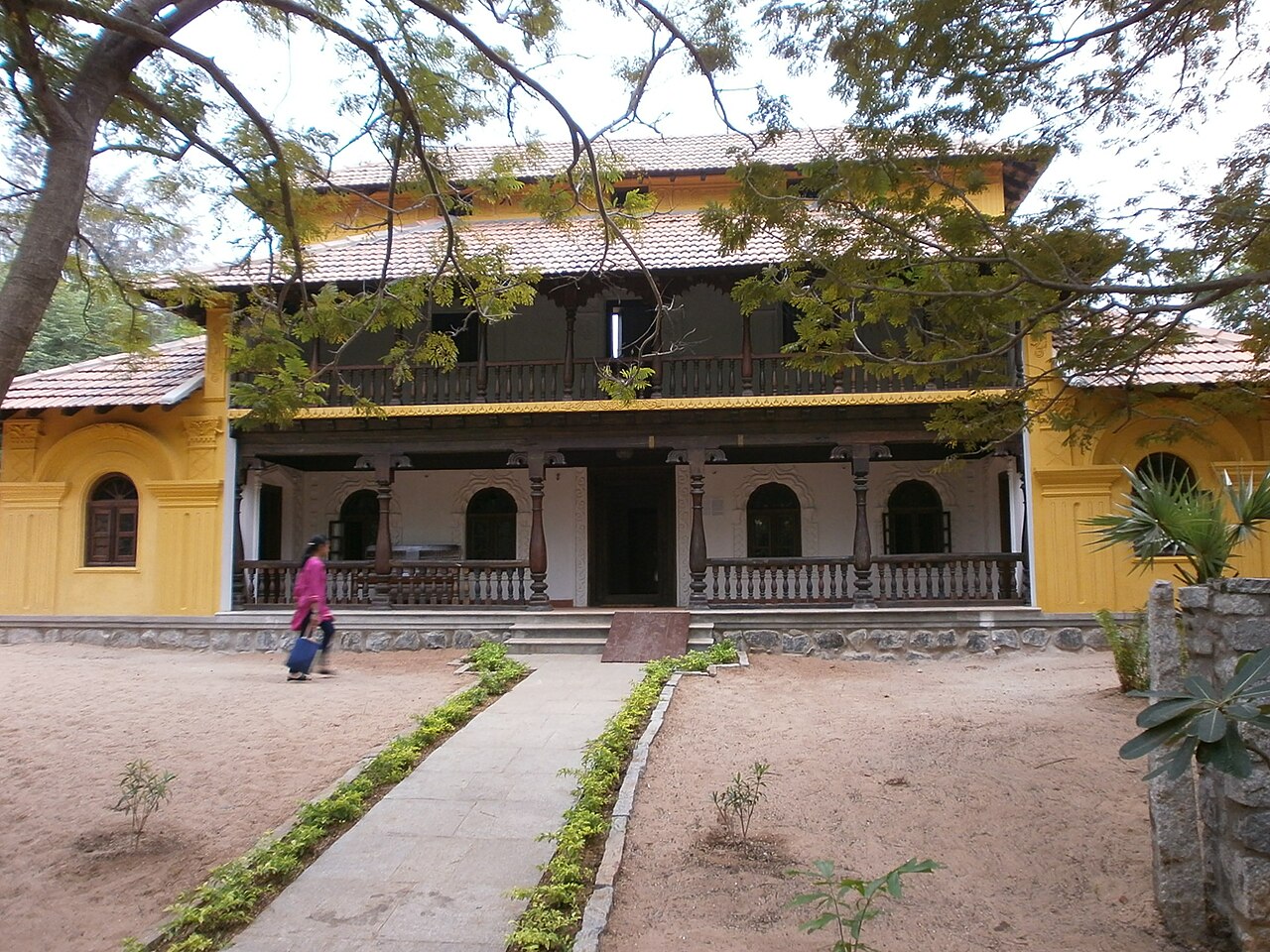
The heart of DakshinaChitra is its collection of heritage houses, and this is what sets it apart from most museums in the city. These are not replicas built to look old, they are actual historic houses that were bought, carefully dismantled piece by piece, transported to the site and rebuilt using the original materials wherever possible.
Highlights include a grand Chettinad mansion, with the dark polished floors and imported tiles that Chettiar merchant families were known for, and a traditional Tamil agraharam house, the narrow terraced homes once found lining temple streets. Alongside these sit Kerala houses with their steep tiled roofs and wooden pillars, and homes from Karnataka and Andhra that show just how differently people across the south have always lived, even within a fairly small stretch of the map. Walking through them in sequence gives a far better sense of South Indian domestic life than any single museum hall could.
Crafts, artisans and performances
DakshinaChitra is a working museum, not a static one. On most days you will find artisans actually practising their craft on site, and many are happy to explain what they are doing if you pause and ask.
- Potters working the wheel and shaping clay the traditional way
- Weavers demonstrating handloom techniques on working looms
- Folk artists showing painting styles such as Kalamkari or Tanjore work
- Puppet shows and folk dance performances on select days, often weekends
- Craft workshops where visitors can try their hand at pottery, weaving or painting for a small extra fee
The performance and workshop schedule tends to vary by day and season, so if a particular craft demo or dance show is the reason for your visit, it is worth checking their listings for that specific date rather than assuming it will be running.
Good for families
This is genuinely one of the better family outings in Chennai, and not just because there is space to run around. Children tend to enjoy the camel and bullock cart rides that run in the grounds, and the hands on craft corners let them get their hands dirty rather than just look at things behind glass.
There is a cafe on site for when energy levels dip, serving simple South Indian snacks and drinks, and a cluster of craft shops selling textiles, pottery, toys and artwork made by the artisans themselves or sourced from craft cooperatives. It is a good place to pick up a genuine souvenir rather than the mass produced kind sold at most tourist stops.
Timings and tickets
DakshinaChitra charges an entry ticket that is more than you would pay at a city park, though it is not expensive by museum standards, and there are usually concessions for children and students. Camera fees, ride charges and workshop fees are typically extra.
The museum is usually closed one day a week, commonly a Tuesday, but this has changed in the past so it is worth checking rather than turning up to locked gates. Opening hours generally run through the morning and afternoon, so this is very much a daytime visit rather than an evening one. Confirm current ticket prices, the closed day and the day’s timing before you set off, ideally on the day itself if you are travelling any distance.
How to get there
DakshinaChitra sits directly on the East Coast Road at Muttukadu, roughly 25 to 30 kilometres south of central Chennai, on the same stretch of road that eventually leads to Mahabalipuram. The easiest way to reach it is by car or cab, and the drive along the ECR is pleasant in its own right, with the sea visible on and off along the way.
Buses running along the ECR towards Mahabalipuram also pass close to the museum, though a cab or self drive gives far more flexibility, especially if you plan to combine the visit with other stops nearby. Traffic on the ECR can build up on weekends, so allow a bit of extra time if you are heading down on a Saturday or Sunday.
Combine it with an ECR day out
Because DakshinaChitra sits right on the ECR, it slots naturally into a longer day trip rather than standing alone. The Muttukadu boat house is a short distance away and makes an easy stop for some time on the backwaters, particularly if you are travelling with children who have had enough of walking through museum rooms.
Cholamandal Artists Village, one of India’s largest artists communes, is also on the same road and worth a stop if you have any interest in contemporary Indian art, painting or sculpture. And if you have a full day free, it makes good sense to continue further south to Mahabalipuram, with its rock cut temples and shore temple, since it sits on the same route and the drive is straightforward.
Tips for your visit
- Go in the morning or early afternoon and avoid the peak midday sun, since a good part of the museum is outdoors
- Wear comfortable shoes, there is a fair amount of walking between the houses and craft areas
- Carry water and use sunscreen, especially between March and June
- Set aside at least three hours if you want to see the houses properly and catch a craft demonstration
- Check the day’s performance schedule in advance if a puppet show or dance performance is the reason for your visit
- If you are planning a wider trip, our guide to things to do in Chennai is a good place to see where DakshinaChitra fits alongside the city’s other sights
DakshinaChitra rewards a slow visit more than a rushed one. Give it a proper morning, talk to the artisans if they are free, and you will come away with a far better sense of South Indian life than most museums in the city can offer.