Guide details
Best time to visit
November to February for cooler, drier days; museums are best on weekday mornings.
How to get there
Egmore Railway Station and Egmore metro station put you in the middle of it; buses and autos reach it easily.
Highlights
Government Museum, Connemara Public Library, Egmore Railway Station, St Andrew’s Kirk, Museum Theatre, colonial architecture
Good for
Heritage lovers, museum visits, rail travellers, budget and mid range stays, walking
Price range
Budget rooms from about Rs 900 to Rs 1,800; mid range hotels Rs 2,500 to Rs 5,500; a plate of local food Rs 80 to Rs 250.
Egmore is one of the parts of Chennai that most visitors pass through without quite realising how much sits within a short walk. For many it is simply the name on a train ticket, the terminus where services from the south of Tamil Nadu pull in. Stay a while, though, and you find one of the oldest museums in the country, a grand old library, a colonial church and a station building that is worth seeing in its own right.
It is central, reasonably walkable in patches, and easy to reach from most of the city. If your idea of a good day out involves bronze sculpture, quiet reading rooms and old architecture rather than malls and beaches, Egmore rewards the effort.
What Egmore is like
Egmore feels busy in the ordinary, working way that a lot of central Chennai does. There is traffic, there are auto drivers waiting near the station, and there are rows of hotels, chemists, small shops and eating places that have grown up around the railway. It is not polished or pedestrianised, and nobody has tidied it for tourists.
What sets it apart is the concentration of heritage buildings in a fairly small area. The main museum complex, the station and St Andrew’s Kirk are all within a short distance of one another, so you can see a lot on foot in half a day. Pavements are uneven in places and crossings can be hectic, so take it at a steady pace and keep an eye on the traffic. Mornings are calmer and cooler, which suits both the walking and the museums.
The Government Museum and Connemara Library
The Government Museum, also called the Egmore Museum or the Madras Museum, is the reason a lot of people make a point of coming here. Founded in the mid nineteenth century, it is among the oldest museums in India, and it spreads across a cluster of red brick heritage buildings rather than a single hall.
The section most people remember is the bronze gallery, home to a celebrated collection of South Indian bronzes, including Chola period figures of Nataraja and other deities. Even if you know little about the art, the craftsmanship is easy to appreciate. Beyond the bronzes there are archaeology, sculpture, natural history and numismatics sections, so it is worth allowing a couple of hours if you want to do it properly.
In the same grounds you will find the Connemara Public Library, one of the four national depository libraries in the country, set in a handsome old building with a fine reading room. Nearby stands the Museum Theatre, a striking colonial hall that still hosts performances and events. Do check current opening days, hours and ticket prices before you go, as these change from time to time and the museum is usually closed one day a week.
Egmore Railway Station
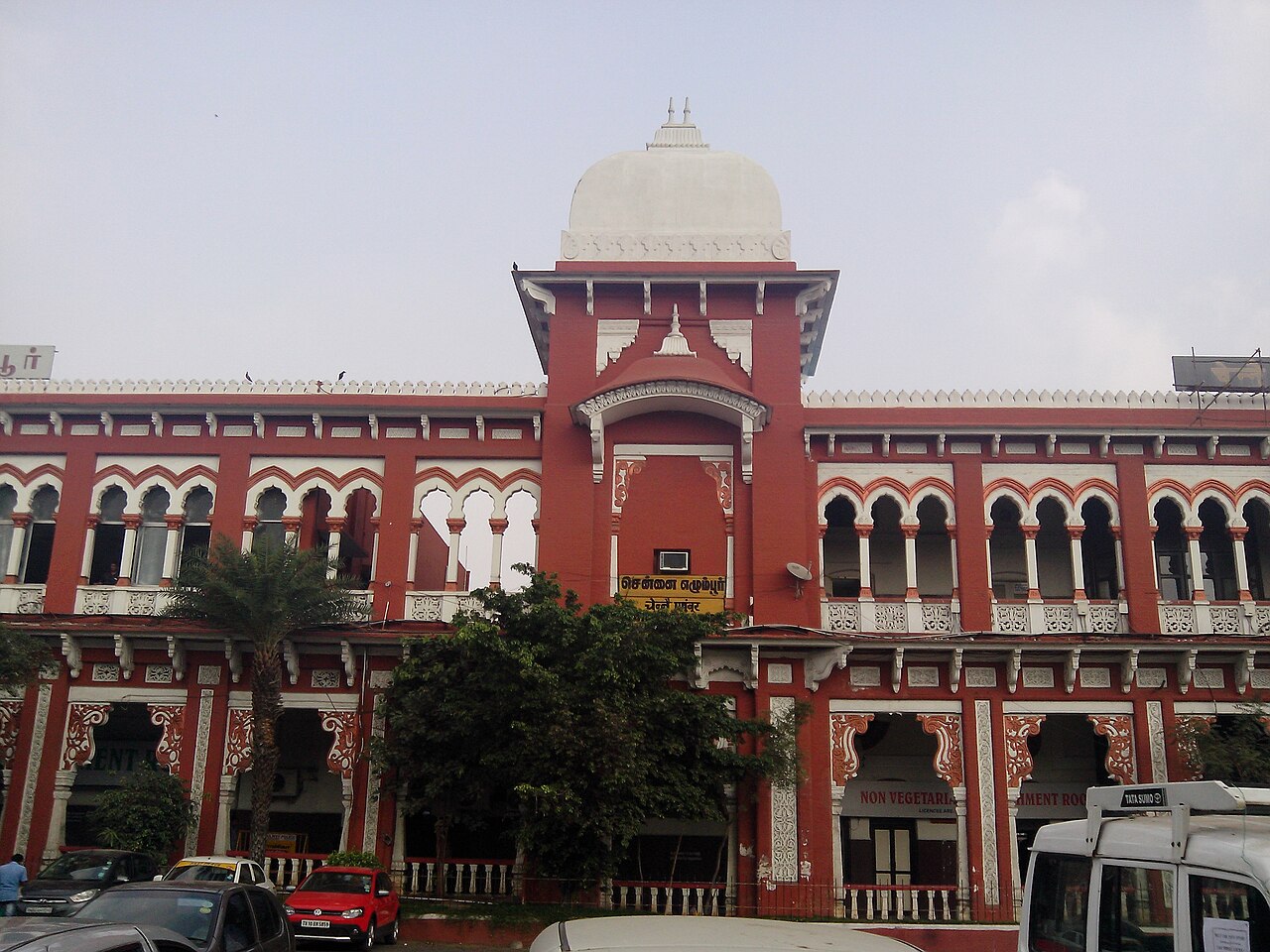
Egmore Railway Station is a landmark before you even board a train. The main building, in red and white with tall towers and long arcades, dates from the early twentieth century and is one of the better looking colonial era stations in the south. It is worth pausing outside to take it in, especially in the softer light of early morning or evening.
As a terminus, Egmore has long been the departure point for many trains heading into southern Tamil Nadu, towards places such as Madurai, Tirunelveli, Rameswaram, Kanyakumari and beyond, alongside a range of other services. Chennai Central, a short distance away, generally handles the longer distance and northbound trains, so it helps to check carefully which station your particular train uses when you book. The station has the usual mix of waiting halls, food stalls, retiring rooms and the general bustle of a busy Indian terminus.
Other things to see
A short walk from the station brings you to St Andrew’s Kirk, a Church of Scotland building from the 1820s that is one of the finest colonial churches in the city. Its columned front, tall steeple and domed interior painted with stars are genuinely impressive, and it is still a working church, so visit respectfully and check whether you are able to go inside on the day.
Beyond these headline sights, Egmore and the streets around it hold plenty of everyday colonial and early modern architecture, from old government offices to schools and residential buildings. It is the kind of area where it pays to look up above the shopfronts. If you enjoy walking and photographing older buildings, you can easily fill an hour or two just wandering the nearby lanes.
Where to eat
Egmore is well supplied with places to eat, largely because so many travellers pass through. You will find plenty of South Indian vegetarian restaurants serving idli, dosa, vada and full meals on a plantain leaf or steel plate, usually at very reasonable prices. These are reliable for breakfast and lunch and are a good introduction to Chennai food if you are new to it.
Alongside them are non vegetarian spots doing biryani, Chettinad style dishes and the Indian Muslim fare that Chennai does well, plenty of small tea and coffee stalls, and a scattering of bakeries and juice shops. Many of the hotels near the station have their own restaurants, which can be handy for a late arrival or an early departure. Standards vary, so a quick look at how busy a place is with local customers is usually a fair guide.
How to get there and around
Getting to Egmore is straightforward. The suburban and long distance railway is the obvious option, and Egmore Railway Station itself is a major hub. There is also an Egmore metro station on the Chennai Metro, which links the area to the airport, Chennai Central and other parts of the city, and it is one of the easiest ways to arrive without dealing with road traffic.
City buses serve the area well, and autos and app based cabs are easy to find, though it is sensible to agree an auto fare or use the meter or app before you set off. Once you are in the museum and station area, the main sights are close enough together to cover comfortably on foot. For anything further afield, the metro and buses will carry you across the city without much fuss.
Where to stay
Egmore is one of the most popular parts of Chennai to stay in, precisely because of the station, and there is a long run of hotels along and around the main roads. This makes it a practical base if you are catching an early train or simply want somewhere central.
Budget lodges and simple hotels typically run from around Rs 900 to Rs 1,800 for a basic double, though quality varies a good deal at this level, so it is worth reading recent reviews. Comfortable mid range hotels generally sit somewhere around Rs 2,500 to Rs 5,500, and there are a few smarter options above that. Rooms facing the main roads can be noisy, so ask for something quieter if you are a light sleeper, and book ahead during festival periods and the winter travel season.
Good to know
- Check whether your train departs from Egmore or Chennai Central, as the two are close but separate.
- Confirm the museum’s opening days, hours and ticket prices in advance, and note it usually closes one day a week.
- Mornings are cooler and calmer for both walking and museum visits.
- Carry water, wear comfortable shoes and take care at busy road crossings.
- Dress modestly if you plan to enter St Andrew’s Kirk, and check visiting times.
- Agree auto fares beforehand or use a meter or an app based cab.
Egmore is not a place you go to for a grand day out in the polished sense, and it does not pretend to be. It is a working, central neighbourhood that happens to hold some of the finest heritage in Chennai within a few streets of each other. Give it a slow morning, and it repays you generously.