Guide details
Best time to visit
October to March is the most pleasant, with cool mornings for the climb. Early morning visits are best year round to avoid the heat and the crowds. New Year’s Eve and New Year’s Day see the heaviest crowds of the year, and Karthigai star days and Skanda Sashti also draw large numbers of devotees. Summer months are hot and best avoided for the hill climb.
How to get there
Tiruttani is roughly 85 to 90 km from Chennai, about 2 to 2.5 hours by road, making it the closest and most accessible of Murugan’s six sacred abodes for a Chennai day trip. It also has its own railway station on the Chennai to Tirupati and Renigunta line, with frequent trains, plus regular bus services. Many travellers combine the visit with Tirupati, which lies around 65 km further north.
Highlights
Arulmigu Subramania Swamy Temple atop Thanigai hill, the 365 stone steps to the sanctum, panoramic views over the surrounding plains, the temple’s association with peace of mind after Murugan’s battle with Surapadman, the Valli marriage legend, Thiruppugazh verses composed here by Arunagirinathar, New Year’s Day crowds and rituals, Karthigai and Skanda Sashti festivities, easy day-trip pairing with Tirupati
Good for
Pilgrims and devotees of Murugan, families seeking a short sacred day trip from Chennai, walkers comfortable with a flight of steps, travellers combining a visit with Tirupati, anyone interested in Tamil temple architecture, Sangam-era history and Thiruppugazh literature
Price range
Mostly visited as a day trip from Chennai rather than an overnight stay. Tiruttani town has a limited number of budget lodges and pilgrim accommodation for those who do wish to stay, but check current rates and availability locally rather than relying on any fixed figure.
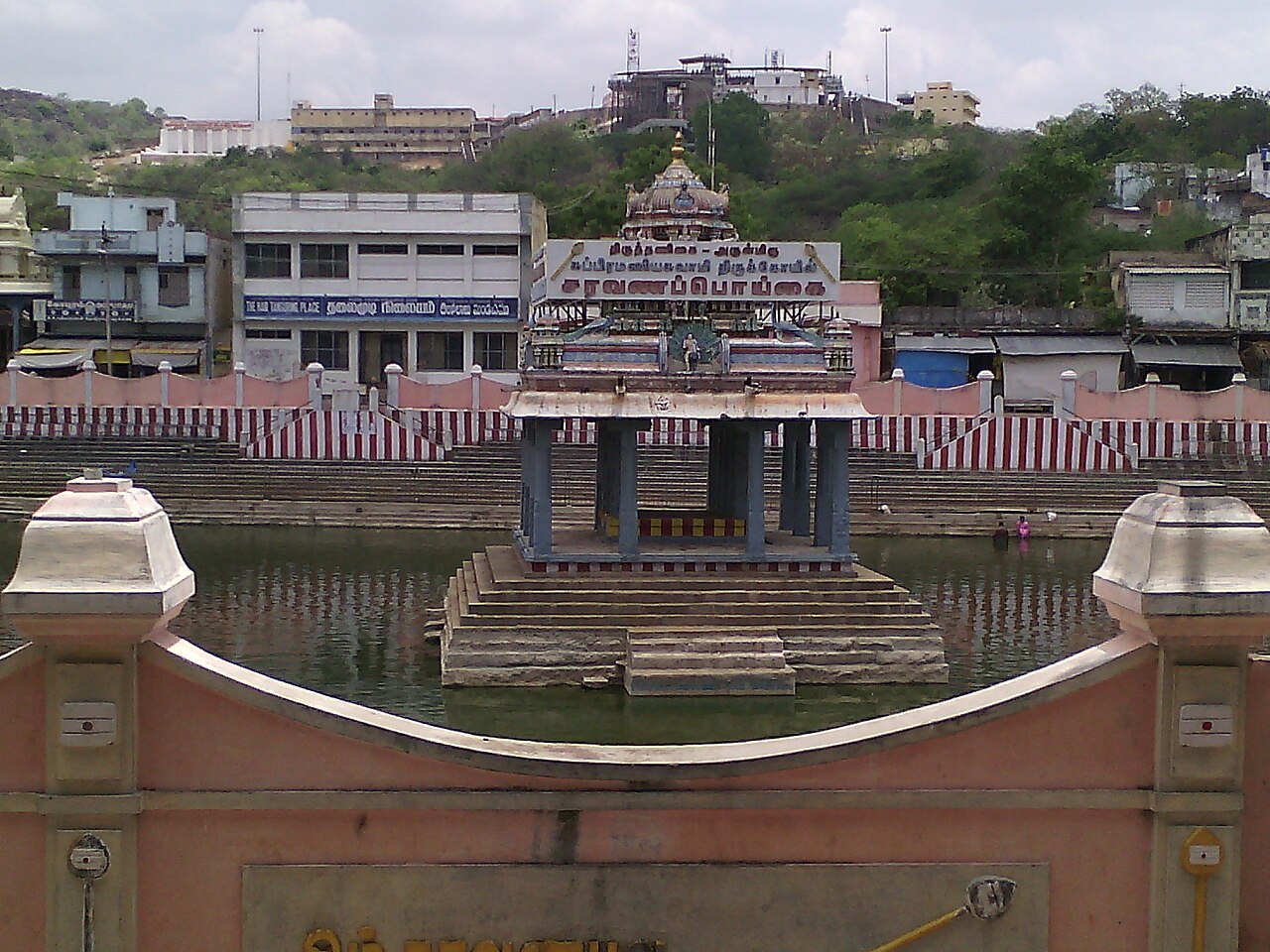
Of the six sacred abodes of Lord Murugan, the Arupadai Veedu, Tiruttani holds a special place simply by virtue of geography. While Palani, Swamimalai, Tiruchendur, Thiruparankundram and Pazhamudircholai lie scattered across Tamil Nadu, often requiring a full day or more of travel from Chennai, Tiruttani sits just beyond the city’s northern edge, in Tiruvallur district, close to the border with Andhra Pradesh. This makes it the most accessible of the six abodes for anyone based in or visiting Chennai, and a genuinely rewarding pilgrimage that can be completed within a single day. The temple itself, the Arulmigu Subramania Swamy Temple, crowns a low hill known locally as Thanigai malai, reached either on foot by a flight of 365 stone steps, said to represent each day of the year, or by a road that winds up to the top for those unable to manage the climb.
Tiruttani’s appeal lies not only in its convenience but in the particular character of its sanctity. Each of Murugan’s six abodes is associated with a different episode or mood in his story, and Tiruttani is traditionally regarded as the place of peace and repose. According to belief, it was here that Murugan came to rest and regain his composure after his fierce battle with the demon Surapadman, a conflict most vividly commemorated at Tiruchendur. Where other abodes emphasise the warrior aspect of the deity, Tiruttani is gentler in tone, associated with calm, stillness and the settling of the mind after struggle. Many devotees speak of visiting specifically for peace of mind, and the hilltop setting, quiet and elevated above the surrounding plains, does much to reinforce that feeling. The temple is also closely tied to the story of Valli, the huntress whom Murugan is said to have wooed and married, and local tradition holds that this union took place at Tiruttani, adding a layer of romance to the site’s association with serenity and resolution.
The climb itself is part of the experience for most pilgrims. The 365 steps are not especially steep, but they do take some sustained effort, particularly once the sun is up, and the stone can grow warm underfoot as the day progresses. Devotees generally begin early in the morning, both to avoid the heat and simply because that is when the temple atmosphere feels most tranquil, with the chanting and the ringing of bells carrying clearly in the cool air. Along the way, the views open out steadily over the flat agricultural plains of Tiruvallur district, and by the time one reaches the top, the town of Tiruttani and the countryside beyond spread out in a wide, unbroken panorama. For those who cannot manage the steps, whether due to age, health or simply time constraints, a motorable road also leads to the hilltop, and this option is used by a good number of visitors, particularly families with elderly members.
This temple is one of the Arupadai Veedu, the six sacred abodes of Lord Murugan. For the full circuit and the story that links them, see our Arupadai Veedu guide.
Festivals and rituals
Tiruttani’s temple calendar follows the broader rhythm of Murugan worship across Tamil Nadu, but a few occasions stand out here in particular. Chief among them is New Year’s Day. It has become something of a local tradition, almost a rite of passage for many Chennai families, to climb the 365 steps on the morning of January 1st, and the temple sees enormous crowds through the closing hours of December 31st and into the following day. The steps and the hilltop can become extremely congested at this time, and anyone planning a New Year visit should be prepared for long queues and a slow, crowded climb.
Beyond New Year, the festivals most closely tied to Murugan worship are observed here with particular devotion. Skanda Sashti, commemorating Murugan’s victory over Surapadman, draws large numbers of devotees, as does Thai Poosam, when many pilgrims undertake kavadi offerings, a practice in which devotees carry ornamented structures on their shoulders as an act of penance and devotion. Aadi Krittika and the recurring Krittika, or Karthigai, star days that fall each month are also considered especially auspicious for Murugan and see heightened activity at the temple, including abhishekam, the ritual bathing of the deity, performed with a combination of milk, water, sandal paste and other traditional offerings. Tiruttani also carries a strong literary and spiritual pedigree. The Tamil poet-saint Arunagirinathar, whose Thiruppugazh hymns remain among the most revered devotional compositions dedicated to Murugan, is closely associated with the temple, and tradition also links the site to the sage Vasishta and to the broader body of Sangam-era Tamil poetry that celebrates the hill shrines of the god.
Around Tiruttani
The town of Tiruttani itself is modest, built largely around the temple and its pilgrim traffic, but the wider area rewards a little exploration. Within the town and its surroundings are smaller shrines worth a visit, including one dedicated to Kanniga Parameswari, which draws its own steady stream of local devotees. Further afield, across the state border in Andhra Pradesh, lie the Tada Falls, also known as Ubbalamadugu, a seasonal waterfall that makes for a pleasant, if unofficial, extension to a Tiruttani trip for those with more time and their own transport. The broader region between Chennai and the Andhra border also takes in Pulicat, with its expansive lake and birdlife, and Nagalapuram, known for its own waterfalls and hill scenery, though both require separate planning rather than being casual add-ons to a Tiruttani day trip.
Given its position close to the Andhra Pradesh border, Tiruttani is very commonly combined with a visit to Tirupati, one of India’s most visited pilgrimage towns, which lies a further stretch north. Many travellers treat the two as a natural pairing, visiting Tiruttani in the morning before continuing on to Tirupati, or vice versa, making for a fuller two-temple pilgrimage across a single extended day or overnight trip. For those keen to visit all six of Murugan’s sacred abodes, it is also worth remembering that Palani is among the most visited of the remaining five, and many pilgrims build a longer circuit around Tiruttani, Palani and the other abodes over subsequent trips.
Where to stay
Tiruttani is overwhelmingly treated as a day-trip destination rather than a place to spend the night, and this is entirely practical given how close it sits to Chennai. Most visitors arrive in the morning, complete their darshan and climb, perhaps take in a nearby sight, and are back in the city by evening. That said, the town does have a small number of budget lodges and pilgrim accommodation catering to devotees who prefer to stay over, whether to attend an early morning ritual, avoid travelling late at night, or simply take the visit at a slower pace. Facilities tend to be simple and functional rather than geared towards tourists, so it is worth checking availability and current rates locally rather than assuming anything in advance, particularly around New Year and major festival dates when demand rises sharply.
For a full breakdown of routes, trains, buses and travel time, see our guide to getting from Chennai to Tiruttani.
Practical tips for visiting
- Begin the climb early in the morning, both to avoid the worst of the heat and to enjoy the temple at its most peaceful.
- If the steps are not manageable, use the road option up to the hilltop, which is available for vehicles.
- Dress modestly and follow the temple’s dress code, as is expected at any Tamil Nadu temple.
- Remove footwear before the temple precincts, as is customary.
- Carry water for the climb, particularly outside the cooler months.
- Visit on a weekday where possible, since weekends, New Year and major festival days bring significant crowds and longer queues.
- Consider combining the trip with Tirupati given the short distance between the two, particularly if travelling from further afield.
- Check locally for current darshan timings, any special darshan arrangements and fees, since these can change and are best confirmed on arrival or through the temple’s own channels rather than assumed in advance.
Tiruttani rewards a visitor precisely because it asks so little in terms of logistics and gives so much in return. It is the most accessible of Murugan’s six sacred abodes, a temple that can be reached, climbed, worshipped at and returned from within a single day from Chennai, yet it carries the same depth of legend, devotion and history as its more distant counterparts. Whether approached as a New Year tradition, a Karthigai pilgrimage, or simply a quiet morning away from the city, Tiruttani offers what its own story promises: a place to pause, breathe and find a measure of peace, before the road carries you back down the hill and on towards home, or onward to Tirupati.