Guide details
Best time to visit
October to March, when the weather across Tamil Nadu is cooler and the hill climbs at Palani and Tiruttani are far more comfortable. Festival periods such as Thaipusam, Skanda Sashti and Panguni Uthiram bring very large crowds, so plan around them if you prefer a quieter visit, or plan for them deliberately if you want to witness the celebrations.
How to get there
The six abodes are spread across the length of Tamil Nadu, so this is rarely a single day trip. Tiruttani is closest to Chennai and easily reached by road or rail. Palani and Swamimalai sit in the central and delta regions and are usually combined with a Kumbakonam or Coimbatore area trip. Thiruparankundram and Pazhamudircholai are both near Madurai and pair naturally with a Madurai visit. Thiruchendur lies in the deep south near Tirunelveli and Thoothukudi. Most pilgrims travel by car, bus or train between towns, and many complete the full circuit over several separate journeys rather than one continuous trip.
Highlights
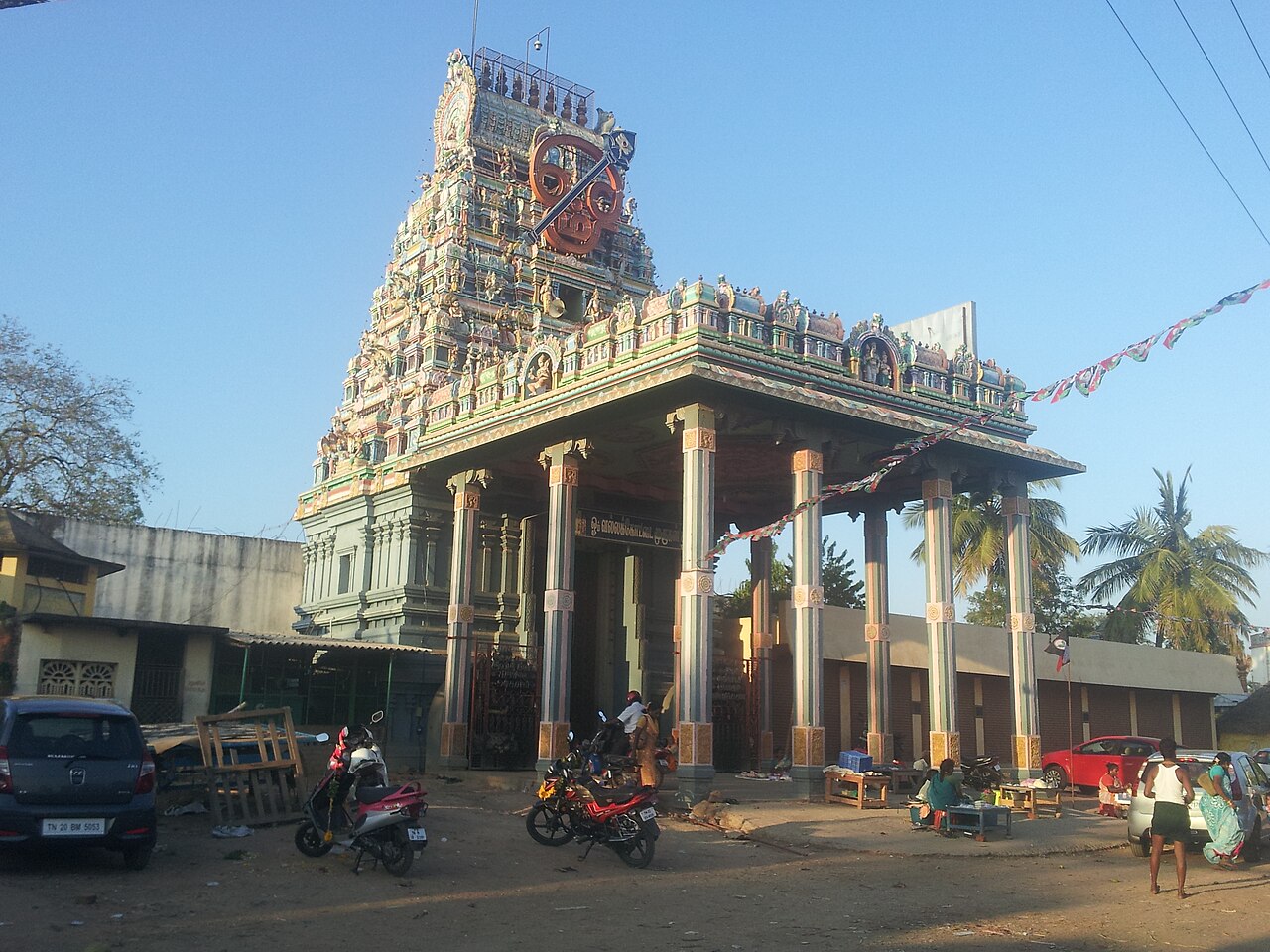
Thiruparankundram, Tiruchendur, Palani, Swamimalai, Pazhamudircholai, Tiruttani
Good for
Devotees and pilgrims undertaking a lifetime Murugan pilgrimage, families visiting during Thaipusam or Skanda Sashti, travellers interested in Tamil temple architecture and hill shrines, and anyone wanting to understand Tamil Nadu’s most beloved devotional tradition
Price range
Each abode has its own town with budget to mid range lodging and simple local eateries nearby. Entry to the temples themselves generally follows normal temple practice with no invented fees quoted here. Because the Arupadai Veedu is usually completed in stages over months or years, total cost depends heavily on how the journeys are grouped and spread out.
The Arupadai Veedu, literally the six war camps or six battle abodes, are the six most sacred temples of Lord Murugan in Tamil Nadu. Murugan is known by many names across Tamil devotional life: Subramanya, Kartikeya, Skanda, Kumara, Vel Murugan. Each of the six temples is tied to a particular episode in his life, and together they trace the great story of his war against the demon Surapadman, a battle remembered as the Soorasamharam. For countless Tamil devotees, Murugan is not a distant deity but a deeply personal and beloved presence, the god of war, youth, beauty and wisdom, and visiting all six abodes at least once in a lifetime is one of the most cherished pilgrimages a Tamil family can undertake.
The tradition itself is ancient. The six shrines are celebrated in the Thirumurugatruppadai, an early Tamil poem that functions almost as a guide, directing devotees from one abode of Murugan to the next. This makes the Arupadai Veedu one of the oldest documented pilgrimage circuits in Tamil culture, and the six temples continue to appear throughout later Tamil devotional literature, songs and folk memory. To walk this circuit today is to follow a path that has been described and sung about for well over a thousand years.
Who Is Murugan?
Murugan is the son of Shiva and Parvati and the younger brother of Ganesha. In Tamil Nadu his following is, if anything, even more intense and intimate than that of his parents. He is closely associated with two consorts, Valli, a huntress he wooed and won in the hills, and Deivanai, also called Devasena, whom he married after his victory over Surapadman. His weapon is the vel, a divine spear or lance given to him by his mother Parvati to defeat evil, and it remains his defining symbol, carried by devotees as a small vel pendant or represented in temple flags and processions. His vahana, the vehicle on which he rides, is the peacock, and a rooster appears on his banner, both familiar sights in temple sculpture and festival art across the state.
Murugan’s popularity in Tamil Nadu expresses itself through some of the region’s most physically demanding and emotionally charged festivals. Kavadi, in which devotees carry decorated frameworks on their shoulders as an act of penance and devotion, is offered at Murugan temples throughout the year and especially during Thaipusam. Skanda Sashti, commemorating the six day battle and eventual triumph over Surapadman, is observed with particular intensity at Tiruchendur. Panguni Uthiram, associated with Murugan’s wedding, is celebrated with great festivity at Thiruparankundram. These festivals are not simply religious calendar dates, they are among the most significant communal events in Tamil life.
The Six Sacred Abodes
- Thiruparankundram, just outside Madurai, is regarded as the first of the six abodes. It is a rock cut cave temple carved into a hillside, and it holds particular significance as the site of Murugan’s wedding to Deivanai, celebrated here after his defeat of Surapadman. The temple’s architecture, hewn directly from the rock, gives it a distinct character among the six.
- Tiruchendur is the only one of the six abodes set directly on the coast, standing on the shore of the Bay of Bengal in the deep south of Tamil Nadu. This is the abode associated with the battle against Surapadman and Murugan’s ultimate victory, the Soorasamharam, and it is here that the Skanda Sashti festival reaches its most dramatic expression, drawing enormous crowds who gather to witness the ritual reenactment of the battle.
- Palani is perhaps the most visited of the six, a hilltop shrine where Murugan is worshipped as Dhandayuthapani, depicted as a young ascetic or hermit bearing a simple staff rather than his usual regalia. The image reflects a well loved legend in which Murugan, in a fit of pique after being denied the fruit of wisdom given instead to his brother Ganesha, retreated here as a renunciate. Pilgrims reach the hilltop shrine by climbing a long flight of steps or by taking a winch and cable car for those unable to walk the climb. The temple’s deity is a navapashanam idol, said to be formed of a rare combination of medicinal and metallic substances, and the panchamirtham offering made here is famous across Tamil Nadu.
- Swamimalai, near Kumbakonam, holds a unique place among the six because of the story attached to it. Here, tradition holds, the young Murugan explained the meaning of the sacred syllable Om, the Pranava mantra, to his own father Shiva, who had come to him seeking its meaning. For this reason Murugan is worshipped at Swamimalai as Swaminatha, teacher even to Shiva. The shrine sits atop a modest hillock reached by a flight of around sixty steps, and the town itself is well known as a centre of traditional bronze icon making.
- Pazhamudircholai, set in the forested Alagar Koil hills near Madurai, is a hill and forest shrine closely tied to Murugan’s life with Valli. It is also remembered for a well loved tale involving the poet Avvaiyar, who is said to have been tested by Murugan disguised as a boy sitting in a jamun, or naaval, tree, posing a riddle about the fruit before revealing his true form. The setting is quieter and greener than the other abodes, and it is often visited together with nearby Alagar Koil.
- Tiruttani is the hilltop abode closest to Chennai, and it holds a gentler place in the Murugan story, remembered as the abode of peace where he rested after the long war against Surapadman. Tradition also holds that it was here that Murugan married Valli. The temple is reached by climbing 365 steps, one for each day of the year, and it is especially popular on New Year’s Day, when large numbers of devotees make the climb as their first act of the year.
One Story, Six Temples
Taken together, the six abodes are not simply a list of temples but chapters in a single unfolding story. Thiruparankundram marks the wedding that follows victory. Tiruchendur holds the memory of the war itself and Murugan’s triumph over Surapadman. Palani reflects a moment of youthful withdrawal and wisdom. Swamimalai speaks to Murugan’s role as teacher, even to his own father. Pazhamudircholai belongs to his life with Valli and to Tamil literary memory through Avvaiyar. Tiruttani closes the circle as a place of rest and peace after battle. Geographically the six abodes span almost the entire length of Tamil Nadu, from Tiruttani in the north not far from Chennai, through the delta region around Palani and Swamimalai, down to the two shrines near Madurai, and finally to Tiruchendur on the far southern coast.
Planning the Pilgrimage
Unlike more compact temple circuits found elsewhere in Tamil Nadu, the Arupadai Veedu cannot comfortably be done in a single short trip. The distances involved mean most pilgrims and travellers group the abodes geographically and cover them over a longer journey, or return across several separate visits, sometimes over years, as part of a genuinely lifelong pilgrimage. A sensible approach is to treat Tiruttani as a manageable outing from Chennai, to combine Palani and Swamimalai with time spent in the central and delta districts, to pair Thiruparankundram and Pazhamudircholai with a visit to Madurai, and to make a dedicated trip south for Tiruchendur, often combined with other sites in the Tirunelveli and Thoothukudi area. Hiring a car or joining an organised temple tour can make the logistics considerably easier, and each abode should be approached with the understanding that it involves its own climb or access arrangement, whether steps, a winch, or a walk up a forested hill.
Festivals to Know
Several festivals shape when devotees choose to visit. Thaipusam, falling in January or February, is marked by kavadi offerings at Murugan temples across the state. Skanda Sashti, in October or November, commemorates the battle against Surapadman and is observed with particular grandeur at Tiruchendur. Panguni Uthiram, in March or April, is celebrated with special significance at Thiruparankundram given its link to Murugan’s wedding. Vaikasi Visakam, marking Murugan’s birth star, is also widely observed. Each of these draws substantial crowds, so travellers who prefer a calmer visit may wish to plan around them, while those keen to witness Tamil devotional life at its most vivid should plan to be present.
Practical Notes
As with any active pilgrimage site, sensible preparation matters. Modest dress is expected at all six temples, and footwear suited to walking and climbing is essential, particularly at Palani and Tiruttani where long flights of steps form part of the approach. Those unable to manage the climb at Palani can use the winch or cable car option. Visiting early in the day helps avoid both the heat and the busiest crowds. These are living, working temples rather than static monuments, so patience and respect for ongoing rituals go a long way. Combining the two Madurai area abodes, Thiruparankundram and Pazhamudircholai, with a broader visit to Madurai itself is an efficient and rewarding way to see that stretch of the circuit.
The Arupadai Veedu stands among Tamil Nadu’s greatest pilgrimages, six temples spread across the length of the state that together trace the life, the battles and the gentler moments of Murugan, the god so many Tamils hold closest to their hearts. Whether undertaken as a devotional journey completed in careful stages or explored simply out of curiosity about Tamil Nadu’s temple heritage, the six abodes reward the traveller with both remarkable architecture and a story that has been told and retold for well over a thousand years.