Guide details
Best time to visit
October to March is the most comfortable stretch, once the worst of the heat has passed, and early mornings are best for the climb up the 365 steps. New Year’s Day and weekends see very heavy crowds on this route, so leave Chennai early if you are travelling then.
How to get there
Tiruttani is roughly 85 to 90 km from Chennai, about 2 to 2.5 hours by road. Frequent trains run on the Chennai-Tirupati line right into Tiruttani’s own station, and TNSTC and private buses leave regularly from CMBT. As the closest of the six Murugan abodes to the city, it makes a genuine same-day trip.
Highlights
frequent trains on the Tirupati line, buses from CMBT, easy self-drive day trip, pairing with Tirupati, short auto ride to the temple
Good for
day-trippers from Chennai, pilgrims visiting the six abodes of Murugan, families wanting an easy temple outing, travellers combining Tiruttani with Tirupati, first-time visitors who prefer public transport over driving
Price range
Very affordable. Trains and government buses are cheap options for solo travellers or small groups, while a taxi or self-drive car costs more but suits families or those combining the trip with Tirupati. No fixed fares are quoted here as they change often, so check current rates with IRCTC, TNSTC or your taxi operator before travelling.
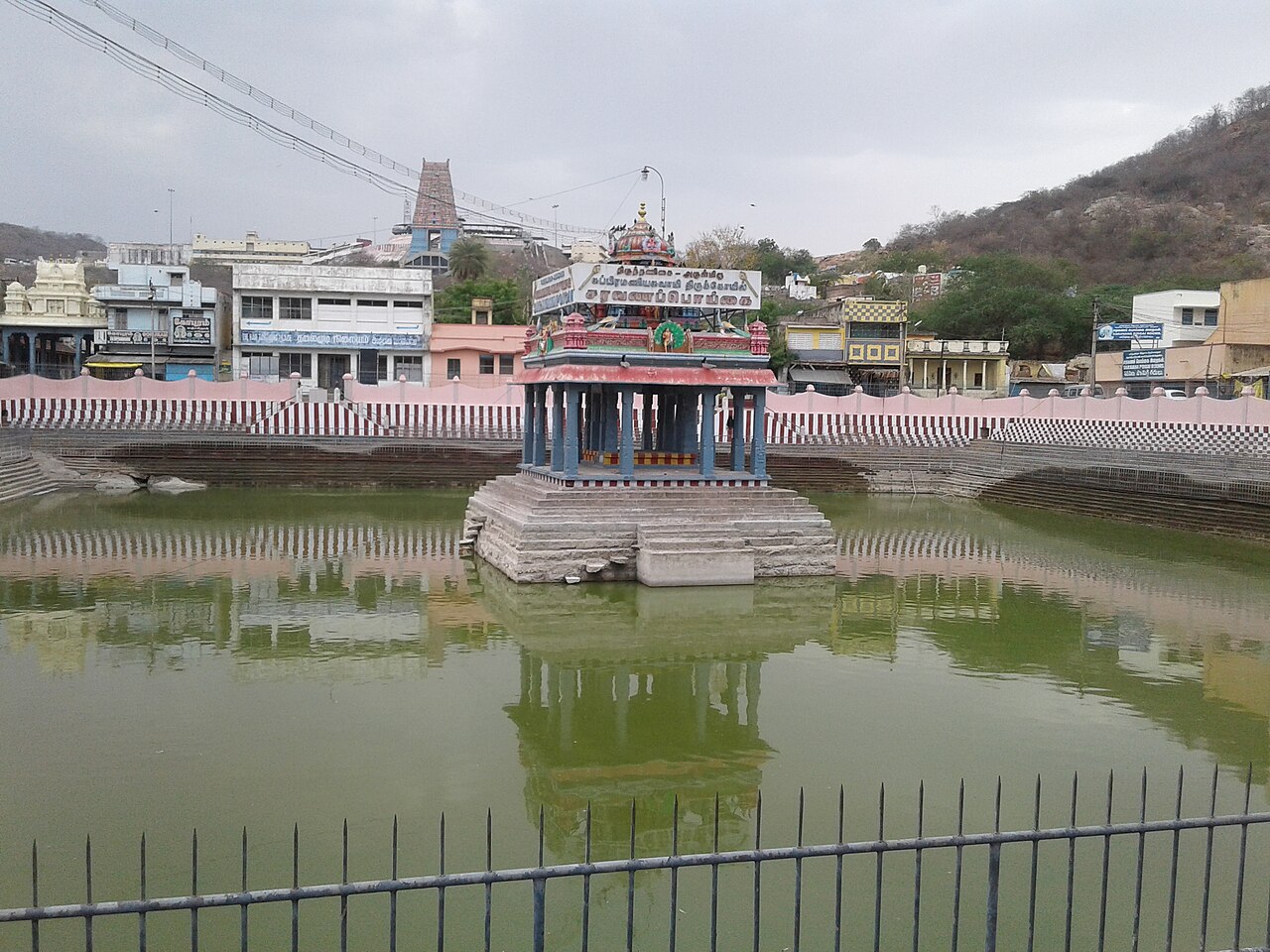
Of the six sacred abodes of Lord Murugan spread across Tamil Nadu, Tiruttani is the one closest to Chennai, sitting roughly 85 to 90 km northwest of the city in Tiruvallur district. That short distance, combined with genuinely frequent train and bus links, makes it one of the easiest proper pilgrimages to fit into a single day from the city, with no overnight bag required. The temple itself stands on a granite hillock above the town, reached either by a flight of 365 stone steps or by a paved road that winds up to the top. For everything about the shrine itself, its legends, the steps and the festival calendar, see our guide to Tiruttani. This piece sticks to the practical side, how to actually get there and back comfortably.
What makes Tiruttani stand out among the six abodes is precisely this ease of access. Some of the other abodes involve a journey of several hours or more from Chennai, but Tiruttani can be tacked onto a weekend without much planning at all. That is part of why it tends to be the first of the six that many Chennai families visit, and often the one people return to most, simply because there is no real excuse not to.
Distance and journey time
Tiruttani lies about 85 to 90 km from central Chennai, the exact figure depending on where in the city you start and which route you take. By road, allow roughly 2 to 2.5 hours each way in normal traffic, a bit longer if you set off during rush hour or on a weekend morning when pilgrim traffic builds up along the way. By train, journey times run in a similar band, around 2 to 2.5 hours depending on the service. Either way, this is comfortably a same-day round trip. Most visitors leave Chennai early in the morning, spend a couple of hours at the temple and in the town, and are back home well before dinner.
By train
Train is arguably the most sensible way to make this trip. Tiruttani has its own railway station, sitting on the Chennai to Tirupati and Renigunta line, so it is served by a steady stream of suburban and express or passenger trains running out of Chennai Central and the surrounding MMC area. Services run through the day, so there is rarely a long wait, and fares are modest compared with hiring a car. The station itself is only a short auto ride from the base of the temple steps, which makes the whole journey door to door fairly painless. Because this is such a popular pilgrim route, trains can get crowded on weekends, festival days and especially around New Year, when large numbers of devotees head up to Tiruttani as their first temple visit of the year. If you are travelling on one of those days, an early start helps you beat both the crowds and the queues. It is worth checking current timings on IRCTC or the suburban rail schedule before you leave, since services and frequencies do shift from time to time. For anyone without their own vehicle, this is genuinely one of the more relaxed pilgrim trips available from Chennai, with none of the long waits or connections that some of the other Murugan abodes demand.
By bus
Buses are the other reliable option and give you a bit more flexibility on timing. TNSTC government buses run regularly from CMBT at Koyambedu towards Tiruttani, and a good number of private buses heading further north towards Tirupati and Tirumala also pass through or close to the town, so there is rarely a long gap between departures. The journey by road typically takes around 2.5 to 3 hours, a little more than the train once you account for stops and traffic, but the fares are low and buses run often enough that you rarely need to plan too far ahead. Buses generally drop passengers close to the temple or in the town centre itself, from where the last stretch is a short walk or auto ride.
By car or taxi
Driving yourself, or hiring a taxi for the day, gives the most flexibility and suits families or small groups well. You can head out via Tiruvallur and the roads leading north, or use the broader Chennai-Tirupati highway corridor, and either way the drive takes around 2 to 2.5 hours in reasonable traffic. This is an easy day-drive by Tamil Nadu standards, with decent road surfaces for most of the route. A car also means you can drive most of the way up the hill yourself along the temple’s motorable road, which is useful if you are travelling with elderly family members or young children who would struggle with the steps. It is also the simplest way to combine Tiruttani with other stops along the same corridor.
The last mile up the hill
However you arrive, whether by train, bus or car, the final approach to the temple is the same choice everyone faces: climb the 365 stone steps or take the road up. The steps are the traditional route and manageable for most fit adults, especially if you start early before the heat builds up. The road is the easier option for anyone who would rather not climb, and autos ply between the town or station and the temple area for those who prefer not to walk the last stretch at all. Carrying water is a good idea whichever way you go up.
Which option should you choose
For most solo travellers or couples coming from Chennai, the train is hard to beat. It is cheap, runs frequently, and sidesteps the traffic that can build up on the road corridors out of the city, particularly on weekends. The bus is a close second, offering similar frequency with a touch more flexibility on where you board and alight. A car or taxi makes the most sense for families, groups travelling with older relatives or small children, or anyone planning to combine the trip with other stops nearby, since it removes the need to manage connections or walk between the station and the temple.
Combining Tiruttani with Tirupati and beyond
Tiruttani pairs very naturally with Tirupati, which lies a further 65 km or so to the north. Plenty of pilgrims combine the two in a single long day, starting early at Tiruttani and continuing on to Tirupati by early afternoon, though others prefer to break the trip with an overnight stay given how much there is to see at both places. The wider region around this corridor has a few other spots worth knowing about too, including Tada falls and the Pulicat backwaters, both reasonably close to the route if you have extra time and want to turn the day into something longer. None of these need to be decided in advance. Many travellers simply set off for Tiruttani in the morning and decide once there, depending on energy levels and how the day is going, whether to press on north or head straight back to Chennai.
Practical tips for the trip
- Start early, particularly on weekends, festival days and New Year’s Day, when the 365 steps see very heavy footfall as part of a well-established local tradition.
- On peak days, the train is usually the smarter choice simply because it avoids the road traffic that builds up around the town.
- Carry water for the climb, and comfortable footwear if you are taking the steps rather than the road.
- Check return train or bus timings before you set off, so you are not left waiting around in the evening.
- If driving, factor in extra time on weekends and holidays when the roads leading into Tiruttani get busy.
Tiruttani genuinely is the easiest of the six abodes to reach from Chennai, and that convenience is exactly what makes it such a rewarding same-day pilgrimage. The train remains the best all-round choice for most visitors, cheap, frequent and free of traffic worries, while a car suits families or anyone planning to continue on to Tirupati the same day. However you choose to travel, the trip up to the hilltop shrine is short enough to fit comfortably into a single day, leaving you back in Chennai by evening with the visit well and truly done.