Guide details
Best time to visit
Early morning on a weekday, or Tuesdays and festival days if you want the full crowd and atmosphere.
How to get there
Vadapalani metro on the green line, then a short walk; also well served by city buses and autos in west Chennai.
Highlights
Tall rajagopuram, Murugan holding the vel, thousands of weddings, tonsure and thanksgiving rituals, Thai Poosam and Panguni Uthiram festivals
Good for
Devotees, couples planning a temple wedding, first time visitors to Chennai, families, photographers of architecture
Price range
Free entry, with paid darshan and archana tickets usually from around Rs 20 to a few hundred rupees for special ceremonies.
If you spend any time in west Chennai, you will hear about the Vadapalani temple long before you see it. It is one of the busiest temples in the city, and on a good day the queue, the flower sellers and the wedding parties spill right out onto the road. The full name is the Sri Bala Dhandayuthapani Swami Temple, but almost nobody uses it. To locals it is simply Vadapalani Andavar, or the Vadapalani Murugan temple.
It is dedicated to Lord Murugan, also known as Muruga, Subramanya or Karthikeya, the son of Shiva and Parvati. People come here for all sorts of reasons: to give thanks, to shave a child’s head, to pray on a Tuesday, and above all to get married. If you are visiting for the first time, expect noise, colour, a fair amount of pushing on busy days, and a genuinely warm atmosphere. This guide covers what the temple is, why it draws so many weddings, and the practical things worth knowing before you go.
About the temple
The temple is roughly 125 to 150 years old, which by south Indian standards makes it fairly modern. It did not begin as the large complex you see today. It grew from a small shrine started by a devotee named Annaswami Nayakar, who is said to have worshipped an image of Murugan he had drawn or set up on the spot. Over the decades that humble shrine expanded into one of the most visited Murugan temples in Tamil Nadu, and the surrounding area took its name from it.
The main deity is Bala Dhandayuthapani, a form of Murugan shown holding the vel, the divine spear given to him by his mother. In this form he is usually pictured as a young ascetic, and the vel is the detail people look for and pray to. The temple follows the standard rhythms of a Tamil Murugan shrine, with regular pujas through the day and special abhishekams on important dates.
The rajagopuram
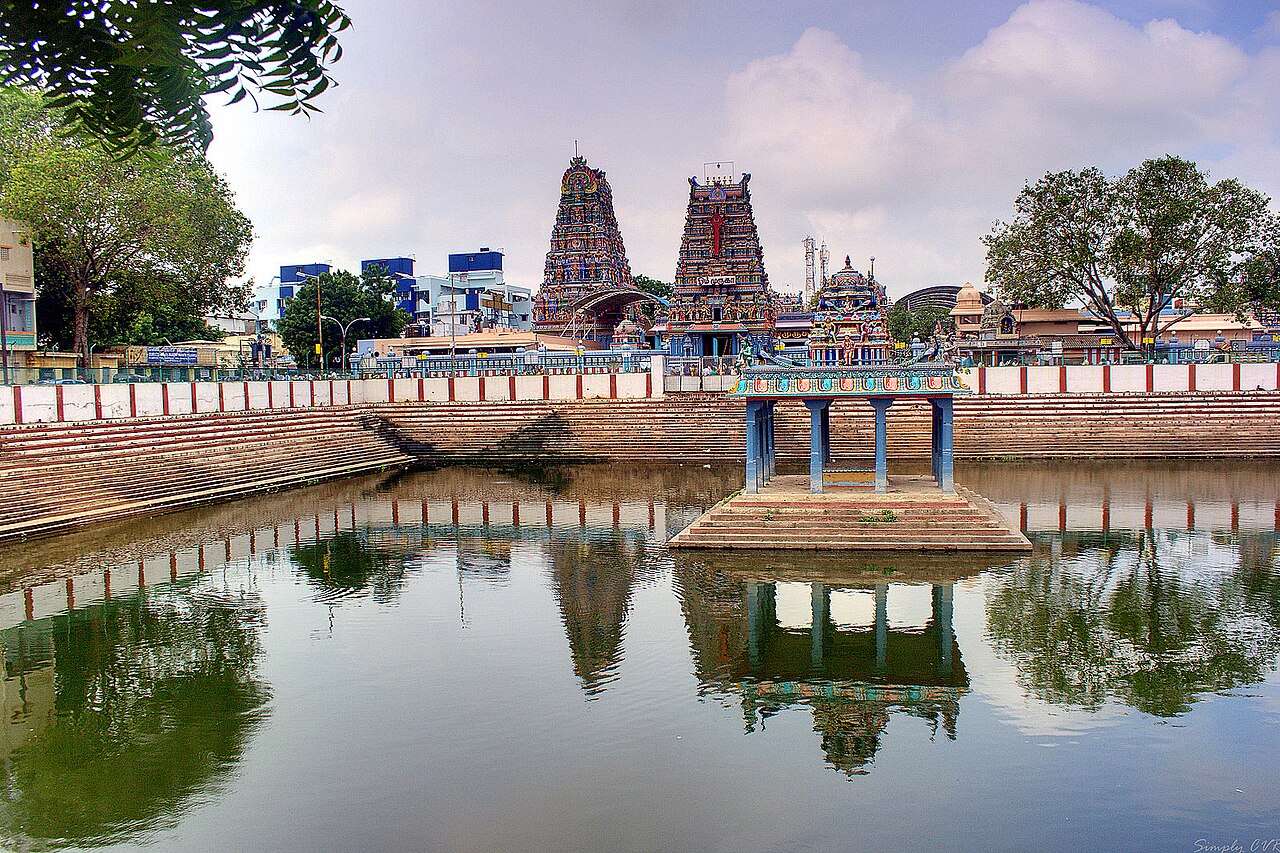
What most people remember is the rajagopuram, the tall gateway tower over the entrance. It is covered in brightly painted figures of gods, goddesses and mythological scenes, stacked in tiers that narrow towards the top. It is genuinely striking, especially in the morning light, and it is the easiest landmark to spot as you come out of the metro or drive down the main road. If you like temple architecture, give yourself a few minutes to stand back and look at it properly before you join the crowd going in.
Why it is famous for weddings
Vadapalani is probably best known as a wedding temple. Thousands of marriages take place here every year, and on auspicious dates the halls run one ceremony after another from early morning. There are marriage halls within and around the complex, and the whole area has grown a small industry of priests, decorators, photographers and caterers built around the demand.
Part of the appeal is practical. Murugan is a much loved deity, the temple is seen as auspicious for couples, and it is central and easy for guests to reach. Weddings here range from simple registrations with a handful of family members to full traditional ceremonies. If you are planning to marry here, book well ahead, especially for dates during the wedding season, and be ready to share the space, because you will rarely be the only couple that day. If you are just visiting, do not be surprised to walk past a marriage in progress; it is part of what makes the place feel alive.
Darshan, timings and tickets
The temple generally opens early in the morning, from around 5 am to midday, then closes for a few hours in the afternoon and reopens in the evening until roughly 9 pm. These hours shift on festival days and can change, so treat them as a guide rather than a promise. If a specific darshan matters to you, it is worth checking locally or by phone before you set out.
Entry to the temple is free. You can simply join the general queue and take darshan of the deity at no cost, which is what most devotees do. There are also paid options for those who want to save time or perform specific rituals:
- A paid quicker darshan ticket, which lets you use a shorter, faster moving queue on busy days.
- Archana tickets, where a priest offers prayers in your name and your family’s star sign, and hands back prasad.
- Tickets for special abhishekams and ceremonies, which cost more and are usually arranged in advance.
Prices are modest and change over time, so we would not quote exact figures, but a basic archana is only a small amount and paid darshan is affordable for most visitors. Counters near the entrance sell the tickets, and staff will point you to the right queue.
Festivals and special days
Tuesdays are special for Murugan, and the temple is noticeably busier then, with longer queues and more pujas. If you want the fullest atmosphere, a Tuesday delivers it, though you will wait longer for darshan.
The big festivals are worth knowing about, both if you want to join and if you would rather avoid the peak crowds:
- Thai Poosam, in the Tamil month of Thai, usually January or February. One of the most important Murugan festivals, marked by kavadi processions and very large crowds.
- Panguni Uthiram, around March or April, celebrating divine marriage and drawing many devotees, which ties in neatly with the temple’s wedding reputation.
- Skanda Sashti, in October or November, a six day festival marking Murugan’s victory over the demon Surapadman, with special pujas each day.
On all of these, expect the temple to be at its most crowded and most colourful. Come early, keep your group together, and be patient.
How to reach Vadapalani temple
The temple sits in Vadapalani, a central and well connected part of west Chennai, close to the film studios that gave the area its cinema links. Getting there is easy by several means:
- Metro: Vadapalani station is on the green line, and the temple is a short walk from the exit. This is usually the simplest option, as it skips the traffic.
- Bus: Many city buses run through Vadapalani, as it is a major junction on the arterial roads of west Chennai.
- Auto and taxi: Autos are everywhere in the area, and app based cabs drop right outside. Agree an auto fare first, or insist on the meter.
Because the temple gives its name to the whole neighbourhood, almost any local will know it, so you rarely need more than to say Vadapalani Andavar temple.
What to know before you go
- Dress modestly. Cover shoulders and knees. Traditional dress is common, but neat everyday clothes are fine as long as they are not too revealing.
- Footwear comes off. You leave shoes at a stand outside, often for a tiny fee. The ground can get hot, so socks help in summer.
- Crowds are the norm. Weekends, Tuesdays and festival days are packed. Keep valuables close and keep an eye on children.
- Photography is often restricted inside the inner sanctum. Look for signs or ask staff, and never photograph the main deity if it is not allowed.
- Tonsure and thanksgiving. Many families come to shave a child’s head as an offering, and there are designated areas for this. Thanksgiving visits, where people return to give thanks for a wish fulfilled, are also a big part of daily life here. If you are watching rather than taking part, be respectful and give people space.
Nearby
One of the nice things about Vadapalani is how central it is, so a temple visit slots easily into a wider day out. The area is a busy commercial hub, with shopping, cinemas, restaurants and hotels all within easy reach, and the film studios that made the neighbourhood famous are close by. We would not send you on a long detour, but you will not struggle to find a meal, a coffee or somewhere to shop within a short auto ride once you are done at the temple.
Vadapalani Murugan temple is not a quiet, out of the way retreat, and it does not try to be. It is a living, working temple at the centre of a busy city, full of weddings, prayers and everyday devotion. Go early if you want a calmer visit, go on a Tuesday or a festival day if you want the full experience, and either way you will come away with a real sense of how Chennai worships.
View Vadapalani Murugan Temple on the map →
Keep exploring Chennai
- Temples in Chennai: The Best Ones to Visit and What to Know
- Ashtalakshmi Temple, Chennai: A Seaside Guide to the Besant Nagar Kovil
- ISKCON Temple Chennai: Timings, Aarti and ECR Visitor Guide
- Kapaleeshwarar Temple Guide: History, Timings and the Mylapore Neighbourhood
- The Best Malls in Chennai: A Guide to the City’s Top Shopping Centres