Guide details
Best time to visit
Tanjore paintings can be seen and bought in Thanjavur throughout the year, since workshops and galleries operate year round. That said, the cooler months from October to March make for the most pleasant time to combine a visit to the artists’ studios with sightseeing at the Brihadeeswarar Temple and the rest of the town, so many travellers build it into a winter Thanjavur itinerary.
How to get there
Tanjore painting originates in Thanjavur, in the fertile Cauvery delta of Tamil Nadu, and this remains the best place to watch artists at work and to buy directly from workshops and family studios. Genuine pieces are also sold through galleries and craft emporiums in Chennai. Thanjavur is roughly 320 to 350 km from Chennai, reachable by train, bus or car, and is usually visited as part of a wider trip through the Chola heartland.
Highlights
gold foil and gesso relief work, inset gems, Bala Krishna and deity subjects, GI-tagged craft, Thanjavur workshops, the Thanjavur art plate
Good for
art and craft lovers, collectors, those seeking an authentic heirloom souvenir, culture travellers, anyone visiting Thanjavur
Price range
Tanjore paintings range widely in price depending on size, subject and, above all, materials. A small piece with modest gold work will cost far less than a large painting with dense gesso relief, genuine gold foil and inset stones, and a printed or gold-painted imitation will always be cheaper than the real thing. Because a genuine Tanjore painting is handmade and built to last for generations, it is best thought of as an heirloom investment rather than a cheap souvenir, and prices should always be discussed directly with the artist or workshop rather than assumed in advance.
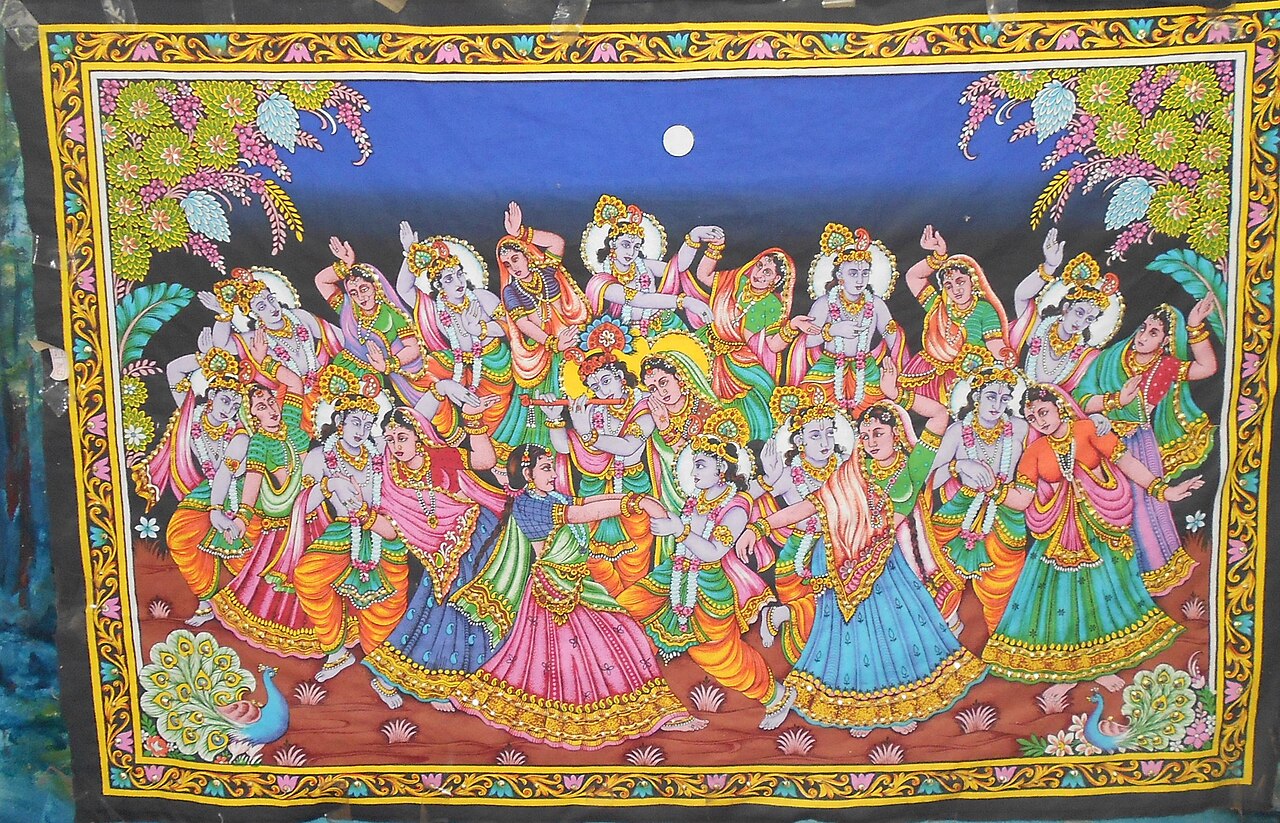
Few Indian art forms announce themselves quite like a Tanjore painting. Walk into a South Indian home with one hanging in the puja room and your eye goes straight to it: a serene deity, rendered in rich colour, framed by an arch of pillars and curtains, with a halo and jewellery that seem to lift off the surface and catch the light. This glowing, three dimensional, almost jewelled effect is the signature of Thanjavur painting, one of India’s most distinctive and celebrated classical painting traditions. Named after the town in the Cauvery delta where it was perfected, it combines flat passages of vivid colour with raised gesso relief, gold foil and inset gems or glass to create images that are as much devotional objects as they are works of art. The craft carries a Geographical Indication tag today, a formal recognition of its centuries old roots in Thanjavur and the community of artists who still practise it by hand.
What makes a Tanjore painting worth pausing over is not just its beauty but the sheer patience behind it. Every genuine piece passes through many hands and many stages, using materials and techniques that have barely changed since the paintings were first made for the temples and palaces of the Thanjavur court. To understand why a good one is treasured as an heirloom rather than picked up as a passing souvenir, it helps to know where the style came from and how it is actually made.
A Court Art Born in Thanjavur
The painting tradition associated with Thanjavur took shape between the sixteenth and eighteenth centuries, under the patronage first of the Nayak rulers and then, most decisively, of the Maratha kings who governed Thanjavur from the late seventeenth century onward. The Maratha court was a famously cosmopolitan one, and the painting style that flourished there absorbed influences from several directions at once: the muscular figural tradition of Vijayanagara painting that had shaped Deccan art for generations, the decorative sensibility the Marathas brought with them, Deccani miniature conventions, and later, as European traders and Company officials became a fixture of South Indian life, a certain flattened realism and interest in portraiture that crept in from Company style painting.
The artists who carried this tradition forward were largely drawn from two communities with long standing associations with temple and court art: the Raju community, based around Thanjavur and Trichy, and the Naidus of Madurai. These families worked as professional painters attached to temples, mathas and the royal household, producing devotional images for worship as well as grander commissioned pieces for palace walls. Because the style was so closely tied to court and temple patronage, it developed a settled visual vocabulary and a set of technical conventions that have been passed down, largely intact, from teacher to pupil ever since.
Gods, Goddesses and the Butter Thief
Tanjore paintings are, overwhelmingly, devotional works. Their subjects are Hindu deities, painted not as narrative scenes so much as icons for contemplation and worship, each one designed to be gazed upon in a home shrine or temple corner. Krishna appears more often than any other figure, and above all Bala Krishna, the plump, mischievous infant Krishna caught in the act of stealing butter, a subject so beloved that it has become almost a shorthand for the art form itself. Alongside him you will find Rama, Lakshmi seated on her lotus, Saraswati with her veena, the elephant headed Ganesha, Murugan, Venkateswara or Balaji of Tirupati, and the many forms of Devi. Portraits of saints and, occasionally, of royal patrons also appear, a legacy of the tradition’s court origins.
Stylistically, the figures share a recognisable family resemblance: rounded, gently modelled faces, wide almond shaped eyes, and a stillness that gives even a lively subject like the butter thief a quality of calm. The central figure is almost always given prominence through composition as much as size, framed by an arch, a curtain, throne pillars or a canopy that draws the eye inward, in the manner of a temple sanctum opening onto its deity.
The Craft Behind the Glow
The real distinction of a Tanjore painting lies in how it is made, and the process is a genuinely elaborate one, carried out in stages that have changed very little over the centuries.
- A piece of cloth is pasted onto a wooden plank, traditionally jackfruit or teak wood, and coated with a smooth paste of chalk powder or limestone mixed with a binding gum. Once dried and polished, this becomes the painting’s board.
- The artist sketches the composition directly onto this prepared surface, laying out the deity, the architectural framing and the surrounding decorative elements.
- The most distinctive stage follows: gesso work, in which a thick paste made from chalk powder and binder is built up in relief over the areas that will carry ornamentation, such as haloes, jewellery, thrones, pillars and architectural detail. This is what gives a Tanjore painting its embossed, sculptural quality, quite unlike anything achieved with paint alone.
- Once the gesso relief has dried and hardened, gold foil, traditionally of high purity, is laid over it. The foil clings to every ridge and contour of the relief work, so that the raised ornamentation catches and holds the light in a way flat gilding never could.
- Precious or semi-precious stones, or in many modern pieces cut glass and kundan work, are then set into the relief for jewellery, borders and sometimes the deity’s eyes, adding a further layer of glitter and depth.
- Finally, the remaining areas of the composition are painted in bold, saturated colour. Traditional artists used natural pigments; today synthetic colours are common, though the underlying method remains the same.
It is this combination, flat glowing colour set against raised gilded relief and glinting inset stones, that makes a genuine Tanjore painting instantly recognisable and very hard to mistake for anything else. Properly made, the gold does not tarnish, and a well cared for painting is built to last for generations rather than years, which is precisely why families have long favoured them as gifts for weddings and housewarmings and as the centrepiece of a home puja room.
Where to See and Buy the Real Thing
There is no better place to encounter Tanjore painting than Thanjavur itself, where artist families and workshops continue the tradition much as their forebears did. Many studios welcome visitors to watch a painting take shape, and the town’s museums and cultural institutions, including the historic Saraswathi Mahal library and its associated gallery spaces, give useful context for the wider artistic world that produced this style. Chennai also has a good number of galleries and craft emporiums selling authenticated work for those who cannot make it to Thanjavur itself, but buying directly from an artist or workshop remains the surest way to know exactly what you are getting, and it puts money straight into the hands of the families keeping the craft alive.
Do be alert to the difference between genuine work and the mass produced imitations that circulate in tourist markets, often finished with gold coloured paint rather than actual gold foil and with printed rather than hand built relief. Genuine gold foil work, understandably, costs a good deal more than these copies, and that price difference is really the clearest signal of authenticity you will find. The GI tag associated with Thanjavur painting exists precisely to protect this distinction and to safeguard the reputation of artists working in the traditional manner. Worth noting too is the Thanjavur art plate, a related craft of repousse metalwork using silver, copper and brass sheets to create similarly ornate devotional and decorative panels, often sold alongside paintings in the same workshops.
What to Look for When Buying
A little knowledge goes a long way when choosing a Tanjore painting. Run a finger lightly over the ornamented areas: genuine gesso relief has real, tactile height and texture, while a printed or shortcut version will feel flat. Ask directly what the gold work is, since a true 22 carat gold foil finish is very different from gold coloured paint, and a reputable artist or dealer will be happy to explain the materials used, including whether the inset stones are semi-precious or glass. Paintings come in a wide range of sizes, from small pieces suited to a shelf or car dashboard shrine to large works meant for a prominent wall, and because they are mounted on wood they are noticeably heavy for their size, something to bear in mind if you are travelling light. Most established workshops are used to dealing with visitors and can arrange shipping, which is worth asking about before you commit to carrying a large piece home yourself. Once you have one, keep it away from damp and direct sunlight and it should easily outlast the house it hangs in.
A Craft You Can Try Yourself
For travellers who want to go beyond simply admiring the finished work, some workshops in and around Thanjavur offer short demonstrations or introductory classes in the technique, letting visitors try their hand at gesso work or gilding under an artist’s guidance. It rarely produces anything close to a professional result in an afternoon, but it gives a real appreciation for just how much skill and patience sits behind every finished painting, and makes a lovely, low key cultural add on to a temple focused day in Thanjavur.
Part of a Living Heritage
Tanjore painting does not exist in isolation. It sits alongside the bronze casting tradition of nearby Swamimalai as one of the great classical crafts to have grown up under Thanjavur’s temple and court patronage, and both are part of a wider living network of art and craft found across Tamil Nadu, where skills honed centuries ago are still being taught, practised and sold by the families who inherited them.
Few souvenirs carry as much history, skill and sheer visual richness as a genuine Tanjore painting. Born in the courts of Thanjavur and still made today by hand, layer by patient layer, it is one of India’s most sumptuous and enduring art forms: a glowing, gold and gem studded window onto Tamil Nadu’s devotional imagination, and a fitting keepsake from a region where art has never stopped being a living practice.