Guide details
Best time to visit
Pleasant for most of the year. April to June is peak summer season and gets busy. September to November is fresh, green and less crowded after the monsoon. December to February is cold and clear, so pack warm layers. The monsoon months bring heavy mist and can close some viewpoints.
How to get there
Coonoor is roughly 530 to 550 km from Chennai, about 11 to 12 hours by road via Coimbatore, or by train to Mettupalayam followed by the Nilgiri Mountain Railway toy train up the ghats. It sits about 20 km before Ooty on the same route, so it suits a multi day trip rather than a day visit.
Highlights
Sim’s Park, Dolphin’s Nose, Lamb’s Rock, Lady Canning’s Seat, Catherine Falls, Law’s Falls, Nilgiri Mountain Railway, tea estate tours, Droog Fort trek, Shola forests
Good for
Couples and honeymooners, slow travellers, tea lovers, nature walkers and birdwatchers, and anyone wanting the Nilgiris without Ooty’s crowds
Price range
Budget lodges in Lower Coonoor from around Rs 1,000 to Rs 2,500 a night, mid range hotels roughly Rs 2,500 to Rs 6,000, and heritage bungalows or boutique plantation stays in Upper Coonoor generally upwards of Rs 6,000, with rates rising further in peak season
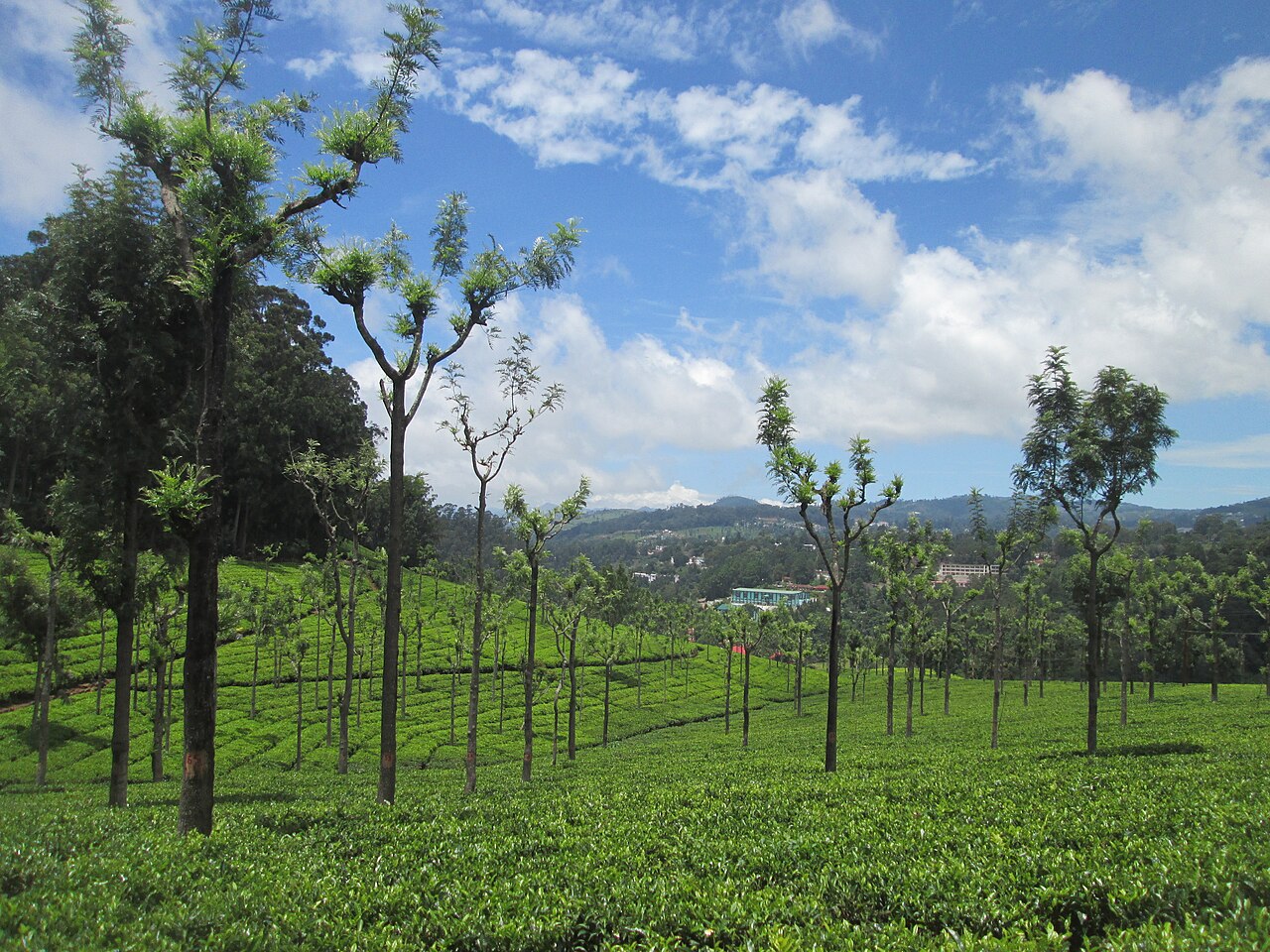
Coonoor is the second largest of the three main Nilgiri hill towns, sitting quietly in the shadow of its more famous neighbour Ooty, which lies about 20 km up the road. Where Ooty can feel crowded and commercial in season, Coonoor stays greener, calmer and considerably less frantic. Perched at around 1850 metres in the Western Ghats, it is the heart of Nilgiri tea country, and for many visitors it has become the better base for exploring the hills at an easier pace.
The town owes its character to the tea that carpets the surrounding slopes and to the crisp, cool air that made it a favoured retreat during the colonial era. Coonoor is loosely split into two halves. Upper Coonoor is quieter and leafier, with winding lanes, old colonial bungalows and a scattering of boutique stays tucked among the tea gardens. Lower Coonoor is the working town, with its market, bus stand and everyday bustle. The climate here is a touch milder than Ooty’s, which suits visitors who find the higher town a bit too sharp in the evenings.
Riding the Nilgiri Mountain Railway
No visit to Coonoor is complete without at least a stretch on the Nilgiri Mountain Railway, the UNESCO listed toy train that has been chugging up these hills since the early twentieth century. Coonoor is a key stop on the line that runs from Mettupalayam in the plains all the way up to Ooty, and the short hop between Ooty and Coonoor is generally reckoned the most scenic and popular section of the whole journey, with the train winding through tea estates, tunnels and pine forest. Steam locomotives still work parts of the route, adding to the heritage appeal. Tickets sell out quickly, especially in season, so it pays to book well ahead rather than turning up on the day.
Sim’s Park and the town’s gardens
Sim’s Park is Coonoor’s answer to Ooty’s botanical gardens, and many visitors find it the more pleasant of the two simply because it draws smaller crowds. Laid out on a sloping, terraced site, it holds a wide collection of trees, shrubs and flowering plants, many of them labelled, with quiet paths that make for an easy stroll away from the traffic. The park also hosts an annual fruit and vegetable show, when local growers display some genuinely oversized produce, a tradition that dates back many decades.
Viewpoints over the tea slopes
Coonoor’s viewpoints are where the town really earns its reputation. Dolphin’s Nose is the best known, a rocky outcrop that juts out over the valley with sweeping views across tea estates down towards the plains, and on a clear day it also offers a distant look at Catherine Falls tumbling through the forest below. Lamb’s Rock is another favourite, framed by eucalyptus and tea gardens, and popular for its own vantage over the Coimbatore plains. Lady Canning’s Seat, named after a former Governor General’s wife, offers a gentler, less crowded outlook and is a good stop for those wanting a quieter moment. Afternoons can bring in mist that swallows these views whole, so mornings are generally the better bet if visibility matters to you.
Waterfalls nearby
Catherine Falls, visible from Dolphin’s Nose and reachable more closely via a forest trek, is one of the taller falls in the district and is at its fullest just after the monsoon. Law’s Falls, closer to town along the Mettupalayam road, is a smaller, more accessible cascade that makes for an easy stop if you are short on time or energy.
Tea, chocolate and the scents of the hills
Tea is woven into everything in Coonoor. Estates spread across the hillsides in every direction, and a number of tea factories in and around the town offer tours that walk visitors through how the leaf is plucked, withered, rolled and dried before it reaches a cup. Some estates, including well known names such as Highfield, run tastings alongside their tours, giving a useful primer on the difference between the various grades of Nilgiri tea. It is one of the most popular things to buy here, along with home made chocolate sold in small shops around town and bottles of eucalyptus oil, both local specialities worth picking up before you leave.
A retreat with a colonial past
Coonoor developed as a retreat town for British planters and officials seeking relief from the heat of the plains, and that history is still visible in the old bungalows scattered through Upper Coonoor, many of them now converted into heritage stays. A short distance away lies Wellington, home to the Madras Regimental Centre and the Defence Services Staff College, both still active military institutions with a long history tied to the region. Coonoor and its surrounding villages also hold a handful of colonial era churches, quiet reminders of the town’s past as a hill station built for a different kind of visitor.
Trekking, forests and birdlife
Beyond the well trodden viewpoints, Coonoor rewards those willing to walk further. Droog Fort, a ruined hilltop fort in the Dodabetta range near Coonoor, sits at the end of a moderate trek through forest and offers commanding views once you reach the top. The wider Nilgiris are known for their shola forests, the stunted, moisture loving woodland unique to these high altitude pockets, and walking through one is a good way to appreciate why this landscape is protected. Birdwatchers will find plenty to look for too, since the Nilgiri hills are home to several endemic species found nowhere else, and quieter trails around Coonoor are generally a more productive place to look than busier parts of Ooty.
Coonoor or Ooty
The comparison with Ooty comes up constantly, and it is worth being clear eyed about it. Ooty has the bigger lake, the busier markets and more infrastructure, but it also draws far bigger crowds, particularly in peak season. Coonoor trades some of that convenience for calm, and increasingly travellers choose to base themselves here and day trip up to Ooty for a few hours rather than the other way round. For honeymooners, slow travellers or anyone who finds Ooty’s traffic wearing, Coonoor is usually the better fit. If you are weighing up the wider region, it is also worth reading about other hill stations near Chennai before deciding where to spend your time.
Where to stay
Accommodation in Coonoor spans a wide range. Lower Coonoor has a cluster of budget lodges close to the market and bus stand, handy if you want to be near transport links. Mid range hotels are spread across both halves of town and tend to offer a reasonable balance of comfort and price. The real draw for many visitors, though, is the collection of heritage bungalows, plantation stays and boutique resorts in Upper Coonoor, several of them set right among working tea estates. These fill up fast in the busier months, so booking ahead is strongly advised if you have your heart set on one.
Getting to Coonoor
Coonoor lies roughly 530 to 550 km from Chennai, which usually works out to around 11 to 12 hours on the road. The most common approach is via Coimbatore, from where it is a fairly quick climb up into the hills, and Coonoor is reached about 20 km before Ooty on this route. An alternative is to take a train to Mettupalayam and continue the final stretch on the Nilgiri Mountain Railway, which turns the journey itself into part of the experience. Because Coonoor sits on the same route as Ooty, our Chennai to Ooty guide covers the practicalities of this journey in more detail, and it is worth reading if you are planning to stop in Coonoor along the way. Given the distance involved, this is best treated as a trip of several days rather than a rushed day out.
A few practical tips
The ghat roads leading into Coonoor are narrow and full of hairpin bends, so allow extra time and take it slow, particularly if you are not used to mountain driving. Toy train tickets are limited and sell out well in advance, so book early if that is part of your plan. Even in the warmer months the evenings turn cool, so pack warm layers regardless of when you travel. Viewpoints are prone to fog, especially in the afternoon, so aim for morning visits if you want clear views. The Nilgiris also enforce restrictions on single use plastic, so carry reusable bottles and bags where you can. Finally, Upper Coonoor is quite spread out, with estates and viewpoints some distance apart, so having a car or hired taxi makes getting around considerably easier than relying on foot alone.
Coonoor rewards travellers who want the Nilgiris without Ooty’s crowds pressing in on every side. It is a place built for slow mornings on a verandah overlooking tea bushes, unhurried walks through the shola forest, and views that are worth waiting out the mist for. For anyone planning time in the hills, it deserves more than a passing stop on the way to somewhere else.