Guide details
Best time to visit
Weekday mornings, when the reading rooms are quieter and the light through the stained glass is at its best
How to get there
In Egmore, on the museum campus, a short walk from Egmore railway station and Egmore metro
Highlights
Indo Saracenic heritage building, ornate reading hall with teak galleries and stained glass, National Depository Library status, rare books and manuscripts, shared campus with the Government Museum
Good for
Heritage and architecture lovers, readers and researchers, history buffs, quiet unhurried sightseeing
Entry
Generally free to visit and read, though rules can change, so confirm current entry and membership requirements on arrival
Walk through the gates of the museum campus in Egmore and, tucked beside the Government Museum’s red domes, you will find a library that has been quietly collecting India’s written word for well over a century. The Connemara Public Library is not a place to rush through. It rewards a slow visit, the kind where you sit under the high painted ceiling of the old reading hall and let the hush of the place settle over you.
This is more than a pretty heritage building, though it is certainly that. The Connemara holds a status few libraries in the country can claim, and its shelves quietly hold a slice of almost everything ever printed in India. For anyone curious about Chennai’s past, or simply looking for a beautiful, unhurried corner of the city, it deserves a proper visit.
About the Connemara Public Library
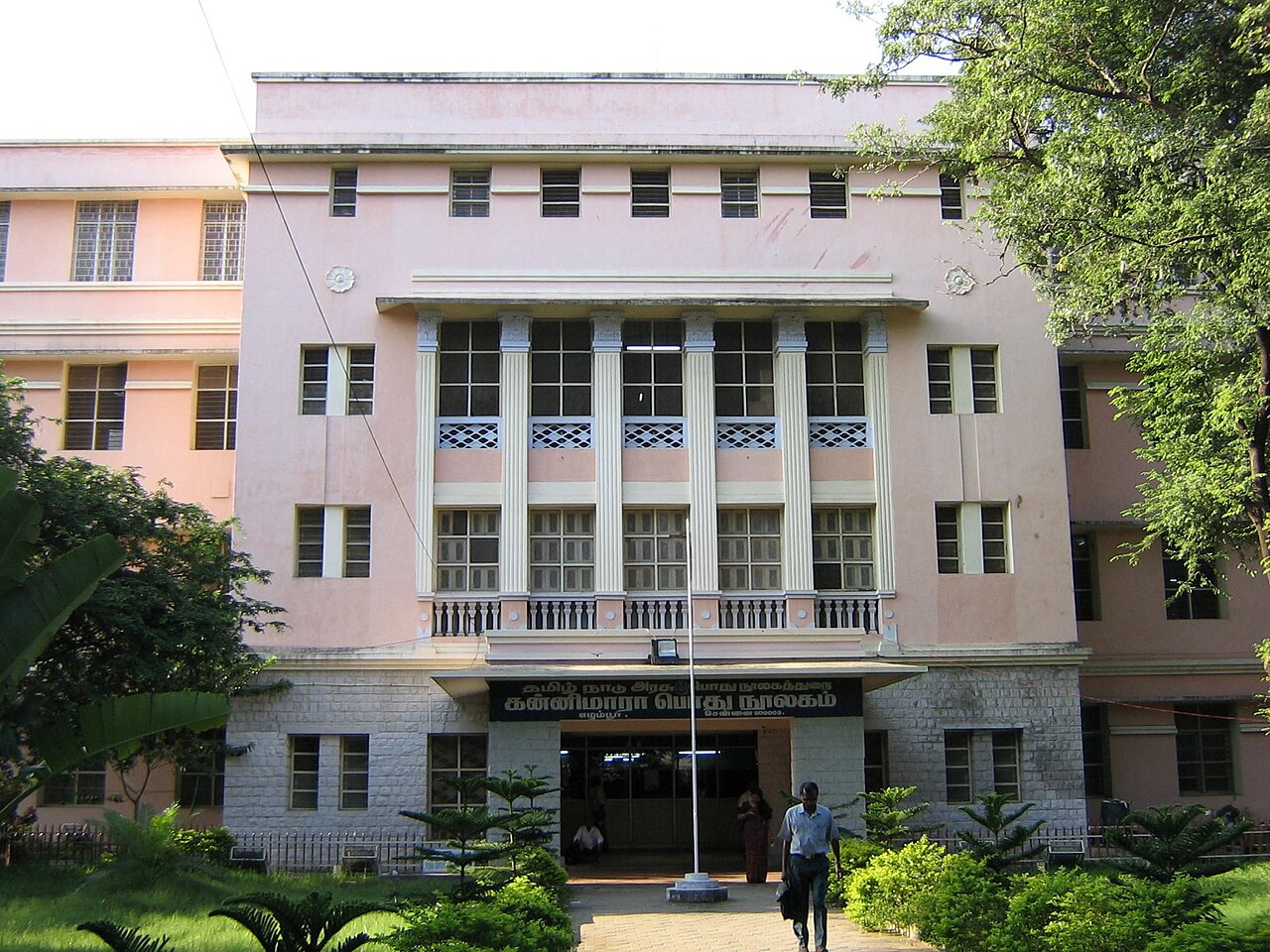
The Connemara Public Library is one of India’s great libraries, and one of Chennai’s most treasured heritage buildings. It stands inside the historic Pantheon Complex in Egmore, the same leafy campus that holds the Government Museum and the Museum Theatre, and it has occupied this spot since it was founded in 1896. The library takes its name from Lord Connemara, who served as Governor of Madras in the late nineteenth century and lent his support to its founding. More than a hundred and twenty five years on, it is still a working public library, open to readers and researchers, not a museum piece behind glass, and that is a large part of its charm.
A National Depository Library
What sets the Connemara apart from almost every other library in India is its status as a National Depository Library. It is one of only four such libraries in the country, alongside institutions in Kolkata, Mumbai and Delhi, and under the law governing delivery of books, publishers are required to send a copy of every book, newspaper and periodical published in India here. In practice, that means the Connemara has been building an unbroken archive of the nation’s printed output for well over a century. It is a quiet but genuinely important role, and one reason serious researchers, historians and students travel from across the country to use its reading rooms.
The heritage building and reading room
The building itself is one of the finest examples of Indo Saracenic architecture in Chennai, a style that blends British colonial planning with domes, arches and details drawn from Mughal and Dravidian design. The old reading room is the heart of it, a grand, airy hall with a high ornamented ceiling, tall teak galleries running around the upper level, touches of stained glass, and rosewood fittings that have been polished by generations of hands. It is the kind of room that makes you lower your voice without being asked to.
As the collection grew, a newer building was added alongside the original to house the expanding stock of books and journals. Today the library is really two structures working together, one for heritage and atmosphere, the other for storage and everyday use.
When you visit, look out for:
- The ornate ceiling and teak balconies of the old reading hall
- Stained glass details catching the Egmore light
- Rosewood furniture and fittings original to the building
- The Indo Saracenic facade, best appreciated from the museum campus gardens outside
The collection
The Connemara’s collection is vast by any measure, and it goes well beyond current reading material. Alongside a large general lending and reference collection, the library holds rare and old books, historic manuscripts and long runs of journals and newspapers going back decades, some of them difficult to find anywhere else in the country. Because of its depository status, it also functions as a kind of running record of Indian publishing, with new titles arriving continuously. For researchers this is a genuine resource, and for the casual visitor, it is simply worth knowing that the quiet shelves around you hold rare and often irreplaceable material.
Visiting: etiquette, entry and timings
The Connemara is a working library first and a heritage sight second, and it is worth visiting with that in mind. Keep your voice down, especially in the reading rooms, and expect the same hush you would offer any library. To enter, or to register as a reader, you will generally need to carry identification, and some sections, particularly rare book and manuscript areas, are restricted to members or researchers rather than open to casual browsing. Photography inside the heritage reading hall is often possible but may need permission from library staff, so it is best to ask before you start taking pictures.
Entry and reading are generally free, though rules and hours do shift from time to time, and the library is typically closed on public holidays and may have a weekly closed day as well. Because these details change, it is worth confirming current timings and entry rules locally, either by phone or with staff on arrival, rather than relying on anything printed online, including this guide.
How to get there
The Connemara sits right in the heart of Egmore, one of the most central and easily reached parts of Chennai. It shares its campus with the Government Museum and the Museum Theatre, so a visit to one naturally leads to the other, and many people combine both in a single outing. Egmore railway station is a short walk away, and Egmore metro station puts the whole complex within easy reach if you are travelling in from elsewhere in the city. Autos and cabs will know the museum campus by name, so getting here is rarely a problem.
Tips for your visit
- Pair your visit with the Government Museum next door, since both sit on the same campus and share the same unhurried, old Chennai atmosphere
- Carry a valid ID, in case you need to register or sign in at the entrance
- Ask before photographing the heritage reading hall, rather than assuming it is allowed
- Visit in the cooler morning hours, when the light through the stained glass is at its best and the reading rooms are calmer
- If the Connemara has whetted your appetite for more of the city’s landmarks, our wider guide to places to visit in Chennai is a good next stop
Few places in Chennai let you sit inside history quite like this. Whether you come to read, to research, or simply to admire the teak and stained glass of an old reading hall, the Connemara Public Library is worth the quiet hour it asks of you.