Guide details
Best time to visit
November to February, when the delta is cooler and drier
How to get there
Around 230 to 250 km south of Chennai, roughly 5 to 6 hours by train, road or bus
Highlights
Thillai Nataraja Temple, Chidambara Rahasyam, 108 karanas carvings, Natyanjali dance festival, Pichavaram mangroves
Good for
temple travellers, dance and heritage lovers, delta road trips, day and weekend trips
Price range
Rooms from about Rs 800 to Rs 3500 a night, meals Rs 80 to Rs 300
Some temples are known for their size, others for their age. Chidambaram is known for an idea. This small town in the Cuddalore district of Tamil Nadu holds the Thillai Nataraja Temple, where Shiva is worshipped as Nataraja, the cosmic dancer, and where one of the most quietly radical concepts in Hindu thought is built into the architecture itself. It sits a comfortable few hours south of Chennai, close enough for a long day trip and rewarding enough to justify a night or two.
We would gently suggest the second option. Chidambaram is not a place to rush. The temple asks for slow attention, the surrounding delta has more to offer than one shrine, and the mangroves at Pichavaram are close enough that skipping them feels like a waste. Here is how to get there and what to make of it.
Planning what to do once you arrive? Our full Chidambaram guide covers the main sights, where to stay and the best time to visit.
How to get to Chidambaram from Chennai
Chidambaram is roughly 230 to 250 km from Chennai, depending on the route, and none of the ways there are especially quick. Plan on around 5 to 6 hours whichever you choose.
The train is the easiest on the body. Chidambaram sits on the main line running south through Villupuram towards Mayiladuthurai and beyond, and several services stop here, including trains heading to Rameswaram and the deeper delta towns. Journey times run around 5 to 6 hours from Chennai Egmore, sometimes a little less on the faster services. Book ahead where you can, as reserved seating makes a long ride far more pleasant.
By road, you would take the East Coast Road or the NH road through Tindivanam and Villupuram, then south towards Cuddalore and Chidambaram. A private car or taxi gives you the freedom to break the trip, and the drive down the coast has its own appeal. Reckon on 5 to 6 hours with a stop, longer if you leave Chennai in the morning traffic.
Buses run frequently from Chennai’s Koyambedu terminus, both state and private operators, and are the cheapest option. They take a similar 5 to 6 hours. Overnight services exist if you want to arrive fresh for a morning at the temple.
The Thillai Nataraja Temple
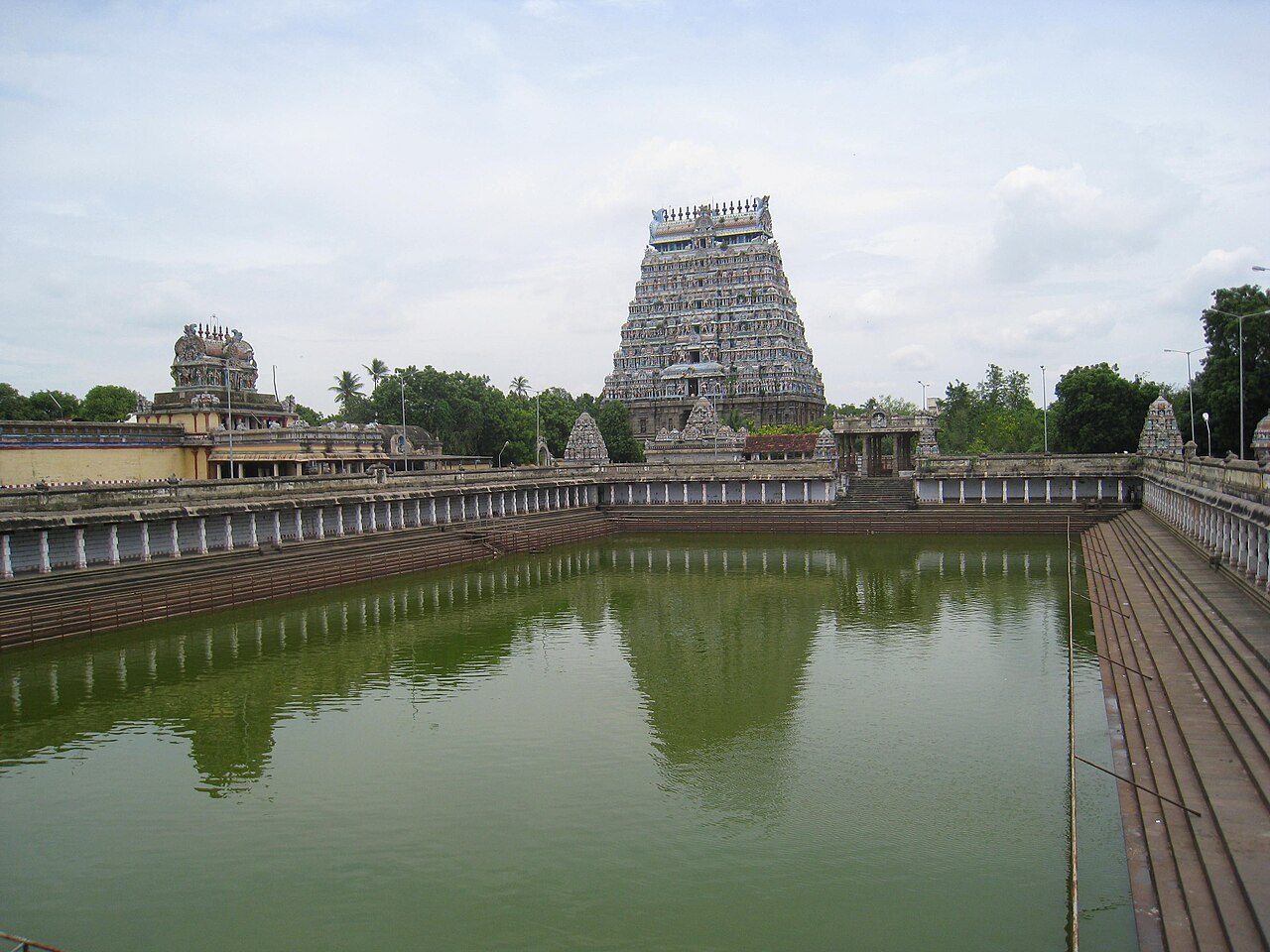
The Nataraja Temple is the reason most people come, and it earns its reputation. This is an ancient complex, expanded over centuries by the Chola kings and others, spread across a large walled site with tall gopurams marking the entrances. Its subject is Shiva as Nataraja, dancing the Ananda Tandava, the dance of bliss that is understood to set the rhythm of creation, preservation and dissolution. The famous bronze image of Nataraja in a ring of fire, so widely reproduced now, draws directly on this tradition.
The inner sanctum here is unusual. The roof over the central shrine, the Chit Sabha or hall of consciousness, is covered in gold plate, and the whole arrangement is treated as a hall for the divine dance rather than a conventional sealed sanctum. The temple is served by the Dikshitars, a hereditary community of priests who have looked after it for generations and who conduct its rituals in their own long established way. You will see them in the temple daily, and their role is central to how the place runs.
Take your time in the outer corridors and tanks before you reach the heart of it. The scale rewards a slow walk, and the atmosphere shifts as you move inward.
Chidambara Rahasyam and the dance connection
The idea we mentioned at the start lives in the sanctum. Near the main shrine is the Chidambara Rahasyam, the secret of Chidambaram. Where a worshipper might expect an image, there is instead a space, screened and garlanded, representing the formless divine, the akasha or ether element. The teaching is that the ultimate reality has no shape, and the temple points to it by showing, in effect, nothing to see. It is a strikingly abstract thing to build into stone and gold, and it gives the whole town its name and character.
The dance runs through the architecture too. Chidambaram is closely tied to Bharatanatyam, and the temple’s gopurams carry carved figures illustrating the 108 karanas, the basic units of movement set out in the classical text on dance and drama, the Natya Shastra. For anyone who practises or loves the form, standing beneath those carvings is a quiet thrill. The link between temple, dance and the cosmic dancer is not decorative here; it is the point.
The Natyanjali dance festival
If you can time it, the Natyanjali festival is the town at its most alive. Held around Maha Shivaratri, usually in February or March, it brings dancers from across the country to perform at the temple as an offering to Nataraja. Bharatanatyam leads, but other classical forms appear too, and the setting gives the performances a weight that a stage never quite matches. It is popular, so accommodation fills up, and you should book well ahead if the festival is your reason for going.
Pichavaram mangroves nearby
About 15 km east of Chidambaram, near the coast, lies Pichavaram, one of the largest mangrove forests in the country. It is a genuine change of pace from the temple, a maze of shallow waterways threading between dense mangrove islands. Boats take you through the channels, from short paddled trips to longer motorised ones, and the quiet green tunnels of overhanging roots are worth the detour. Go earlier in the day when the light is soft and the heat manageable, agree the boat rate before you set off, and carry water. It pairs naturally with the temple to make a full and varied day.
Where to eat and stay
Chidambaram is a temple town, not a resort, so keep expectations sensible and you will be happy. Food is the reliable pleasure. Simple vegetarian meals, the banana leaf thali, crisp dosas and strong filter coffee, are easy to find near the temple, and you can eat very well for around Rs 80 to Rs 300 a head. Annamalai University in the town keeps a steady student crowd, which helps the modest eateries stay busy and fresh.
For rooms, there are plenty of budget lodges close to the temple from around Rs 800 to Rs 1500, clean enough and convenient for early darshan. A handful of mid range hotels sit in the Rs 2000 to Rs 3500 bracket if you want air conditioning and a little more comfort. Some travellers prefer to base themselves in a larger delta town and visit, but staying in Chidambaram itself lets you reach the temple when it is calmest.
Best time to visit and what to combine
The cooler, drier months from November to February are the kindest for temple courtyards and mangrove boats alike. The delta gets hot and humid from March onward, and the north east monsoon can bring heavy rain around October and November, so check before you travel. Chidambaram rarely stands alone on an itinerary. It fits naturally into a delta temple trip, with towns such as Kumbakonam, Thanjavur and the coastal shrines within reach, and Pichavaram on the doorstep. Many people treat it as one stop on a slower loop through this temple rich stretch of Tamil Nadu.
Tips for the trip
- Dress modestly. Cover shoulders and knees, and be ready to remove footwear before entering. Men may be asked to remove their shirt in the inner areas, as is traditional in some Tamil temples.
- Mind the timings. Like many temples here, it closes for several hours in the middle of the day, so aim for the morning or evening sessions and check current hours locally.
- Respect photography rules. Inner sanctums are usually off limits to cameras and phones. Follow the signs and the priests’ guidance rather than assuming.
- Carry cash. Smaller lodges, eateries and boat operators often prefer it, and card and digital payment can be patchy.
- Go early for Pichavaram and settle the boat price before boarding.
Chidambaram works on you slowly. You come for a famous bronze and a golden roof, and you leave thinking about an empty screen and a dance that never stops. Give it a night rather than an afternoon, add the mangroves, and it becomes one of the more thoughtful stops the delta has to offer.