Guide details
Best time to visit
October to March is coolest and most comfortable. The daily Rahu Kalam pooja timing, which shifts by day of the week, is the key window many visitors plan around to see the milk abhishekam at the Rahu shrine, so check the local timing on the day. Summers are hot and humid.
How to get there
Thirunageswaram is roughly 280 to 300 km from Chennai, about 6 to 6.5 hours by road. It is only around 6 km from Kumbakonam, which is the practical base and has its own railway station, making it the natural railhead for the area. The nearest airport is Tiruchirappalli (Trichy), around 90 km away. From Kumbakonam it is a short auto or bus ride, and it is easily included as a stop on a Navagraha circuit drive.
Highlights
Naganathaswamy Temple, the Rahu Bhagavan shrine and its famous colour changing milk pooja, Rahu depicted with a human face, Piraisoodi Amman (Girigujambika) shrine, Chola era architecture and gopuram, Tevaram Padal Petra Sthalam status, naga worship traditions, Rahu Kalam pooja timings
Good for
Navagraha circuit pilgrims, devotees seeking Rahu dosham or Kala Sarpa dosham parihara, temple architecture and heritage enthusiasts, travellers basing themselves in Kumbakonam, short day trips from Kumbakonam
Price range
Thirunageswaram is a small town with limited tourist infrastructure. Most visitors stay in nearby Kumbakonam, about 6 km away, which has a range of hotels and lodges to suit different budgets. Food in Thirunageswaram itself is simple and pilgrim oriented; check current temple entry, pooja and abhishekam charges locally.
Thirunageswaram is a small temple town in the Cauvery delta of Tamil Nadu, barely 6 km from Kumbakonam, close enough that most visitors treat it as a half day excursion rather than a separate stop on their itinerary. The town’s identity is built almost entirely around one shrine: the Sri Naganathaswamy Temple, an ancient Shiva temple that is counted among the nine planetary temples of the Cauvery delta, and specifically the temple associated with Rahu, one of the two shadow points in traditional Hindu astronomy and astrology known as the lunar nodes. The temple is also a Padal Petra Sthalam, meaning it is one of the shrines sung about by the Nayanmar saints in the Tevaram hymns, which places its origins well before the Chola era structure that visitors see today.
The name Naganathaswamy translates loosely as lord of the serpents, and the temple’s own tradition explains why. According to local belief, the presiding Shiva lingam here was worshipped by nagas, serpent beings, among them Adisesha, Dakshan and Karkotakan, said to have performed penance at this spot. That serpent association runs through the entire site, from the temple’s name to its strong connection with naga worship, and it sits naturally alongside the temple’s better known role as the seat of Rahu, since Rahu himself is traditionally depicted in serpent form elsewhere in Hindu iconography.
The Rahu Shrine and the Colour Changing Milk Tradition
What draws most visitors to Thirunageswaram, though, is not the main sanctum but a separate shrine within the complex dedicated to Rahu Bhagavan. Two things make this shrine unusual. First, Rahu is shown here with a human face and torso rather than the serpent hood he is usually given in Hindu iconography elsewhere, a detail that priests and locals will point out if asked. Second, and more famously, is what is widely reported to happen during the daily Rahu Kalam pooja, the ritual conducted at the specific time slot each day traditionally associated with Rahu. As milk is poured over the deity during this abhishekam, it is commonly observed by those present to change colour, taking on a bluish or violet tinge before settling back to white. This is one of the most talked about traditions anywhere on the Navagraha circuit, and it is the reason the shrine draws a steady stream of devotees and curious visitors who plan their arrival specifically to coincide with Rahu Kalam. Whatever explanation one prefers for the phenomenon, it is described here as it is experienced and reported by pilgrims, a widely observed part of temple practice rather than a claim this guide makes on its own authority. Visitors are welcome to watch respectfully, and photography rules should be checked with temple staff on the day.
Rahu, Parihara and Belief
Because Thirunageswaram is regarded as Rahu’s temple within the Navagraha circuit, it attracts a particular category of pilgrim: those who, on the advice of an astrologer or family tradition, believe that Rahu is unfavourably placed in their horoscope. In Hindu astrological belief, an afflicted Rahu is associated with conditions such as Rahu dosham, Kala Sarpa dosham or Naga dosham, and is traditionally linked by believers to delays in marriage, difficulties with progeny, or obstacles in career and decision making. Devotees who hold these beliefs come to Thirunageswaram to perform parihara, remedial worship intended to ease Rahu’s influence, often timed deliberately around the daily Rahu Kalam. This guide describes these practices as they exist within Hindu devotional tradition and as matters of personal faith, not as an endorsement of astrology as a literal or scientific claim. The temple’s association with naga worship reinforces this side of its identity too, since snake worship in Tamil Nadu has long been connected with fertility, protection and the easing of inherited or planetary afflictions in popular belief. Visitors who are not participating in these rituals are still welcome to observe the temple’s atmosphere, which on any given day mixes ordinary darshan with visibly earnest, personal devotion, and it is worth being quietly respectful around those clearly there for parihara rather than sightseeing.
Inside the Temple: Naganathaswamy and Piraisoodi Amman
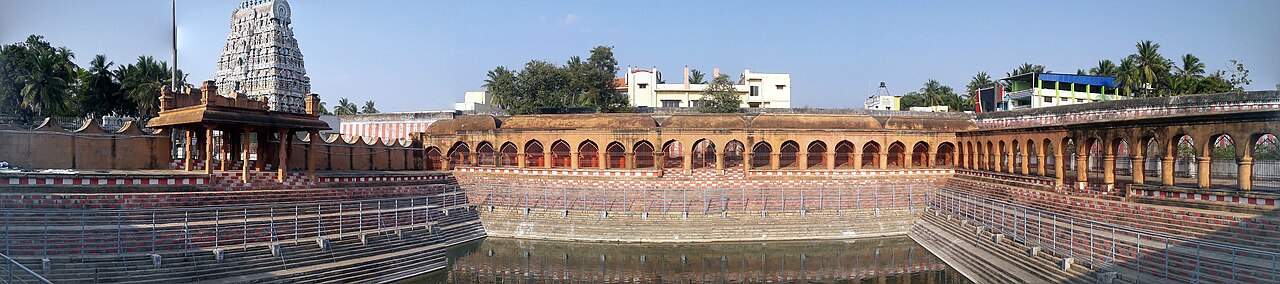
The temple itself is a fairly compact but architecturally rich complex, with origins going back to the Chola period and additions made over subsequent centuries. The main sanctum houses Naganathaswamy, a form of Shiva, while a separate and architecturally notable shrine within the same complex is dedicated to the goddess, worshipped here as Piraisoodi Amman, also known as Girigujambika. Her shrine is often singled out by visitors and art historians alike for its craftsmanship and is treated as a highlight in its own right rather than a secondary stop. The temple has a gopuram, several mandapams and corridors typical of a mature Chola era temple, and the pace here tends to be unhurried compared with the far busier temples of central Kumbakonam, which makes it a pleasant place to linger over the architecture as well as the ritual life of the shrine.
Thirunageswaram on the Navagraha Circuit
Thirunageswaram is one of nine Navagraha temples scattered across the villages of the Cauvery delta, each associated with one of the nine celestial bodies of traditional Hindu astrology. Of the nine, Thirunageswaram is among the easiest to reach, thanks almost entirely to its proximity to Kumbakonam, only about 6 km away. Pilgrims doing the full circuit typically use Kumbakonam as their base and fan out to the individual temples by car or auto, and Thirunageswaram is often paired in a single outing with Suryanar Kovil, the Sun temple, along with one or two of the other delta shrines. Because it is so close to town, many visitors treat it as a natural first or last stop on the circuit rather than a dedicated half day trip of its own.
Where to Stay and Eat
Thirunageswaram itself is a small town with limited tourist infrastructure, so almost everyone visiting stays in Kumbakonam, 6 km away, which has a good range of hotels and lodges to suit different budgets, along with the transport connections needed for the wider delta temple circuit. Food options in Thirunageswaram itself are modest, generally simple South Indian vegetarian meals and snacks aimed at pilgrims, so most visitors eat in Kumbakonam before or after the temple visit rather than expecting a proper restaurant scene in the town itself.
Best Time to Visit
The cooler months from October to March are generally the most comfortable time to visit, as the Cauvery delta gets uncomfortably hot and humid during the summer months. Beyond the season, though, the more important timing consideration is the daily Rahu Kalam, the specific time period observed each day that shifts depending on the day of the week. Many visitors deliberately plan their arrival around this window in order to witness the milk abhishekam at the Rahu shrine, so it is worth checking the day’s Rahu Kalam timing locally, either with the temple or with a local guide, rather than assuming a fixed hour. The temple also observes its own festival calendar through the year, and visiting during a festival period brings a livelier, more crowded atmosphere than an ordinary weekday.
Getting There
Thirunageswaram is roughly 280 to 300 km from Chennai, a drive of around 6 to 6.5 hours depending on route and traffic. The practical base for most travellers is Kumbakonam, only about 6 km away and home to its own railway station, making it the natural railhead for anyone arriving by train rather than road. The nearest airport is Tiruchirappalli, Trichy, around 90 km away, which has domestic and some international connections. From Kumbakonam, Thirunageswaram is a short and easy trip by auto rickshaw or local bus, and it is commonly included as a stop for travellers doing the Navagraha circuit by hired car.
A Few Practical Tips
- Try to time your visit around the day’s Rahu Kalam pooja if you want to see the milk abhishekam at the Rahu shrine; ask locally for that day’s timing since it changes through the week.
- Dress modestly and be prepared to remove footwear before entering the temple, as is standard at Tamil Nadu temples.
- Given the short distance, Thirunageswaram pairs easily with a visit to Kumbakonam’s own temples on the same day.
- Treat the astrological beliefs associated with Rahu as a matter of personal faith and tradition, and be considerate around devotees performing parihara.
- Carry water and expect limited shade while queuing, particularly outside the cooler months.
Thirunageswaram may be a small town, but its temple punches well above its size within the Navagraha circuit. Between the ancient Tevaram associations, the finely worked shrine of Piraisoodi Amman, and above all the famous colour changing milk tradition at the Rahu shrine, it offers a genuinely distinctive stop on any Cauvery delta temple trip. Paired with its closeness to Kumbakonam, that makes Thirunageswaram one of the most accessible and atmospheric of the nine planetary temples, and an easy, rewarding addition to any Kumbakonam itinerary.