Guide details
Best time to visit
October to March is the most comfortable period, with cooler mornings and evenings for temple visits. Wednesdays draw more devotees, since the day is traditionally associated with Budhan (Mercury). Summer months from April to June are hot and best avoided for a full day of temple hopping. Check locally for festival dates before planning a visit.
How to get there
Thiruvenkadu is roughly 270 to 300 km from Chennai, about 6 to 6.5 hours by road via the East Coast Road or the Chennai-Trichy highway through Kumbakonam and Mayiladuthurai. The nearest railheads are Sirkazhi, about 10 km away, and Mayiladuthurai, both connected to major towns in the region. The nearest airport is Tiruchirappalli (Trichy), with Puducherry also an option. Most visitors reach Thiruvenkadu by car or hired taxi as one stop on the wider Navagraha temple circuit rather than as a standalone trip.
Highlights
Swetharanyeswarar Shiva temple, Aghoramurthy shrine, Budhan (Mercury) Navagraha sanctum, Brahmavidyanayaki shrine, sacred temple tanks, Chola-era architecture, Tevaram hymns, historic Thiruvenkadu bronzes
Good for
Devotees performing Navagraha and Budhan parihara, pilgrims on the nine-temple delta circuit, students and professionals seeking blessings for learning and communication, travellers interested in Chola temple architecture and Tamil Nadu’s temple towns
Price range
Thiruvenkadu is a small temple village without dedicated tourist lodging or restaurants of note. Most visitors base themselves in Kumbakonam, Mayiladuthurai or Sirkazhi, where a range of budget to mid-range hotels is available, and visit Thiruvenkadu as a day stop. Temple entry itself is generally free, though specific rituals may carry charges; check locally for current details rather than relying on any fixed figure.
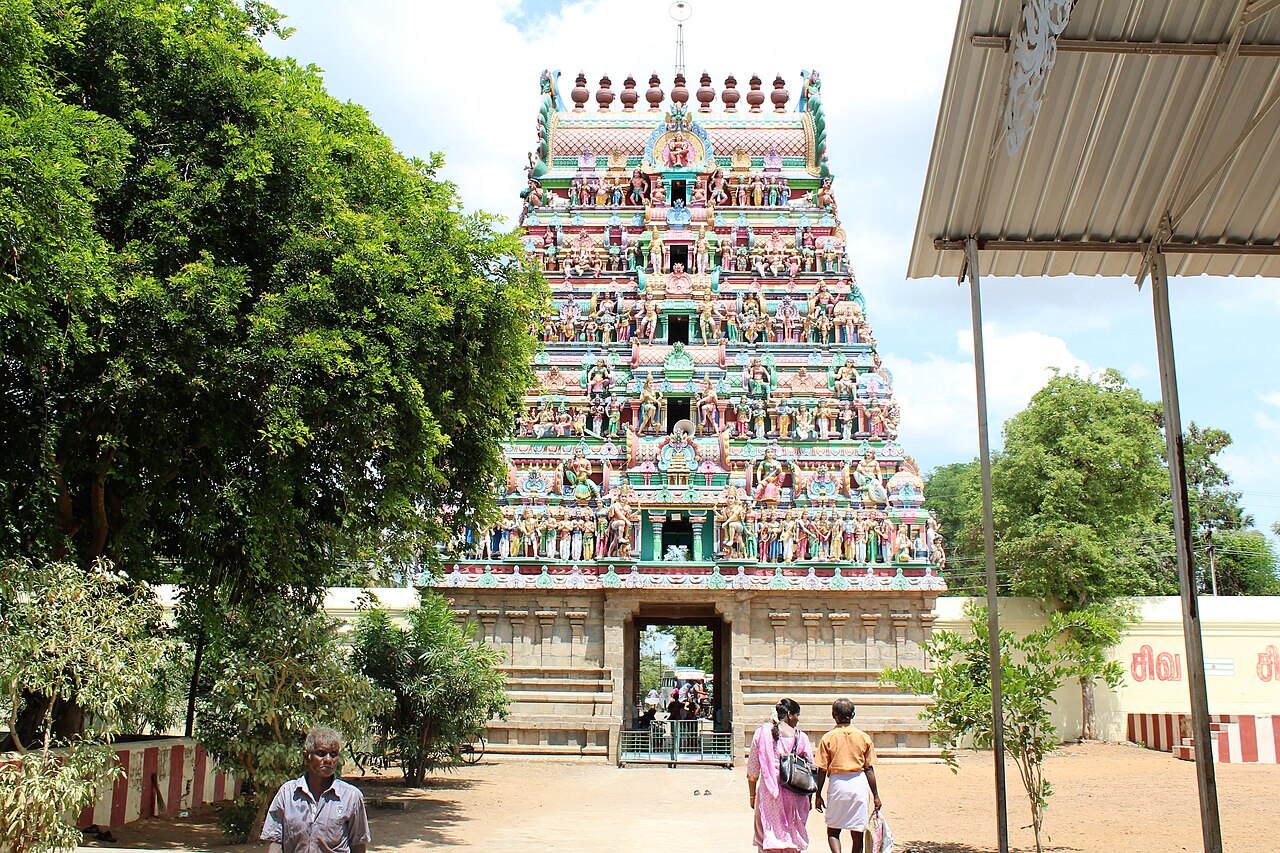
Tucked away in the fertile Cauvery delta of Mayiladuthurai district, not far from the coast and the temple town of Sirkazhi, Thiruvenkadu is one of those places that rewards travellers willing to step off the more obvious tourist trail. It is an unassuming village on the map, but in Tamil Nadu’s temple geography it holds an important place as the seat of the Swetharanyeswarar Temple, dedicated to Lord Shiva as Swetharanyeswarar, the Lord of the White Forest. Thiruvenkadu is one of the celebrated Padal Petra Sthalams, temples sung about by the Nayanmar saints in the Tevaram hymns, and it is also the Navagraha shrine associated with Budhan, the planet Mercury. For pilgrims tracing the nine planetary temples of the delta, and for anyone curious about the Chola-era temple towns of this region, Thiruvenkadu is a quietly compelling stop.
The town’s antiquity is easy to sense the moment you step through the temple gateway. Unlike some of the larger, more commercialised shrines of Tamil Nadu, Thiruvenkadu retains a settled, unhurried air, with stone corridors and tank steps that have seen many centuries of worship.
The Legend of the White Forest
The name Thiruvenkadu comes from the Tamil words for sacred and white forest, a reference to the dense white-flowered forest that is said to have once covered this area. Local tradition holds that this was a place where Shiva revealed himself in a fierce and protective form to subdue a demon associated with an elephant, a story that gave rise to the temple’s most distinctive shrine, that of Aghoramurthy. Aghoramurthy represents Shiva’s terrifying yet ultimately protective aspect, one that destroys ignorance, fear and evil. This shrine is considered especially powerful by devotees, and worship here is approached with particular reverence. Many who visit Thiruvenkadu do so specifically to seek the blessings of Aghoramurthy, believing that this form of Shiva offers relief from difficult periods in life, though as with all such beliefs, this is a matter of personal faith rather than anything that can be verified, and visitors are best served by treating it with the same respect one would extend to any long-standing tradition.
Inside the Swetharanyeswarar Temple
The temple’s presiding deity is Swetharanyeswarar, worshipped alongside the goddess Brahmavidyanayaki, whose name suggests an association with sacred knowledge and wisdom. The complex has been rebuilt and expanded over centuries, with much of its present stone structure attributed to the Chola period, when this region flourished as a centre of temple building and bronze casting. Thiruvenkadu is, in fact, closely linked with a set of exquisite Chola bronzes, including a celebrated Ardhanarishvara and a Bhairava image, pieces now regarded as masterworks of South Indian bronze art and preserved in museum collections. Even without seeing those original bronzes in situ, walking through the temple gives a strong sense of the artistic and devotional world that produced them.
The temple is also known for its sacred tanks, or theerthams, a feature that adds to its scenic and spiritual character. Devotees traditionally associate these tanks with the sun, moon and fire, and bathing in or visiting them is considered part of a complete pilgrimage to the temple. Together with the Aghoramurthy sanctum and the Navagraha shrine for Budhan, these tanks make Thiruvenkadu a temple of layered significance rather than a single-purpose shrine.
Budhan: The Mercury Shrine
Within the Navagraha framework of Tamil Nadu’s temple tradition, each of the nine celestial bodies recognised in Hindu astrology has a dedicated shrine somewhere in the Cauvery delta, and Thiruvenkadu is the seat of Budhan, or Mercury. In traditional belief, Mercury governs intellect, learning, speech, communication and commerce, and devotees who feel that Mercury is unfavourably placed in their horoscope, or who simply wish for its blessings, come here to perform parihara, or corrective worship. Students preparing for examinations, people starting new ventures in trade or business, and those whose work depends on clear communication are commonly seen among the visitors to this shrine. Wednesdays, traditionally linked with Mercury, tend to be busier than other days of the week. It is worth stating plainly that these are devotional practices rooted in long-standing Hindu tradition, and this article treats them as a matter of faith and cultural heritage rather than as claims about how planets literally affect human affairs.
Thiruvenkadu on the Navagraha Circuit
Thiruvenkadu rarely features as a solo destination. It is almost always visited as part of the wider Navagraha temples circuit, the sequence of nine planetary shrines scattered across the delta villages around Kumbakonam, Mayiladuthurai and Sirkazhi. Nearby stops on this circuit include Vaitheeswaran Koil, associated with Mars, along with temples near Poompuhar and Keezhperumpallam, the seat of Ketu. Because these temples are spread across a fairly compact but rural stretch of countryside, most pilgrims hire a car and driver for the day, moving between shrines in a planned sequence rather than attempting to navigate independently. Many use Kumbakonam as their base for the whole circuit, given its central location and wider choice of accommodation, though Mayiladuthurai and Sirkazhi work equally well for those approaching from the coastal side.
Where to Stay and Eat
Thiruvenkadu itself is a small temple village, and it does not have dedicated tourist hotels or restaurants geared towards visitors. This is entirely normal for temples on the Navagraha circuit, most of which sit in quiet rural settings rather than towns built up for tourism. Simple South Indian meals, typically vegetarian, can usually be found in small eateries near the temple, but options are limited and basic. For an overnight stay, Kumbakonam offers the widest range of hotels and guesthouses and functions as the natural hub for exploring the delta temples. Mayiladuthurai and Sirkazhi are closer alternatives with their own, smaller selection of places to stay. Most travellers plan Thiruvenkadu as a stop within a single day’s temple run rather than an overnight destination in itself.
Best Time to Visit
The cooler months from October through March are the most pleasant time to explore Thiruvenkadu and the surrounding delta temples, since much of the visit involves walking on open stone courtyards that can become uncomfortably hot later in the day during summer. April to June brings high heat and humidity typical of the Tamil Nadu plains, which can make a long day of temple visits tiring. Wednesdays see a noticeably higher footfall given the day’s association with Mercury, so those who prefer a quieter visit may wish to plan around that. As with any active temple, it is sensible to check locally for festival dates and any special worship days before setting out, since timings and rituals can vary through the year.
Getting to Thiruvenkadu
Thiruvenkadu lies roughly 270 to 300 km from Chennai, a drive of about six to six and a half hours depending on the route and traffic through the delta towns. The nearest railway stations are at Sirkazhi, about 10 km away, and at Mayiladuthurai, both of which connect to larger towns in the region. The nearest airport is at Tiruchirappalli, with Puducherry also serving as a reasonable alternative for those approaching from the coast. In practice, very few travellers arrive at Thiruvenkadu by public transport alone. The temple’s rural setting, combined with its place within the nine-temple Navagraha circuit, makes travelling by car, whether self-driven or with a hired driver, by far the most practical option.
Practical Tips
- Plan Thiruvenkadu as one stop within a Navagraha circuit day trip rather than a separate excursion, and consider hiring a car and driver familiar with the route between the nine temples.
- Dress modestly and be prepared to remove footwear before entering the temple premises, as is customary at all active Tamil Nadu temples.
- The Aghoramurthy shrine follows its own customs around worship, and some rituals may have specific days or conditions; it is best to check locally on arrival rather than assume general temple timings apply.
- Carry water and sun protection if visiting outside the cooler months, since courtyards and walkways are largely uncovered stone.
- Approach the astrological and parihara traditions associated with Budhan worship as a matter of personal or cultural belief, and be respectful of devotees engaged in these rituals even if you are visiting primarily as a traveller.
Thiruvenkadu is not a grand or heavily promoted destination, but that is part of its appeal. It is an ancient, atmospheric delta temple town, home to the Mercury shrine of the Navagraha circuit and to the formidable Aghoramurthy sanctum, and it offers a genuine sense of the Cauvery delta’s deep temple heritage. Whether you arrive as a devotee seeking Budhan’s blessings or as a traveller drawn to Chola-era architecture and the quiet rhythms of a working temple village, Thiruvenkadu is well worth the detour on any journey through Tamil Nadu’s temple country.