Guide details
Best time to visit
October to June is generally pleasant. April to June is peak season with warm days, cool evenings and the Summer Festival, so it gets busy. The monsoon months bring mist, waterfalls and greenery but the ghat road can be slippery. Evenings are cool year round, so carry a light jacket whenever you visit.
How to get there
Yercaud is roughly 360 to 370 km from Chennai, about 6 to 7 hours by road. The nearest railhead and airport is Salem, around 30 km away, from where a ghat road with about 20 hairpin bends climbs up to the hill station. It is considerably closer to Chennai than Ooty or Kodaikanal, making it a good option for a shorter break.
Highlights
Yercaud Lake, Pagoda Point, Ladies Seat, Gents Seat, Children’s Seat, Arthur’s Seat, Shevaroyan Temple, Killiyur Falls, Anna Park and rose garden, Bear’s Cave, Silk Farm, Deer Park, coffee and spice estates, Yercaud Summer Festival
Good for
couples and families wanting a quiet weekend, first time hill station visitors, nature and coffee lovers, budget travellers, people short on time who still want a proper hill escape from Chennai
Price range
Budget lodges and homestays in town are generally inexpensive. Mid range hotels with lake or valley views cost a bit more, especially in season. A handful of heritage bungalows, plantation stays and resorts sit at the upscale end. Prices rise noticeably in summer and on long weekends, so it helps to book ahead.
Tucked away in the Shevaroy Hills of the Eastern Ghats, in Salem district, Yercaud is the hill station that Tamil Nadu tends to keep for itself. Sitting at roughly 1500 metres, it is smaller, quieter and far less commercial than Ooty or Kodaikanal, which is exactly why so many people who have visited both keep coming back to Yercaud instead. It has long been nicknamed the Jewel of the South, and some travellers fondly call it the poor man’s Ooty, gently put, meaning it delivers much of the same cool air, mist and greenery at a fraction of the crowd and the cost. This is coffee, orange and spice country, with plantations wrapped around the slopes and a slow, unhurried pace that makes it a genuinely restful place to spend a few days.
Unlike Ooty and Kodaikanal, which sit in the Western Ghats, Yercaud belongs to the Eastern Ghats, a slightly lower and gentler range that gives it a different character altogether. The name itself is thought to come from the local words for lake and forest, a fitting description given that the town wraps around a pretty stretch of water known as the Emerald Lake. Coffee estates cover much of the surrounding hillsides, alongside jackfruit trees, orange orchards and pepper vines, and the air often carries a faint smell of spice and damp earth. Yercaud is cooler than the plains of Salem below, but it does not get quite as cold or as misty as the higher stations further west, which makes it comfortable to explore on foot for most of the year. Getting up here from Salem town involves a winding ghat road with around 20 hairpin bends, a short but memorable climb that announces the change in altitude almost immediately.
Yercaud Lake, the heart of the town
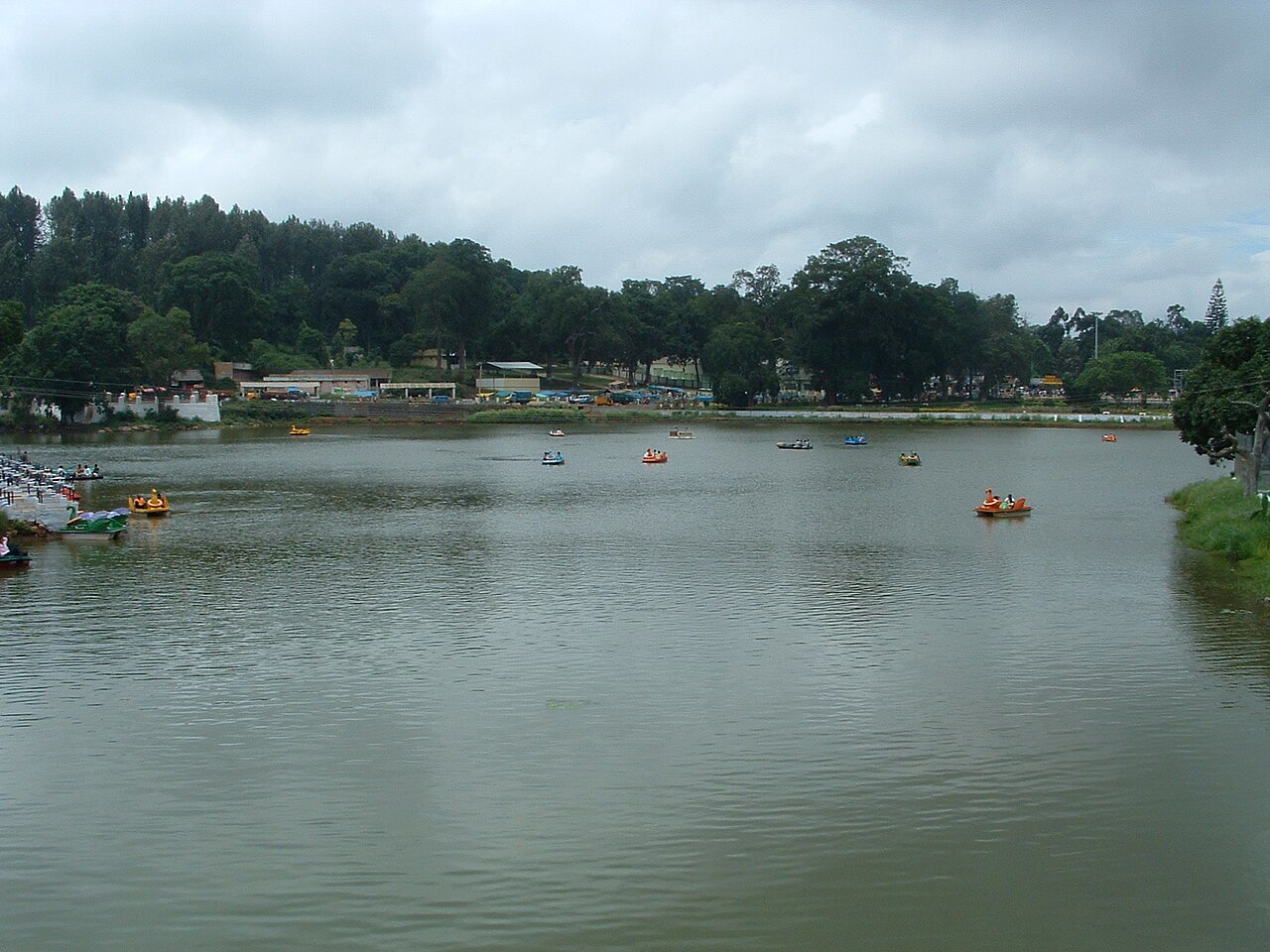
Everything in Yercaud radiates outward from the lake, often called the Emerald Lake for its deep green colour. There is a small, well kept park along its edge where families stroll in the evenings, and pedal or row boats are usually available for anyone who fancies a slow circuit across the water. It is not a grand attraction in itself, more of a gentle, pretty centrepiece, but it sets the tone for the whole town: unhurried, a little old fashioned, and easy to like.
Viewpoints for the plains below
Yercaud’s real draw is its string of viewpoints, each looking out over the plains of Salem district in a different direction. Pagoda Point, also called Pyramid Point, is the most popular spot for sunrise and sunset, with layers of hills fading into haze on a clear day. Ladies Seat and Gents Seat offer similarly wide views and are popular stops on a half day loop around town, while Children’s Seat and Arthur’s Seat add a couple of quieter alternatives away from the busier crowds. Several of these points have a telescope house nearby where, for a small fee, you can get a closer look at the valley and the villages scattered across it. None of these spots require much effort to reach, and stringing a handful of them together makes for a relaxed half day out.
Shevaroyan Temple
Perched on the highest peak in the range, the Shevaroyan Temple is dedicated to the local deity believed to watch over the hills, and it draws a steady stream of pilgrims through the year. The temple hosts an annual festival that pulls in visitors from across the district, with the hillside coming alive for a few days of celebration. There is also a small cave associated with the temple, adding a bit of local legend to what is otherwise a fairly simple, atmospheric hilltop shrine with commanding views in every direction.
Killiyur Falls
Not far from Ladies Seat, a path leads down towards Killiyur Falls, a waterfall that tumbles through the forest below the town. It is at its best just after the monsoon, when the water is full and the surrounding greenery is at its lushest, so time a visit accordingly if this is a priority. In peak summer the flow can thin out considerably or even dry up altogether, so it is worth checking conditions locally before making the walk down, since the steps can also be a little steep and uneven.
Gardens and smaller attractions
Anna Park, along with the rose garden and a small orchidarium near the lake, gives Yercaud a burst of colour and is an easy, pleasant stop for anyone travelling with children or older relatives. A little further out, Bear’s Cave, the Government Silk Farm and Deer Park round out the list of smaller sights around town. None of these are must see landmarks on their own, but they add up nicely into a couple of relaxed days of sightseeing without ever feeling like a rushed checklist.
Coffee, spice and plantation life
This is really where Yercaud earns its reputation. Coffee estates spread across much of the hillside, and several offer plantation walks where you can wander among the coffee bushes, pepper vines and fruit trees with someone from the estate explaining how it all comes together. It is a genuinely nice way to spend a morning, slow and shaded and quite different from ticking off viewpoints. Local shops in town sell home made chocolate, roasted coffee, fresh oranges in season, honey and an assortment of spices, and picking some up to take home is practically a rite of passage for anyone who visits.
The Yercaud Summer Festival
Usually held in May, the Yercaud Summer Festival is the busiest and liveliest time to be in town, with a flower show, a boat race on the lake and a general festive buzz that draws visitors from across Tamil Nadu. It is a good time to see the town at its most colourful, though it is also when hotels fill up fastest and the roads and viewpoints get noticeably more crowded than usual.
A brief colonial past
Yercaud’s development as a hill station owes a good deal to the British, who planted much of the coffee that still defines the landscape today, and to missionary institutions that followed. Montfort School, one of the older educational institutions in the area, is a quiet reminder of this history, and a handful of colonial era bungalows and churches dotted around town add a bit of period charm to an otherwise low key hill station.
Where to stay
Accommodation in Yercaud ranges from simple budget lodges in the town centre to mid range hotels, many with decent views over the lake or the valley. For something a bit different, a few heritage bungalows, plantation stays and small resorts scattered around the coffee estates offer a quieter, more immersive stay away from the main road. Whatever your budget, it is worth booking ahead if you are travelling in summer or over a long weekend, since the town’s limited number of rooms fills up quickly during peak periods.
Best time to visit
Broadly speaking, October through to June is a pleasant time to be in Yercaud, with comfortable days and cool nights throughout. April to June counts as peak season, coinciding with the Summer Festival, so expect more visitors, brighter flowers and busier roads. The monsoon months bring their own appeal, with mist rolling through the estates and everything turning a deep, saturated green, though the ghat road can get slippery and some viewpoints may be shrouded in cloud. Whatever the season, evenings stay cool, so it is worth packing a light jacket or sweater even in the height of summer.
Getting there
Yercaud sits roughly 360 to 370 km from Chennai, which usually works out to about 6 to 7 hours on the road depending on traffic and where you stop along the way. The nearest railhead and airport is at Salem, from where the final stretch climbs up through the hairpin bends of the ghat road to reach the town. For a full breakdown of routes, stops and travel times, our Chennai to Yercaud guide covers the journey in detail. One of Yercaud’s biggest draws is simply how much closer it is than Ooty or Kodaikanal, which makes it a realistic option for a short weekend trip rather than a full week away. If you are weighing up options, our guide to hill stations near Chennai is a useful place to compare distances and decide which one suits your plans best.
A few practical tips
The ghat road up from Salem has a good number of hairpin bends, so anyone prone to car sickness should plan accordingly, perhaps with a light meal beforehand and a window seat. Some of the quieter spots, like the walk down to Killiyur Falls, are easier with a local guide or at least clear directions, since paths are not always well marked. Yercaud is a low key, unhurried town by design, so it rewards visitors who slow down and match its pace rather than trying to rush through a long list of sights. Weekends and the summer season bring noticeably more visitors, so if you prefer a quieter experience, weekdays outside the peak months are the way to go. Finally, carry some cash, since small vendors, roadside stalls and plantation shops do not always accept cards.
Yercaud is not trying to compete with Ooty’s scale or Kodaikanal’s polish, and that is really the point. It is a smaller, gentler hill station that rewards a slower, quieter visit, whether that means a lazy walk among coffee bushes, an evening by the lake, or simply sitting at one of its viewpoints and watching the plains fade into the distance. For anyone who wants the cool air and green hills of a Tamil Nadu hill station without the crowds and queues that come with the bigger names, Yercaud is well worth the detour.