Guide details
Best time to visit
November to February, sometimes stretching into March, depending on the monsoon; avoid the summer months when the tank is low and the birds have left
How to get there
75 to 90 km south west of Chennai via GST Road towards Chengalpattu, then inland to Maduranthakam; about 2 to 2.5 hours by car, or bus to Maduranthakam or Chengalpattu with a local connection
Highlights
Nesting painted storks, pelicans, egrets, herons, cormorants and open-billed storks, one of India\u2019s oldest protected bird sanctuaries, watchtower and bund walkway views, over 200 years of village-led bird protection
Good for
birdwatchers, families, nature photographers, weekend day trippers from Chennai
Entry
Modest entry ticket, generally in the range of Rs 25 to Rs 50 per person, with a small extra charge for cameras; always confirm current rates at the counter
There are not many places left where you can watch a shallow village tank fill up with thousands of nesting birds and know that the local community has been protecting that exact scene for well over two hundred years. Vedanthangal Bird Sanctuary is one of those places, and it remains one of the most rewarding half day trips out of Chennai for anyone who enjoys watching wildlife rather than just walking past it.
It is a small, unglamorous sort of sanctuary, no safari jeeps, no big infrastructure, just a tank, a bund, some old trees and, in season, an astonishing number of birds. That simplicity is exactly why it works. Get the timing right and you will understand why bird lovers keep coming back year after year.
About Vedanthangal Bird Sanctuary
Vedanthangal sits in Chengalpattu district, close to the town of Maduranthakam, and is widely considered one of the oldest bird sanctuaries in India. Villagers here have protected the nesting birds since the late eighteenth century, long before conservation was a formal idea anywhere in the country, and the site was officially notified as a sanctuary in the early twentieth century. That history matters, because it explains why the birds keep returning to the same trees season after season, largely undisturbed.
The sanctuary itself is compact, centred on a shallow irrigation tank that also serves the surrounding farmland. Around the water are stands of barringtonia and other trees, and it is in these trees, growing right out over the water, that the birds build their nests. In peak season the branches are so thick with birds that from a distance the trees can look like they are covered in white and grey blossom.
The birds
Vedanthangal is not just a place where birds pass through, it is a genuine breeding and nesting ground, which is what makes it special. Pairs arrive, build nests, raise chicks, and the whole tank becomes a working nursery for several weeks. The variety and sheer number of birds packed into a relatively small area is the main draw.
Species you can expect to see in season include:
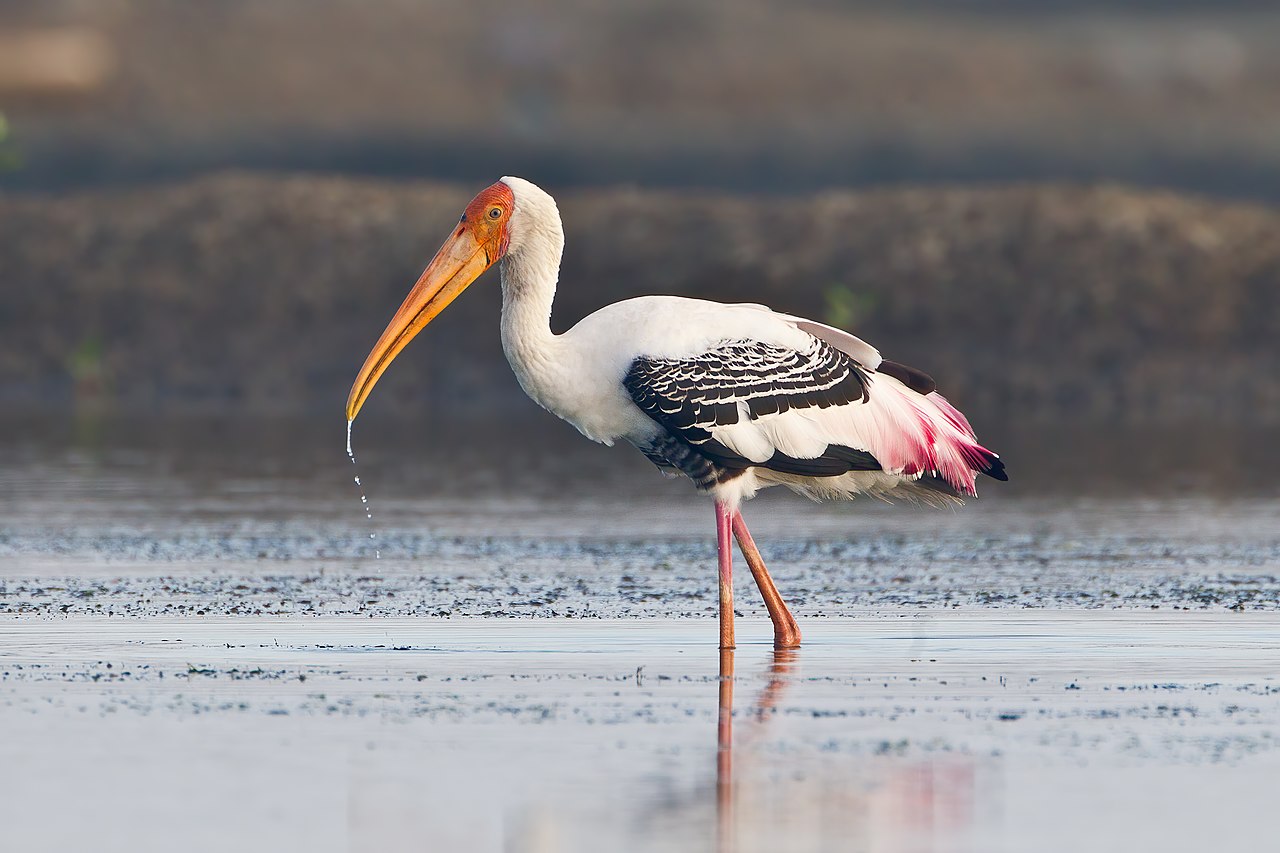
- Painted storks, usually the star attraction, nesting in large numbers
- Spot billed pelicans, sometimes simply called grey pelicans
- Little and large egrets
- Grey and purple herons
- Little cormorants and Indian cormorants
- Glossy and white ibises
- Asian open billed storks
- Spoonbills
- Assorted ducks, coots and waders around the fringes of the tank
Even if you are not the sort of person who can identify every species on sight, the sound and movement of a tank full of nesting birds is something you feel rather than study. Bring binoculars if you have them, the birds nest at a comfortable distance from the bund, but you will see far more detail with a bit of magnification.
When to go: the season is everything
This is the single most important thing to know before you plan a trip to Vedanthangal. The sanctuary is essentially a seasonal spectacle. Migratory and breeding water birds arrive roughly from November through to February, sometimes stretching into March depending on how the north east monsoon has behaved that year. During this window the tank is full, the trees are busy with nests, and there can be thousands of birds present at once.
Outside that window, particularly through the summer months, there is very little reason to visit. The migratory birds have left, the tank can run low or dry, and what you will find instead is a quiet, largely empty stretch of water. We say this plainly because it is easy to plan a trip around a free weekend rather than around the birds, and that is the one mistake that leads to disappointment here.
Because the season depends on the monsoon and can shift a little from year to year, it is worth calling ahead or checking recent visitor reports before you set off, especially if you are travelling early in the season in November or late in the season around March, to confirm the birds have actually arrived and are still around.
How to get there from Chennai
Vedanthangal is roughly 75 to 90 km south west of Chennai, which usually works out to about 2 to 2.5 hours by road, depending on traffic and where in the city you start from. The most straightforward route is along GST Road towards Chengalpattu, then a turn inland towards Maduranthakam and on to the sanctuary itself.
Driving is by far the easiest way to get there, whether self drive or with a hired car and driver, since it lets you set your own pace and leave early to catch the birds at their most active. If you are relying on public transport, buses run from Chennai towards Maduranthakam or Chengalpattu, from where you will need a local auto or shared transport to cover the last stretch to the sanctuary.
Either way, this is a genuine day trip from Chennai, and for keen birdwatchers it also works well as a half day outing if you leave very early and head back by late morning.
Timings, tickets and facilities
Vedanthangal is set up simply and that is part of its charm. There is a bund and walkway running along the edge of the tank, and a watchtower or raised viewing platform that gives you a proper vantage point over the nesting trees. Entry involves a modest ticket, and the sanctuary is generally open through the day during the season, though timings can vary, so it is worth confirming before you travel.
Early morning and late afternoon are, without question, the best times to be there. Birds are far more active feeding, moving between the tank and their nests, and calling to one another. Midday tends to be quieter, with birds settling in the shade and less visible movement, so if you can only pick one time slot, make it dawn.
A few practical points worth keeping in mind. Carry binoculars if you own a pair, along with sun protection and drinking water, since there is not much shade once you are out on the bund. Keep your voice down and avoid sudden movements, this is a working nesting colony, not a display, and the birds deserve the quiet. Feeding the birds is not allowed, and rightly so.
Tips and combining your trip
A visit to Vedanthangal rarely takes more than an hour or two once you are there, so most visitors build it into a longer day out rather than treating it as the only stop.
- Leave Chennai as early as you comfortably can, arriving soon after sunrise gives you the best light and the most active birds
- Combine the trip with nearby Chengalpattu or a temple en route to make a fuller day of it
- Vedanthangal is a good addition to any list of tourist places near Chennai if you are planning a few different day trips out of the city
- If birdwatching is your main interest, consider pairing this trip with Pulicat Lake on a separate outing, since it offers a different kind of wetland birding experience on the coast
- Double check the season has properly started before you travel, a quick call to the forest department counter or a look at recent visitor reports can save you a wasted trip
- Pack water, sun protection and, if you have them, binoculars, since facilities on site are basic by design
Vedanthangal will not impress anyone looking for polish or spectacle in the conventional sense. What it offers instead is something quieter and, in its own way, more remarkable, a small village tank that has sheltered breeding birds for over two centuries, still doing exactly that today. Time it right and it is one of the best half day trips you can take from Chennai.