Guide details
Best time to visit
October to March is the best time to visit Srisailam, when the weather is pleasant and cool, ideal for the forest drive and unhurried temple visits. Maha Shivaratri, usually in February or March, is spectacular but draws enormous crowds, so plan carefully if you want to attend. Summers from April to June are very hot and best avoided, while the monsoon from June to September turns the Nallamala hills lush green, though the ghat roads and forest routes can occasionally be affected by heavy rain, so it is worth checking conditions before you travel.
How to get there
Srisailam lies in Nandyal district of Andhra Pradesh, deep in the Nallamala forest. It is roughly 180 to 215 km from Hyderabad, a journey of about five hours and the most common approach for visitors, and around 130 km from Kurnool. The nearest airport is Hyderabad, and the nearest railheads are Markapur, Nandyal or Kurnool, from where you continue by road. Most pilgrims arrive by road through the forest ghat section, with APSRTC and TSRTC buses running services from Hyderabad and other towns. The forest road can close at night for wildlife safety, so it is best to plan your arrival in daylight and check current timings locally before setting out.
Highlights
Bhramaramba Mallikarjuna Jyotirlinga and Shakti Peetha temple, Patala Ganga and the Krishna ghat ropeway, Srisailam Dam viewpoint, Sikhareswaram hilltop shrine, Akkamahadevi Caves boat trip, the Nallamala forest and tiger reserve, Sakshi Ganapati, Maha Shivaratri
Good for
Pilgrims and devotees, temple and heritage travellers, nature and forest lovers, dam and reservoir sightseers, offbeat South India trips
Price range
Srisailam is a pilgrim town rather than a resort destination, with options ranging from budget pilgrim lodges and Devasthanam guest houses to APTDC Haritha resort facilities and private mid-range hotels; book ahead during festivals as prices and availability can change quickly.
Srisailam is one of the most important pilgrimage towns in Andhra Pradesh and, by extension, in all of South India. Perched on a hill and plateau deep within the Nallamala forest of the Eastern Ghats, and set on the banks of the Krishna River in what is now Nandyal district, it is a place that combines deep sanctity with genuinely wild scenery. Few sites anywhere in India share Srisailam’s unusual dual distinction: it is counted among the twelve Jyotirlingas of Shiva, here worshipped as Mallikarjuna, and it is also one of the eighteen Ashtadasa Maha Shakti Peethas, where the goddess is revered as Bhramaramba Devi. This rare combination of Jyotirlinga and Shakti Peetha in a single temple is said to be found nowhere else, and it is this that gives Srisailam its uniquely revered status among devotees. Add to that a landscape of forested hills, a tiger reserve, and one of the region’s great dams, and you have a destination that rewards both the pilgrim and the nature lover in equal measure.
Getting to Srisailam is itself part of the experience, since the town is reached mainly by a winding ghat road that climbs through dense forest, past checkposts, under a canopy that feels a world away from the plains below.
The Bhramaramba Mallikarjuna Swamy Temple
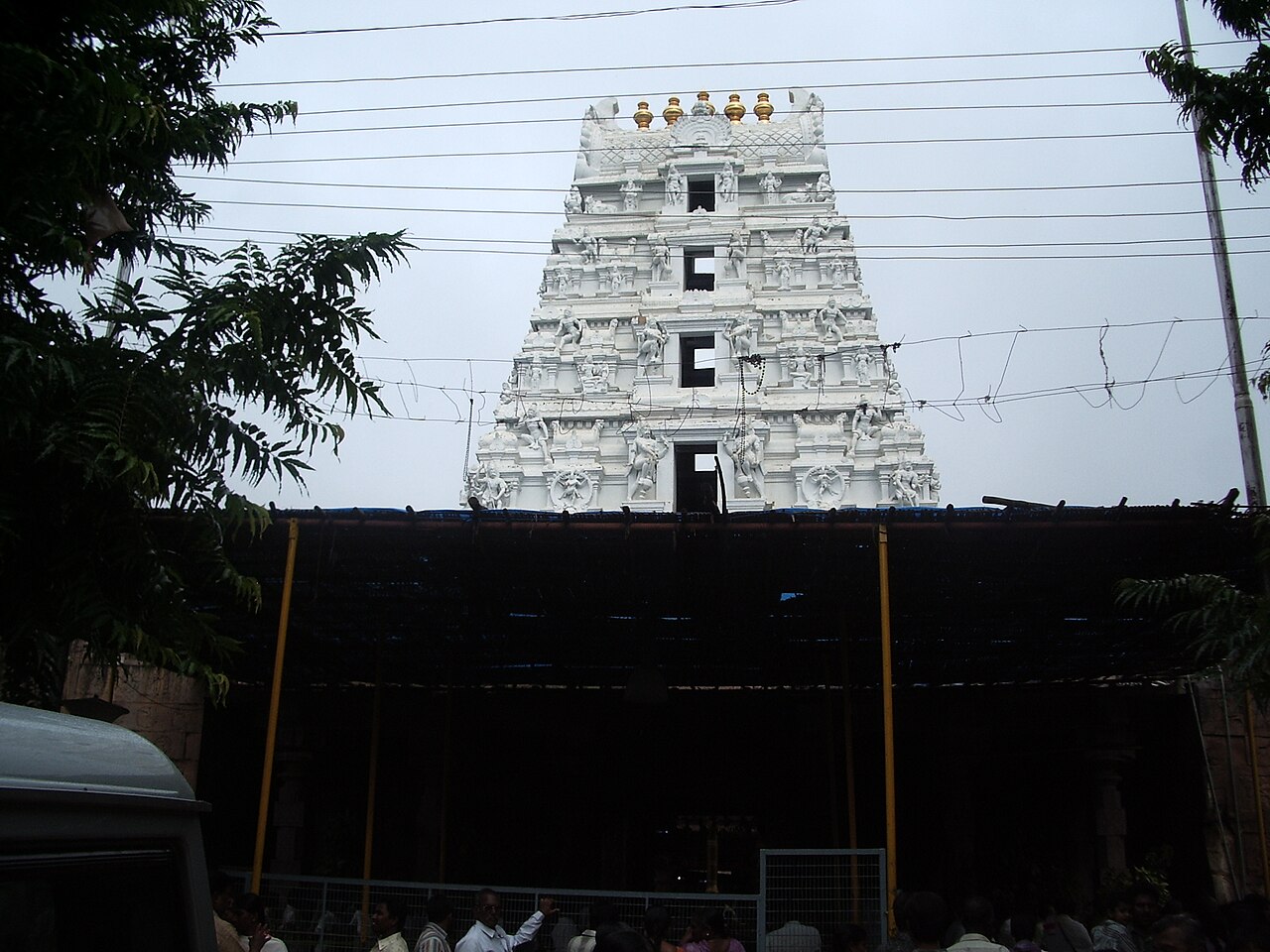
At the heart of Srisailam stands the Bhramaramba Mallikarjuna Swamy temple, an ancient shrine enclosed within tall fortified walls with a carved gopuram and sculptural work that reflects centuries of patronage and rebuilding. The temple is believed to have received the attention of various ruling dynasties over the centuries, including the Vijayanagara and Reddy kings, who are credited with much of the structure, fortification and artwork that survives today. Passing through the mahadwaram, the main gateway, into the temple precincts, visitors are struck by the atmosphere of antiquity and devotion that pervades the complex.
The two principal deities are Mallikarjuna, Shiva in his form as the Jyotirlinga, and Bhramaramba Devi, the presiding goddess of the Shakti Peetha. Darshan of both deities is the central purpose of most visits, and queues can build up quickly, especially at weekends and during festivals. Special darshan arrangements are usually available for those who prefer a quicker route through, though exact procedures, timings and fees change from time to time and are best checked locally or through the temple’s Devasthanam before you travel, rather than relied upon in advance. According to tradition, even a glimpse of the temple’s gopuram from a distance is considered auspicious, which gives some sense of the reverence in which the site is held.
Legend and significance
Srisailam’s stories are woven deeply into Shaiva tradition. It is associated, according to legend, with an episode involving Shiva and Parvati’s sons Kartikeya and Ganesha, one strand of the wider mythology that explains why this hill came to be regarded as sacred to both Shiva and the goddess. Adi Shankara, the great philosopher-saint, is traditionally said to have visited Srisailam, and devotees believe it was here that he composed the Sivananda Lahari in praise of Shiva, a text still recited by many pilgrims today. The name Mallikarjuna is generally explained as combining ‘mallika’, jasmine, with ‘Arjuna’, while Bhramaramba is often described as the bee goddess, her name evoking bees drawn to blossom. Whatever the precise origins of these stories, believed and retold across generations rather than treated as settled history, they add meaning to a visit and help explain why Srisailam has drawn pilgrims for so many centuries.
The Nallamala forest and the Krishna gorge
Part of what makes Srisailam so distinctive is its setting. The temple town sits amid the Nallamala hills, within the Nagarjunasagar-Srisailam Tiger Reserve, one of the largest tiger reserves in India, and the drive up through the ghats gives a real sense of entering a wilderness rather than simply another town. Below the plateau, the Krishna River carves a deep and dramatic gorge, and the Srisailam Dam, a major hydroelectric structure across the river, has created a vast reservoir behind it. Viewpoints near the dam give sweeping views over the water and the forested hills beyond, and are a popular stop for visitors combining pilgrimage with sightseeing.
Close to the temple, a flight of steps and a ropeway lead down to Patala Ganga, the ghat on the Krishna where pilgrims traditionally bathe before darshan. The descent, whether on foot or by ropeway, and the sight of the river running through its gorge, is one of the most memorable parts of a Srisailam visit. Given the surrounding tiger reserve, visitors are asked to stay on marked roads, avoid littering, and refrain from driving through the forest sections after dark, both for their own safety and to minimise disturbance to the wildlife that lives here.
Other sights around Srisailam
Beyond the main temple, Srisailam and its surroundings offer a number of other places worth a visit if time allows.
- Sikharam, also known as Sikhareswaram, a hilltop Shiva shrine that marks the highest point in the area, with panoramic views across the forest.
- Akkamahadevi Caves, a set of ancient caves along the Krishna backwaters, reached by boat, said to contain a naturally formed Shiva lingam and linked in tradition to the saint-poet Akka Mahadevi.
- Hatakeswaram, another shrine associated with the wider sacred landscape around Srisailam.
- Sakshi Ganapati temple, encountered on the approach to Srisailam, traditionally regarded as the ‘witness’ Ganesha who records the intentions of pilgrims on their way to the main shrine.
- Paladhara Panchadhara, a spring associated with Adi Shankara’s time at Srisailam.
- Mallela Theertham, a waterfall in the wider Nallamala forest, a rewarding detour for those interested in the region’s natural beauty.
- Kailasadwaram and the dam’s Octopus viewpoint and ropeway, both popular for views over the reservoir and gorge.
Things to do
A visit here is naturally built around temple darshan, but there is enough to fill a couple of days comfortably: a trip down to Patala Ganga and the Krishna ghat, a stop at the Srisailam Dam viewpoint, and, time permitting, the climb to Sikhareswaram. The boat trip to the Akkamahadevi Caves is a highlight for many, offering a quieter side to the pilgrimage, though it is worth checking locally that boats are running that day. Those with a full day to spare might venture out to Mallela Theertham waterfall. Wildlife sightings within the tiger reserve are possible but not guaranteed, and any safari should be arranged through proper, permitted channels.
Festivals
Maha Shivaratri is by far the biggest occasion at Srisailam, marked by an elaborate brahmotsavam and drawing enormous crowds from across South India and beyond. Ugadi, the Telugu new year, and the Dasara and Navaratri period, when the goddess Bhramaramba is honoured with particular devotion, are also significant times at the temple. The month of Karthika is likewise considered especially auspicious for Shiva worship here. Visitors who prefer a calmer, less crowded darshan may wish to plan around these peak periods, while those who want to experience Srisailam at its most vibrant should be prepared for very heavy crowds and should book accommodation well in advance.
Where to stay
As a pilgrimage town rather than a resort destination, Srisailam’s accommodation is generally basic to mid-range. The temple’s own Devasthanam runs guest houses and cottages for pilgrims, and the APTDC Haritha resort offers another comfortable option. Beyond these, the town has a range of private lodges and hotels catering to the steady flow of visitors. During festivals, particularly Maha Shivaratri, rooms fill up quickly, so booking ahead is strongly advised, and it is worth confirming rates and availability directly with the Devasthanam or individual properties rather than assuming standard pricing.
Food
Food in Srisailam is simple and largely vegetarian, in keeping with its character as a temple town. Many pilgrims take temple prasadam, and annadanam, free meals offered to devotees, is available at the temple, following the pattern seen at many major South Indian shrines. In the town itself, you will find straightforward South Indian and Andhra vegetarian meals, along with typical Andhra tiffin items, at the numerous pure-vegetarian eateries clustered near the temple. This is not a place for elaborate dining, and it is sensible to carry your own water, particularly if you plan to spend time down at Patala Ganga or out at the dam viewpoints.
Best time to visit
October to March is the most comfortable window, with cooler weather that suits both the temple queues and the forest drive. Maha Shivaratri, in February or March, is spectacular but very crowded, so it suits those wanting that atmosphere rather than a quiet visit. Summers from April to June are best avoided, and the monsoon from June to September greens the hills beautifully but can occasionally affect the ghat roads, so check conditions before setting out.
Getting there
Srisailam is most commonly reached by road, with Hyderabad, roughly 180 to 215 km away and about five hours’ drive, the usual starting point, served by regular APSRTC and TSRTC buses as well as private cars and taxis. Kurnool lies around 130 km away. The nearest airport is Hyderabad, and the nearest railheads are Markapur, Nandyal or Kurnool, from where you continue by road. Since the final stretch runs through protected forest, the ghat road can close overnight for wildlife safety, so check current timings and aim to arrive in daylight.
Tips for visiting Srisailam
- Check the forest ghat road timings before you travel, as the route can close at night, and plan your journey to arrive in daylight.
- Go for darshan early in the day where possible, since queues build up quickly, and crowds are especially heavy on weekends, during Maha Shivaratri and other festivals.
- Dress modestly in keeping with the temple’s dress code.
- Do not miss the descent to Patala Ganga and the ropeway down to the Krishna, along with the dam viewpoint above the reservoir.
- The boat trip to the Akkamahadevi Caves is well worth arranging if operations are running that day, so check locally in advance.
- Respect the surrounding tiger reserve by keeping to marked roads, avoiding littering, and not driving through forest sections after dark.
- Consider combining your trip with a visit to Srikalahasti, another major Shiva pilgrimage town in Andhra Pradesh, for a fuller South Indian temple itinerary.
- Carry sufficient cash, as Srisailam remains a fairly small town.
- Check special darshan arrangements and accommodation options through the official Devasthanam rather than relying on unofficial sources.
An extraordinary pilgrimage in the hills
Srisailam is one of India’s most extraordinary pilgrimage places, a temple that stands at once as a Jyotirlinga and a Shakti Peetha, set high in a tiger forest above a great gorge where the Krishna is dammed into a vast reservoir. Whether you come as a devotee seeking darshan of Mallikarjuna and Bhramaramba, or simply drawn by the wild beauty of the Nallamala hills, Srisailam has a way of leaving a lasting impression on everyone who makes the journey up through its forested ghats.