Guide details
Best time to visit
October to March is the most comfortable period, with cooler mornings and evenings that suit walking around the mansions and villages. Summer, from April to June, is very hot as Karaikudi lies well inland. Many of the clan temples hold festivals through the cooler months, which is a good time to combine sightseeing with local celebrations, though it is worth checking dates locally as they vary.
How to get there
Karaikudi is roughly 380 to 410 km from Chennai, about 7 to 8 hours by road. The town has its own railway station, Karaikudi Junction, with connections to major Tamil Nadu cities. The nearest airports are Madurai, about 90 km away, and Tiruchirappalli (Trichy), about 80 km away, both with regular domestic flights. Karaikudi is well connected by road and rail and makes a convenient base for exploring the Chettinad villages around it.
Highlights
Chettinad mansions, Athangudi handmade tiles, Chettinad cuisine, antique markets, Kandangi sarees, Pillaiyarpatti and Kundrakudi temples, heritage hotels
Good for
Heritage and architecture enthusiasts, food lovers keen to try authentic Chettinad cuisine, photographers, culture and temple tourism, shoppers interested in antiques, tiles and handloom textiles, and travellers looking for a slower, atmospheric side of Tamil Nadu away from the main coastal circuit
Price range
Karaikudi town has budget and mid-range hotels and lodges suited to most travellers. At the upper end, restored Chettinad mansions operating as heritage hotels offer a more atmospheric, and correspondingly pricier, stay. It is best to check current rates directly with individual properties.
Karaikudi is the largest town in Sivaganga district and, by common agreement, the capital of Chettinad, that remarkable stretch of villages and small towns in southern Tamil Nadu known the world over for its mansions, its cuisine and its air of faded mercantile splendour. The town and the region around it were built by the Nattukottai Chettiars, also called Nagarathars, a close knit trading and banking community whose businesses once reached across South and Southeast Asia, to Burma, Malaya, Ceylon and Vietnam among other places. The fortunes they made overseas in the nineteenth and early twentieth centuries came home in a very physical form, poured into vast courtyard mansions scattered across more than seventy villages that make up greater Chettinad. Karaikudi, as the principal commercial centre of this world, is usually the starting point for anyone wanting to explore it.
What makes Karaikudi and its surrounding villages so compelling is not any single monument but an entire built landscape, a cuisine, and a set of crafts that all grew out of one community’s global trading success. It is a place best explored slowly, on quiet lanes lined with houses far too grand for the sleepy towns that contain them.
The Mansions of the Nagarathars
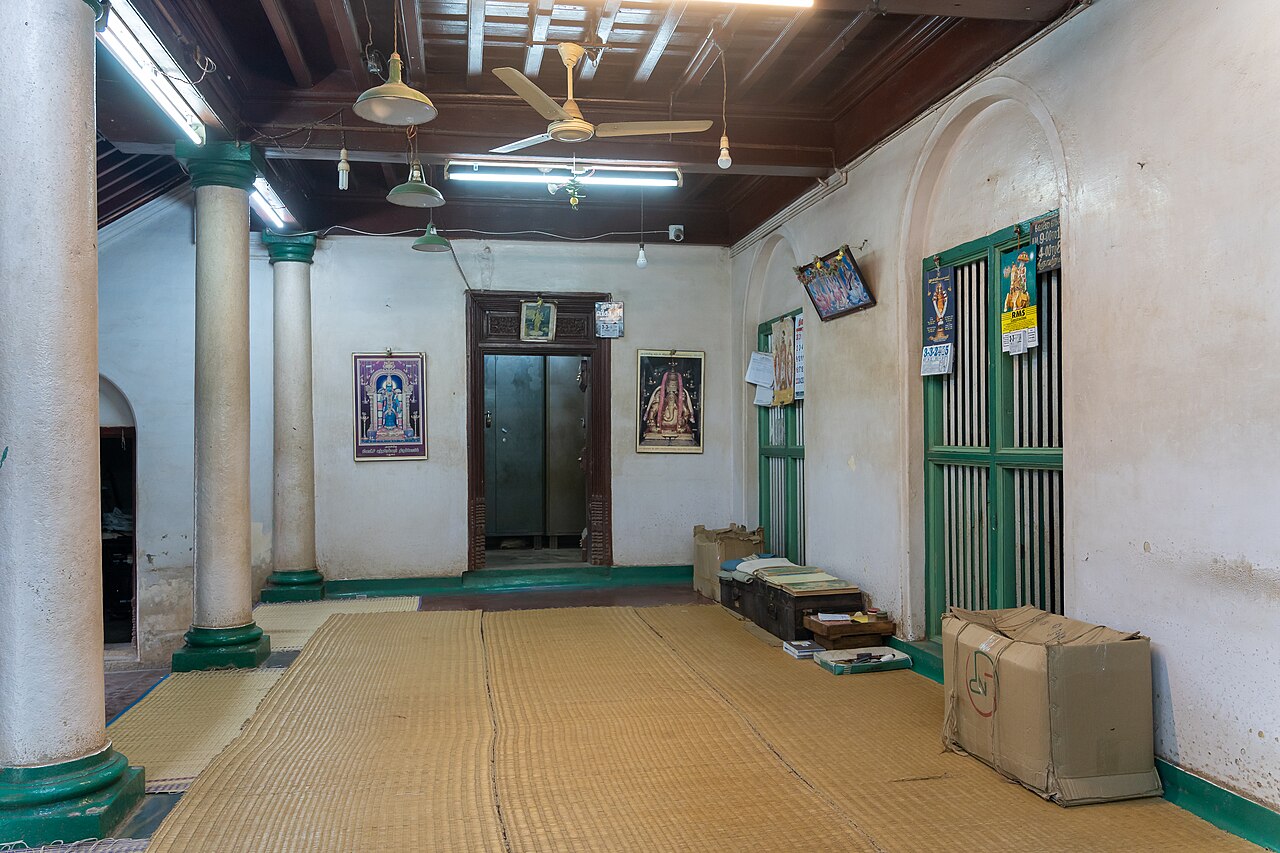
The signature sight of Karaikudi and Chettinad is the Chettiar mansion, an enormous courtyard house built on a scale that still startles first time visitors. These homes were constructed with materials sourced from wherever in the world the Chettiars traded, so it is common to find Burmese teak pillars, Italian marble flooring, Belgian glass and mirrors, and English or Japanese ceramic tiles all within a single house. Facades are often heavily ornamented with stucco work, carved wooden doors and pillared entrance halls known locally as thinnai, where the family once received guests and conducted business. Inside, houses typically unfold through a sequence of courtyards, each opening onto living quarters, storerooms and reception halls, built to accommodate large extended households as well as visiting relatives and traders.
The architectural style itself is a hybrid, blending Tamil courtyard traditions with colonial era detailing and touches drawn from the East Asian ports the Chettiars traded through. Many mansions today stand empty, their owners’ descendants long since settled in Chennai, Singapore or further afield, and this gives Karaikudi its particular, slightly melancholic atmosphere. A number of houses have, however, been carefully restored, some as small museums, others as heritage hotels, and a handful open their doors to visitors for a fee that is best confirmed locally before turning up. Wandering the residential streets of Karaikudi and nearby villages such as Kanadukathan, even from the outside, is one of the more memorable things to do anywhere in Tamil Nadu.
Athangudi Tiles: A Handmade Craft
Many of these mansions are floored with Athangudi tiles, a distinctive handmade cement tile named after the village of Athangudi a short drive from Karaikudi, where they are still produced by hand today. Each tile is made individually using local soil, cement and pigment poured into a mould, a slow process that produces the slightly irregular, richly coloured patterns that set these tiles apart from mass produced flooring. Visitors can call in at the small workshops in Athangudi to watch the tiles being made from start to finish and to buy a few as a genuinely local souvenir. The craft remains a proud symbol of the region’s identity and continues to supply both restoration projects and new homes being built in the Chettinad style.
Chettinad Cuisine
Karaikudi is widely regarded as the home of Chettinad cuisine, one of the most celebrated regional cuisines in India and a core part of wider Tamil Nadu cuisine. The style is built around freshly ground spice blends, often prepared on a stone grinder just before cooking, combined with generous use of black pepper, star anise, kalpasi (stone flower) and maratti mokku, along with sun-dried meats, vegetables and lentils that were traditionally preserved for long ocean voyages. The best known dishes include Chettinad chicken and mutton curries, fiery pepper chicken, and kola urundai, deep fried meatballs packed with spice. Vegetarian cooking is just as accomplished, with a wide range of lentil and vegetable preparations, along with distinctive sweets and snacks such as kavuni arisi, a black glutinous rice pudding, kandarappam, a lightly sweet rice fritter, and paal paniyaram, soft steamed rice dumplings served in sweetened milk. Karaikudi town has a good number of restaurants where these dishes can be tried in something close to their authentic form, and food is, for many visitors, as strong a reason to come here as the mansions themselves.
Antiques, Sarees and Markets
Chettinad’s trading past has left it with an unusually rich stock of antiques, and Karaikudi’s markets are known across Tamil Nadu for old furniture, brass and bronze vessels, carved wooden panels and other artefacts that have made their way out of the region’s mansions over the years. Browsing these shops, whether or not anything is bought, gives a good sense of the domestic life the mansions once supported. The region is equally famous for its handloom textiles, in particular the Chettinad kandangi saree, a bold, checked or striped cotton saree with a geographical indication tag recognising its origin in this part of Tamil Nadu. Traditional woodcarving is another local craft worth seeking out, often visible in the doors and furniture still being produced for restoration projects and new heritage style buildings.
Temples and Sacred Sites
Religious life is woven closely into Chettiar identity, and each of the community’s clans is associated with one of a set of clan temples scattered through the Chettinad villages, including well known examples at Ilayathakudi and Vairavan Kovil. A short distance from Karaikudi, Pillaiyarpatti is home to the Karpaga Vinayagar temple, a rock cut shrine to Ganesha that is one of the oldest and most revered temples in the region. Kundrakudi, also nearby, has a hilltop temple dedicated to Murugan that draws pilgrims throughout the year. Beyond these larger sites, the surrounding countryside is dotted with Ayyanar shrines, village guardian deity temples marked by rows of large terracotta horse figures, a striking and very regional form of folk religious art. Karaikudi is also remembered as the birthplace of Kannadasan, one of Tamil cinema’s most celebrated poets and lyricists, and a small memorial in the town honours his legacy.
A Landscape of Faded Grandeur
What lingers longest for most visitors is the mood of the place. As Chettiar families moved to Chennai, Madurai and cities further afield through the twentieth century, many mansions were left locked up, occupied only by a caretaker, or shared uneasily among heirs scattered across continents. The result is a landscape of grand, often empty houses standing quietly along village streets, their carved doors closed but their scale still unmistakable. This atmosphere has made Chettinad a popular location for Tamil film shoots over the years, and it has also drawn a growing wave of heritage tourism, with conservationists and private owners restoring select mansions rather than letting them fall further into disrepair. The contrast between the crumbling and the restored is, if anything, part of what makes a visit here so evocative.
Where to Stay
Karaikudi town itself has a reasonable spread of budget and mid-range hotels, convenient for a short stay while exploring the wider region. The real highlight, though, is the growing number of restored Chettinad mansions in and around Karaikudi and villages such as Kanadukathan that now operate as heritage hotels. Sleeping in one of these vast courtyard houses, surrounded by the same teak pillars, tiled floors and carved detailing described earlier, is an experience quite unlike a standard hotel stay and is worth arranging in advance given the limited number of rooms most of these properties offer.
Best Time to Visit and Getting There
The cooler months from October to March are the most pleasant time to explore Karaikudi and Chettinad on foot, since the region is well inland and summers can be intensely hot. Festivals at the various clan and Ayyanar temples take place through the year and can be worth timing a visit around, though it is sensible to check current dates locally. Karaikudi is roughly 380 to 410 km from Chennai, a drive of about 7 to 8 hours, and also has its own railway station, Karaikudi Junction, on a well served line. The nearest airports are at Madurai, about 90 km away, and Tiruchirappalli, about 80 km away, both offering regular domestic connections, making Karaikudi easy to reach by road, rail or a short onward drive from either airport.
A car and a knowledgeable local driver or guide make a real difference here, since the finest mansions and temples are spread across small villages some distance apart, and public transport between them is limited. Some mansions ask for a small viewing fee or require permission before visitors are allowed in, so it is worth checking locally rather than assuming access. It is also worth remembering that many of these houses remain private family homes, even when partially open to the curious, and a respectful approach goes a long way.
Karaikudi and the Chettinad region offer a travel experience with few equivalents anywhere else in Tamil Nadu, a landscape shaped by palatial mansions, world renowned cuisine, handmade tiles and the quiet, dignified grandeur of a merchant community’s vanished golden age. It rewards visitors who are willing to slow down, wander the back lanes, and taste, look and ask questions along the way.