Guide details
Best time to visit
October to February, early morning start, avoid the peak summer months of April to June
How to get there
Around 160 km south of Chennai via the GST Road towards Tindivanam and Villupuram, roughly 3 to 3.5 hours by car or bus
Highlights
Rajagiri hill climb, Kalyana Mahal, ASI protected fort walls, granaries and durbar hall, panoramic views from the citadel, layered Nayak, Maratha, Mughal and French history
Good for
history lovers, fit walkers and trekkers, heritage and architecture fans, photographers, couples and friends looking for a proper day out from Chennai
Entry
A modest ASI entry ticket for Indian nationals and a higher fee for foreign visitors, plus a small camera charge in some cases; always confirm current rates locally before you go
If you want a day trip from Chennai that is a genuine adventure rather than a gentle sightseeing stop, Gingee Fort deserves to be near the top of your list. It is one of the most dramatic hill forts in South India, three rocky peaks stitched together by walls that run for kilometres, and it rewards anyone willing to put in some legwork with views and history that most visitors to Tamil Nadu never see.
We will be honest from the start: this is not a quick photo stop. Gingee, also spelt Senji or Chenji, is a serious half day out on its own, involving real climbing in real heat. But for anyone who loves forts, history or just a good hard walk with a payoff at the top, it is one of the best day trips within reach of Chennai.
About Gingee Fort
Gingee Fort sits in Villupuram district, roughly 160 km south of Chennai, and is often called the Troy of the East, a nickname given to it by the British for its scale and its near impregnable defences. Shivaji, the Maratha king who captured it in the 17th century, is said to have called it the most impregnable fort he had ever seen, which is quite a claim from a man who took a great many forts in his lifetime.
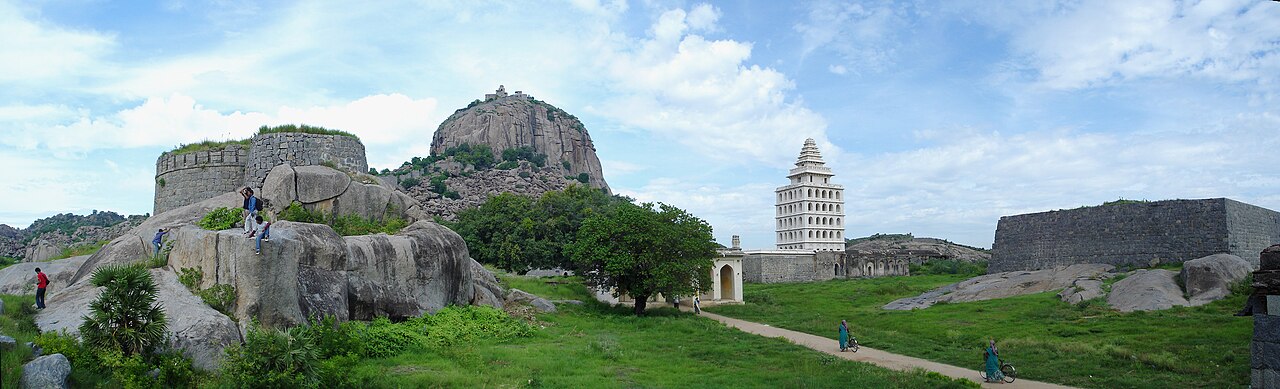
The fort is spread across three separate hills, Krishnagiri, Rajagiri and Chandrayandurg (also known as Chandragiri), joined by long defensive walls that snake across the valley floor between them. Together they form one continuous fortified landscape rather than a single building, which is part of what makes Gingee so unusual and so large. It is now protected as a monument of national importance by the Archaeological Survey of India, and it is genuinely one of the best preserved fort complexes anywhere in the south.
History: Nayaks, Marathas, Mughals and the French
Gingee has one of the most layered military histories of any site in Tamil Nadu. The fort as it largely stands today was built and expanded by the Gingee Nayaks from around the 15th and 16th centuries, on top of earlier fortifications that had existed on these hills for a long time before that. Its natural defences, three steep granite hills with a valley in between, made it a prized possession for whoever could take it.
Over the following centuries it changed hands repeatedly. The Marathas under Shivaji seized it, and it remained an important Maratha stronghold for decades afterwards. It later fell to the Mughals, then passed to the French, and eventually came under British control. Each power left its mark in some way, whether through additions to the fortifications or simply through the records and legends that grew up around a fort that so many different empires fought to hold. Few sites in the region offer such a direct, physical sense of how contested this part of India once was.
The three hills and the climb to Rajagiri
Of the three hills, Rajagiri is the tallest and holds the main citadel, and it is the one most visitors climb. This is where we need to be properly honest with you. The climb up Rajagiri is steep, involves a long series of stone steps and rocky, uneven stretches, and in places crosses narrow ledges with a real drop below. There is a section with a drawbridge over a chasm, which is thrilling but also a reminder that this fort was built to be difficult to attack, and it is still difficult to walk.
Allow at least two to three hours for the round trip up and down Rajagiri if you want to see the citadel properly and are not rushing. This is not a stroll. It suits reasonably fit visitors who are comfortable with sustained climbing in heat, and it is not a good idea for young children, anyone with knee or heart problems, or anyone who has not brought enough water. Krishnagiri, the smaller hill near the entrance, is a much easier and shorter option if you would rather see a fort structure without the full climb, and Chandrayandurg is the least visited of the three and requires more effort and local guidance to reach.
If your time and fitness allow only one climb, Rajagiri is the one to prioritise, since it holds the main citadel and the best views across the surrounding plains. But do not feel bad about admiring Krishnagiri and the valley walls instead if the full climb is not for you. There is plenty to see without going all the way up.
What to see inside
Gingee rewards slow exploration, and there is a lot packed into the complex beyond the climb itself. Look out for:
- The Kalyana Mahal, a distinctive tiered, pyramidal tower that formed part of the queen’s quarters and is one of the most photographed structures at the fort.
- Old granaries built to store grain for long sieges, a reminder of how self sufficient the fort had to be.
- A durbar or audience hall, used for royal and administrative business.
- Old cannons still positioned along parts of the ramparts.
- Temples within the complex, including a Venkataramana temple, along with smaller shrines scattered across the site.
- Ponds and water tanks that supplied the fort, an important feature for a hilltop stronghold that needed water during long sieges.
- The ramparts and gateways themselves, which run for a striking distance and give a real sense of the scale of the defences.
Chennai to Gingee: how to get there
Gingee is about 160 km south of Chennai, and the drive typically takes around 3 to 3.5 hours by road, depending on traffic. The usual route runs along the GST Road out of Chennai, heading down through Tindivanam and on towards Villupuram, with Gingee lying just off this main corridor. It is an easy enough drive by car, and regular buses also run from Chennai towards Tindivanam and Villupuram, from where local buses or autos can take you on to the fort.
If you are self driving, an early start is worth it both for the roads and for the climb, since you will want to be at the fort before the day heats up. The nearest towns of any size are Tindivanam and Villupuram, both useful stops for fuel, food or a break on the way down.
Combining it with Tiruvannamalai
Gingee sits roughly 35 to 40 km from Tiruvannamalai, one of Tamil Nadu’s great temple towns and home to the vast Annamalaiyar Temple, so the two make a natural pairing if you have a full day or even an overnight to spare. Many visitors combine a morning at Gingee Fort with an afternoon or evening at Tiruvannamalai, which softens the day considerably since the temple visit involves far less physical effort than the fort climb. If you are planning that route, our separate guide to Chennai to Tiruvannamalai covers the journey, timings and what to expect there in more detail.
Timings, tickets and what to bring
Gingee Fort is an ASI protected monument, so there is an entry ticket, with a modest fee for Indian nationals and a higher fee for foreign visitors, and sometimes a small extra charge for cameras. Timings, ticket prices and any weekly closed day do change from time to time, so please confirm the current details locally, either through the ASI website or by asking at the ticket counter, before you plan your trip around them.
What you bring matters more here than at most day trip destinations. Carry plenty of water, more than you think you will need, along with sun protection such as a hat and sunscreen, and wear proper closed shoes with a good grip rather than sandals, since the steps and rocky stretches genuinely demand it. Start as early in the day as you reasonably can, both to avoid the worst of the heat on the climb and to give yourself enough time to explore properly. Monkeys are present around the fort, so keep food out of sight and do not try to feed them.
Tips for your visit
- Wear proper trekking or walking shoes, not flip flops or sandals, given the steep steps and uneven rock surfaces.
- Carry more water than feels necessary, especially if you plan to climb Rajagiri.
- Start early, ideally soon after the fort opens, to avoid climbing in the midday heat.
- Pace yourself on the climb and take breaks in the shade where you find them.
- Keep an eye on your belongings and food around the monkeys near the fort.
- If you are building a longer itinerary around Chennai, our guide to tourist places near Chennai has other ideas for day trips that pair well with a rugged outing like this one.
- If the full Rajagiri climb feels too much on the day, do not be discouraged, Krishnagiri and the valley walls still give a strong sense of the fort’s scale.
Gingee Fort is not a place you visit for an easy afternoon out. It asks something of you, real walking, real heat, a bit of nerve on the narrower ledges, and in return it gives you one of the most complete and atmospheric fort experiences in South India. Go prepared, go early, and you will come away understanding exactly why so many empires fought so hard to hold these three hills.