Guide details
Best time to visit
October to February for cooler, drier weather; the festival peaks around 8 September.
How to get there
About 310 to 320 km south of Chennai, roughly 7 to 8 hours by road, with trains and frequent buses.
Highlights
Basilica of Our Lady of Health, the annual feast, Velankanni beach, museum of offerings, thanksgiving traditions
Good for
Pilgrims, families, first time visitors, weekend travellers, people of all faiths
Price range
Simple lodges from about Rs 800 to Rs 1500 a night; mid range hotels Rs 2000 to Rs 4500.
Velankanni is a small coastal town in the Nagapattinam district of Tamil Nadu, sitting on the Bay of Bengal a little over 300 km south of Chennai. It is best known for the Basilica of Our Lady of Health, one of the most visited Catholic shrines in India. Many people call it the Lourdes of the East, a nod to the famous shrine in France, because pilgrims come here in the hope of healing, comfort and answered prayers.
What draws people is not grand scenery but a long tradition of faith. The story of Our Lady of Velankanni is tied to accounts of apparitions and healings going back several centuries, and the shrine has grown around that devotion. You will meet Catholics from across India and abroad, but also Hindus, Muslims and people of no particular faith, all coming to light a candle, make an offering or simply sit quietly by the sea. It is an honest, unpolished sort of place, and that is much of its appeal.
Planning what to see once you arrive? Our full Velankanni guide covers the basilica, the feast, the beach and the pilgrimage traditions.
How to get to Velankanni from Chennai
By road, Velankanni is roughly 310 to 320 km from Chennai and the drive usually takes about 7 to 8 hours, sometimes longer with stops or heavy traffic near towns. The common route runs south through Tindivanam, Villupuram, Chidambaram and Nagapattinam, mostly on the East Coast Road corridor and national highways. A car or taxi gives you the most flexibility, and many families hire a vehicle for the round trip so they can carry offerings and rest on the way.
By train, Velankanni has its own railway station with a handful of direct and special services, though not all trains run daily. During busy periods the railways lay on pilgrim special trains, so it is worth checking current timetables close to your dates. If you cannot find a convenient direct train, the larger and better connected railhead is Nagapattinam, about 12 km away, from where local buses, share autos and taxis run to Velankanni in around half an hour.
By bus, the town is very well served. State and private operators run buses from Chennai and from Tamil Nadu hubs such as Thanjavur, Trichy and Nagapattinam. Overnight buses from Chennai are popular with pilgrims, leaving in the evening and reaching Velankanni in the morning. Buses are the cheapest option and drop you close to the shrine, but they can be crowded near the festival, so book ahead when you can.
The Basilica of Our Lady of Health
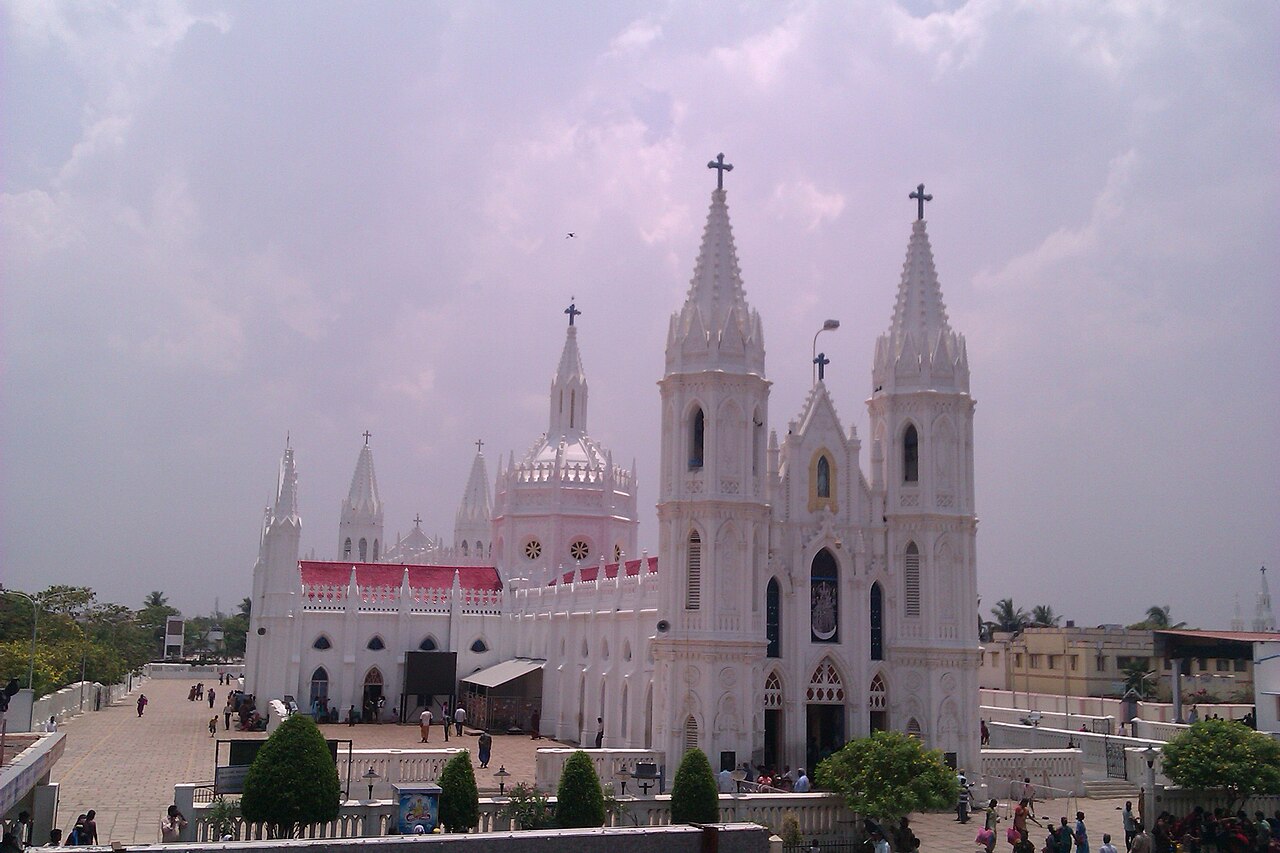
The basilica is the heart of the town. The main shrine church, with its white facade and tall spires, was raised to the status of a minor basilica in the twentieth century, and it has been extended over the years to hold the growing crowds. Inside, the focus is the image of Our Lady of Health holding the child Jesus, before which pilgrims pray, give thanks and leave their petitions.
Around the main church you will find other prayer spaces, a large open area for gatherings, and the Museum of Offerings, where gifts left by grateful pilgrims are displayed. A well known local custom is to offer items shaped like the part of the body a person prayed for, along with candles, flowers and thanksgiving gifts. Masses are held in several languages through the day. Dress modestly, keep your voice low inside, and be ready for queues, especially at weekends.
The annual festival
The great event of the year is the annual festival built around 8 September, the feast of the Nativity of Mary. The celebrations usually begin in late August with the hoisting of a flag and run for about eleven days, leading up to the feast day itself. This is when Velankanni is at its most intense, with processions, continuous Masses and a car procession of the statue that draws enormous crowds.
Hundreds of thousands of pilgrims arrive in this period, many of them walking long distances or travelling on the pilgrim special trains and extra buses laid on for the season. It is a moving thing to witness, but it is not a restful visit. Accommodation fills months ahead, prices rise, and the town is packed. If you want the atmosphere of the feast, plan early and be patient. If you prefer a calmer, prayerful trip, come well outside these dates.
The beach and the town
Velankanni sits right on the Bay of Bengal, and the beach is only a short walk from the basilica. It is a working, everyday beach rather than a resort strip, often busy with pilgrims and vendors selling snacks, candles, rosaries and religious souvenirs. Many people walk down to the shore after praying, and some regard the sea itself as part of the pilgrimage.
Take care in the water. This stretch of coast can have strong currents, and the beach was badly affected by the 2004 tsunami, which is remembered locally. Paddling at the edge is fine for most people, but do not swim out, and keep a close eye on children. The town around the shrine is compact and easy to explore on foot, lined with shops, small eateries and stalls that keep going late into the evening.
Where to eat and stay
Food in Velankanni is simple, cheap and mostly vegetarian South Indian fare, with plenty of small restaurants serving idli, dosa, meals on a banana leaf and strong coffee. You will also find North Indian and a few non vegetarian options near the main roads. A filling meal costs very little, and roadside stalls are handy for quick snacks between prayers.
For staying, there is a wide range. The church runs pilgrim lodges and guest accommodation aimed at keeping costs low for those who come to pray, and these are the most sought after during the festival. Simple private lodges typically run from about Rs 800 to Rs 1500 a night, while mid range hotels with air conditioning sit around Rs 2000 to Rs 4500. A few more comfortable hotels cost more. Book ahead near the feast, and confirm what is included, as basic lodges may offer little beyond a clean bed and a fan.
Best time to visit
The most comfortable months are October to February, when the coast is cooler and drier and long walks around the shrine are pleasant. March to May turns hot and humid, which can be tiring in crowds. The northeast monsoon brings heavy rain to this coast, mainly from October into December, so watch the forecast, as cyclones and flooding do sometimes affect the region. The festival window of late August into early September is the busiest time of all, wonderful for atmosphere but hard for comfort and cost, so choose your dates around what matters most to you.
Tips for the trip
- Dress modestly out of respect, with shoulders and knees covered inside the basilica.
- Book travel and rooms well ahead if you are going near the festival, ideally months in advance.
- Keep valuables secure and stay alert in crowds, especially in queues and at the beach.
- Carry enough cash, as offerings, small lodges and stalls often prefer it and card use can be patchy.
- Bring water, a hat and sun protection, and go slowly in the heat.
- Respect that this is a place of prayer, so keep photography discreet inside the shrine.
Whether you come to give thanks, to ask for healing, or simply out of curiosity, Velankanni rewards an unhurried visit. Say your prayers, walk down to the sea, share a plain hot meal, and let the quieter side of the town settle on you once the crowds thin. It is a short journey from Chennai and, for many, one they end up making again.