Guide details
Best time to visit
November to February for cool dry weather and full beach shacks, avoid the June to September monsoon if beaches are the point of the trip
How to get there
Fly in about 1 hour 30 minutes (fastest and most popular), or take a 21 to 24 hour train via the Konkan Railway, or drive or bus roughly 900 km via Bangalore in 15 to 18 hours
Highlights
Baga and Calangute beaches, Anjuna flea market, Palolem and Agonda in South Goa, Basilica of Bom Jesus, Fontainhas Latin Quarter, Dudhsagar Falls, Goan fish curry rice and feni, beach shacks and nightlife
Good for
beach holidays, couples, friend groups, nightlife, families wanting a quieter South Goa base, history and heritage walks, food and seafood lovers
Price range
Rs 1,200 to Rs 2,500 a night for budget guesthouses, Rs 3,500 to Rs 7,000 for mid range hotels, Rs 8,000 upwards for luxury resorts, meals roughly Rs 300 to Rs 800 a head at shacks
Goa sits on India’s west coast, a good 900 km from Chennai as the crow flies, and for years it has been the beach holiday that Chennai actually takes rather than just talks about. The distance sounds like a lot until you realise a flight gets you there in under two hours, which is shorter than a lot of weekend drives.
This guide covers every way of getting from Chennai to Goa, honestly, with real travel times for flight, train, road and bus, and then gets into what to actually do once you land, from the beach parties of the north to the quiet coves in the south.
Chennai to Goa distance and travel time
- Distance by air: roughly 900 km
- Distance by road: roughly 900 to 950 km depending on the route
- By flight: about 1 hour 30 minutes
- By train: roughly 21 to 24 hours, sometimes longer with a connection
- By road, self drive or taxi: roughly 15 to 17 hours, usually split over two days
- By sleeper bus: roughly 15 to 18 hours, mostly via Bangalore
By flight
Flying is the sensible choice for most people and it shows in how many flights run each day between Chennai (MAA) and Goa. Non stop flights take about 1 hour 30 minutes, and with several airlines, including the low cost carriers, competing on the route, fares can be reasonable if you book a few weeks out.
Goa now has two airports, and this trips up a fair number of first time visitors. Dabolim (GOI) is the older airport near Vasco da Gama in the south, close to South Goa’s beaches. Manohar International Airport at Mopa (GOX) opened more recently in the north, and it is far more convenient for Baga, Calangute, Anjuna or Morjim, since Dabolim to North Goa can mean well over an hour of extra driving. Always check which airport your flight lands at before you book accommodation, since the two are a couple of hours apart by road.
Fares climb sharply in peak season, particularly around Christmas and New Year, so if you are travelling in December book well ahead. Outside peak season and the monsoon months, midweek flights can be genuinely cheap.
By train
The train to Goa is a proper journey, not a quick hop. There is no direct fast train from Chennai, and depending on the service and connections, the trip typically takes somewhere between 21 and 24 hours. Some travellers find a direct train to Madgaon (Margao) or Vasco da Gama, Goa’s two main railway stations, while others connect via Bangalore or Mangalore if the direct options are full.
What makes the long ride worthwhile for some is the Konkan Railway stretch along the Karnataka and Goa coast, cutting through hills, tunnels and river crossings with the Arabian Sea never far away. It is one of the more scenic rail routes in the country and if you have the time and patience for a two night journey, it is a genuinely pleasant way to arrive rather than just a means to an end.
Sleeper class is the budget option and AC classes (3AC, 2AC) offer more comfort for the long haul, particularly useful if you are travelling with family or simply prefer to sleep properly. Demand on this route is high, especially in season, so book through IRCTC as early as tickets open, and keep tatkal as a backup rather than your main plan since seats there disappear fast.
By road and bus
Driving from Chennai to Goa covers roughly 900 to 950 km, usually via Bangalore and then on through Hubli or Belgaum before crossing into Goa. Expect around 15 to 17 hours of actual driving time, which most people break into two days with an overnight stop, often around Bangalore or further along near Hubli. It is a long haul, not something to attempt in one straight run, but for those with their own car and a taste for a road trip, it lets you see a fair slice of Karnataka’s countryside along the way.
Private sleeper buses also run this route, mostly via Bangalore, taking roughly 15 to 18 hours depending on traffic and the operator. It is a less common way to reach Goa from Chennai compared with travellers coming from Bangalore, Pune or Mumbai, where bus routes are shorter and more frequent, so from Chennai it suits budget travellers with time to spare more than anyone in a hurry.
Which option should you choose?
For most people, flying is the right call. An hour and a half in the air against 15 hours or more by road, bus or rail is not much of a contest if your holiday time is limited, and fares are often reasonable if booked ahead.
The train makes sense if you enjoy travel for its own sake, have a week or more to spare, and would like to see the Konkan coast from a train window rather than treat the journey as dead time.
Road trips are for people with their own vehicle, a taste for adventure, and no fixed schedule, since two full days of driving each way eats heavily into a holiday. Buses fall somewhere in between, a budget option for those with time but without a car.
North Goa beaches
North Goa is where most first time visitors head, and it has the livelier, more energetic feel that Goa is known for. Baga and Calangute are the busiest beaches, lined with shacks and water sports operators, while Anjuna and Vagator have a more relaxed, alternative crowd, with cliffside views and a reputation for trance parties that goes back decades. Anjuna’s Wednesday flea market is worth a visit even if you are not shopping. Morjim, further north, is quieter, known for its Russian expat community and as a nesting site for olive ridley turtles in season. North Goa gets crowded in peak months, so arrive early in the day if you want space on the sand.
South Goa beaches
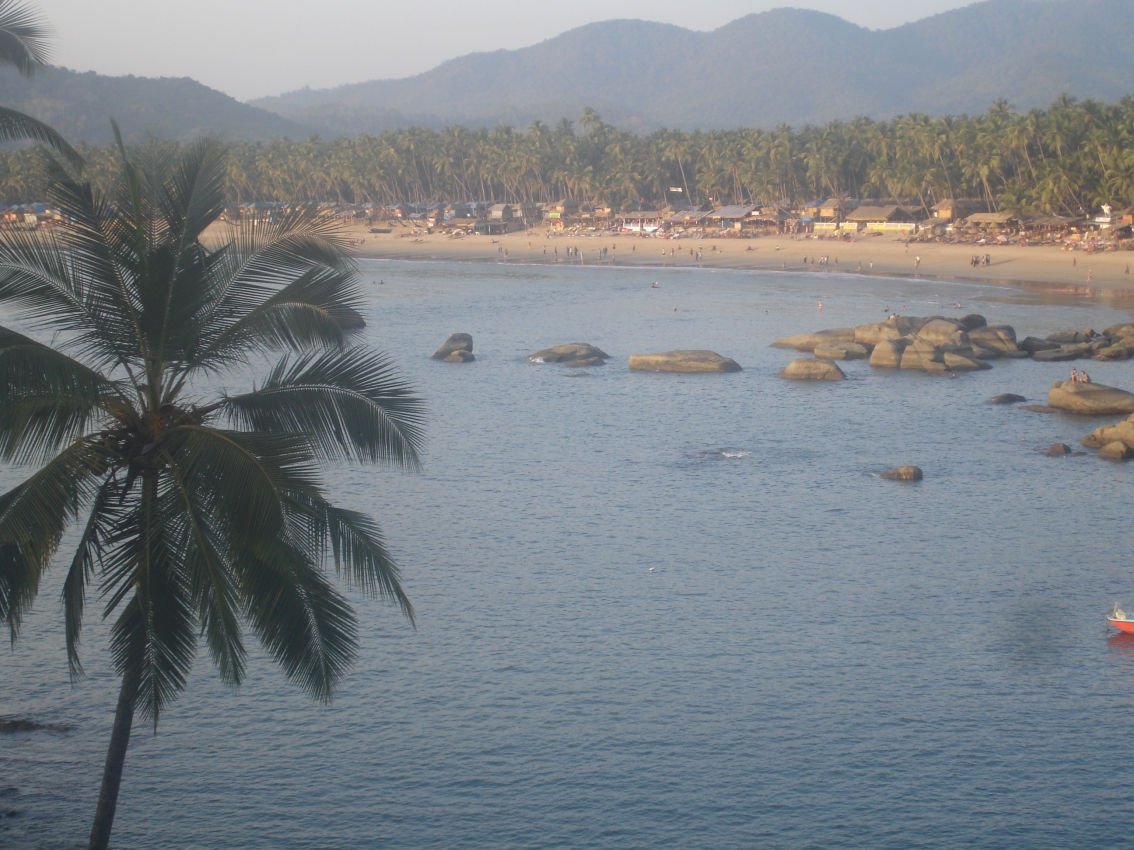
South Goa is calmer by design, with wider, less crowded sand and a more relaxed pace throughout. Palolem is the standout, a curved bay lined with simple beach huts and calm water, drawing crowds without ever feeling as frantic as the north. Agonda, nearby, is quieter still, popular with people who want a proper unwind rather than a party. Colva and Benaulim mix local Goan life with tourist infrastructure, good for families, and generally have more resort style stays than backpacker huts. If your idea of a beach holiday is fewer people and more peace, South Goa is where to base yourself.
Old Goa, Panjim and Fontainhas
Goa’s Portuguese history runs deep, and Old Goa is where it is most visible. The Basilica of Bom Jesus, a UNESCO World Heritage site, holds the relics of St Francis Xavier, while the nearby Se Cathedral is one of the largest churches in Asia, both worth an unhurried visit rather than a rushed photo stop. Dress modestly and keep noise down inside, as these remain active places of worship.
Panjim, Goa’s capital, is compact and easy to explore on foot, with the Mandovi river running alongside it. Just off the main streets sits Fontainhas, the old Latin Quarter, a neighbourhood of narrow lanes and colourful Portuguese era houses that rewards slow wandering and a coffee stop.
Things to do beyond the beach
Water sports are a big draw around Baga and Calangute, with parasailing, jet skiing and banana boat rides easy to arrange on the spot, though check operators are using proper safety gear before you sign up. Dolphin watching boat trips run from several beaches in the early morning and are a reliably good outing for families.
Dudhsagar Falls, one of India’s tallest waterfalls, makes for a satisfying day trip, usually reached by jeep safari through the Bhagwan Mahaveer Wildlife Sanctuary. The falls are most dramatic just after the monsoon, when the water is still running high but the roads have dried out enough to be passable. Spice plantation tours inland are another popular half day trip, and the Arpora night market on Saturdays has food stalls, music and local crafts worth a browse.
Goan food and nightlife
Goan food deserves as much attention as the beaches. Fish curry rice is the everyday staple, tangy and coconut based, while vindaloo and xacuti bring proper heat from their Portuguese and local roots. Sorpotel, a pork dish, and bebinca, a layered dessert, are worth seeking out, and no trip is complete without trying feni, the local spirit distilled from cashew or coconut, best had in small measures.
Beach shacks are where most of this food is eaten, simple open air setups right on the sand serving fresh seafood through the day and into the evening. Nightlife is concentrated mostly in North Goa, around Baga and Anjuna, with clubs and beach parties running late in peak season, while Panjim has floating casinos on the Mandovi river for a different kind of evening.
Where to stay and best time to visit
Accommodation in Goa spans a huge range. Budget guesthouses and hostels run roughly Rs 1,200 to Rs 2,500 a night, mid range hotels and boutique stays fall between Rs 3,500 and Rs 7,000, and the well known luxury resorts start around Rs 8,000 and climb well beyond that. Meals at beach shacks typically cost Rs 300 to Rs 800 a head, more at the smarter restaurants in Panjim.
The best time to visit is November to February, when the weather is cool and dry and every beach shack is open. December and January are peak season, meaning higher prices and bigger crowds, so shoulder months offer a better balance. The monsoon, roughly June to September, brings heavy rain, rough seas and many shacks shutting for the season, so it is not the time for a classic beach holiday, though the countryside turns green and prices drop if grey skies do not bother you.
Tips for the trip
- Confirm whether your flight lands at Dabolim in the south or Mopa in the north, and book your stay accordingly.
- Book flights and trains well ahead for the December to January peak season, when both fill up fast and prices rise.
- Renting a scooter or bike is the easiest way to get around, though carry a valid licence and helmet.
- Carry cash for shacks and small vendors, as card acceptance is patchy away from the main hotels.
- Dress modestly at churches and temples, and avoid swimming during the monsoon when the sea gets genuinely dangerous.
- If travelling by train, book sleeper or AC well in advance and keep tatkal only as a backup.
However you get there, Goa rewards a bit of planning more than most Indian holiday destinations. Pick the right airport, pick the right coast for the mood you are after, and the rest tends to fall into place easily enough.