Guide details
Best time to visit
Weekday mornings, from about 9am to noon, before the heat and crowds peak; avoid Sundays when many wholesale shops are shut
How to get there
Take a bus or suburban train to Broadway or Chennai Beach station, or the metro to High Court or Mannadi; walking is the only practical way to explore once you arrive
Highlights
Dare House and the Parry\u2019s junction, Godown Street textile wholesalers, Mint Street jewellery trade, Sowcarpet sweets and snacks, George Town\u2019s colonial era streets, proximity to Fort St George and the harbour
Good for
Bulk and wholesale shopping, street photography, exploring old Chennai\u2019s commercial history, textile and jewellery buyers, curious walkers who enjoy chaos with a purpose
Prices
Wholesale and bulk rates, generally well below retail elsewhere in Chennai; individual prices vary hugely by trade and quantity
Parrys Corner is the beating commercial heart of old Chennai, the point where the streets of George Town converge at a junction named after one of India’s oldest trading houses. It is loud, it is crowded, and it has been doing business here in more or less the same way for the better part of two centuries.
This is not a place for a leisurely stroll with a coffee in hand. It is a working wholesale district where the city buys and sells in bulk, and that is exactly what makes it worth understanding, even if you only pass through once. Come with the right expectations and it becomes one of the most genuinely interesting corners of Chennai.
About Parrys Corner and George Town
Parrys Corner takes its name from the junction near Dare House, the headquarters of EID Parry, a trading firm that has been operating in Chennai since the late eighteenth century and remains one of India’s oldest companies still in business. The Parry’s building on the corner is a well known landmark and the whole area, and often the wider commercial district around it, has borrowed the name.
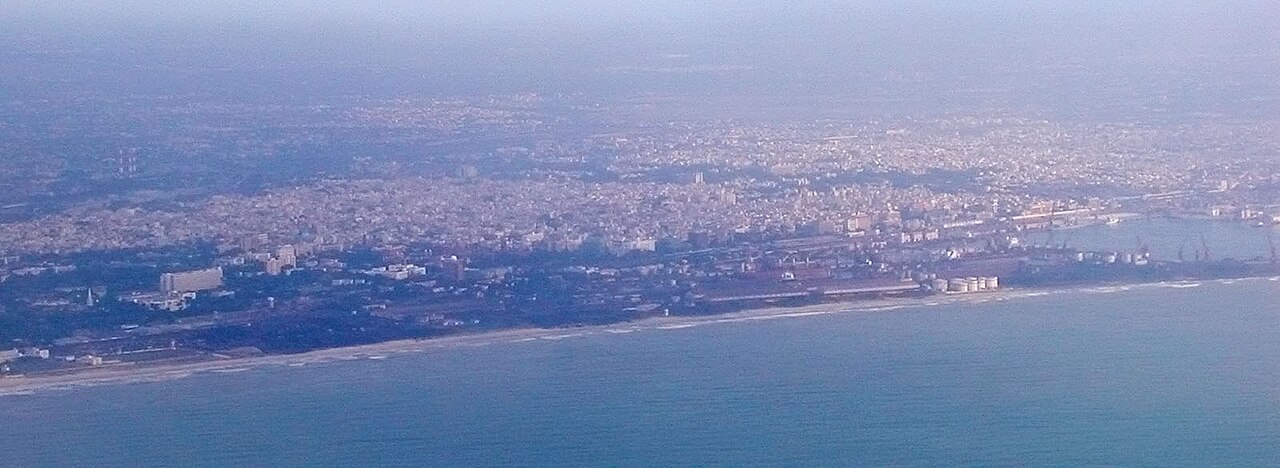
That wider district is George Town, the oldest part of modern Chennai and the city’s original mercantile quarter. It grew up just outside Fort St George in the colonial period, laid out on a neat grid of streets that has stayed largely intact even as the buildings on it have changed hands, been rebuilt and been packed ever tighter with shops. George Town has always been where Chennai does its trading, and it still is, close to the old harbour and within easy reach of the fort that started it all.
The wholesale markets
What strikes most visitors first is how specialised each street is. Walk a few hundred metres in George Town and the goods on sale can change completely, because generations of traders in the same line of business have clustered together on the same lane. This is a genuine wholesale economy, where shopkeepers from across Chennai and further afield in Tamil Nadu come to buy stock in bulk, not a market dressed up for tourists.
- Godown Street and the surrounding lanes, the traditional centre for textiles and wholesale cloth
- NSC Bose Road, a long, busy stretch selling a huge range of general goods
- Streets nearby given over to paper and stationery, sold by the ream and the carton
- Hardware and electrical goods lanes, dense with small shops and stacked stock
- Areas trading in plastics, chemicals and industrial supplies
- Countless smaller specialist lanes that only make sense once you notice the pattern
None of this is arranged for browsing. Pavements double as storage space, handcarts and porters move constantly, and the pace is set by business, not by visitors. That is the honest picture, and it is also what makes the area fascinating if you approach it as a working district rather than a shopping trip.
Mint Street and Sowcarpet nearby
Just north of Parrys Corner proper, Mint Street and the Sowcarpet area shift the trade again, this time towards jewellery, sweets and the North Indian merchant community that has been settled here for generations. Sowcarpet has its own distinct character within George Town, with Marwari and Gujarati traders, small temples tucked between shopfronts, and some of the best North Indian sweet shops in the city sitting alongside gold and silver dealers.
It is worth treating Sowcarpet as a short extension to a Parrys Corner visit rather than a separate trip. The streets are just as narrow and just as busy, but the mix of jewellery counters, sweet shops and everyday grocery trade gives a different flavour to the walk, and a good excuse to stop for something to eat.
Heritage around George Town
For all its present day chaos, George Town carries a great deal of history. The grid of streets was laid out in the colonial era and still holds a mix of old commercial buildings, churches, temples and mosques standing close together, a reflection of the many communities who settled here to trade. The Madras High Court, with its distinctive red domed architecture, sits at the southern edge of the district, and Broadway, home to the old Broadway bus terminus and Prakasam Road, is one of the area’s main arteries and a transport hub in its own right.
The harbour and the old fort are both within easy reach, and it is worth remembering that this entire district exists because of the fort and the trade that grew up around it. Anyone interested in how Chennai actually began, rather than how it looks today, will find George Town more rewarding than most conventional sightseeing stops.
Is it worth visiting as a tourist?
Honestly, it depends on what you are looking for. Parrys Corner and George Town are not designed for leisurely tourism. The streets are narrow, the crowds are constant, the noise is considerable and there is very little in the way of pavement space or shade. If you want a relaxed shopping experience, this is not it.
What it does offer is a completely unfiltered look at how Chennai’s economy actually works, a slice of old commercial India that has not been tidied up for visitors. If you are after bulk goods, particularly textiles or jewellery, the prices can be genuinely low compared with retail elsewhere in the city. If you simply want to see and feel a working wholesale district at full pace, an hour or two here, walked slowly and with your wits about you, is well spent. Just do not expect it to be comfortable.
How to get there and when to go
Broadway, right in the middle of the district, is one of Chennai’s major bus terminuses, so buses from across the city converge here. The suburban railway serves the area well too, with Chennai Beach and Chennai Fort stations both close by, and the Chennai Metro stops at High Court and Mannadi, both within walking distance of Parrys Corner. Public transport, or a short walk from one of these stations, is by far the easiest way in.
Driving is best avoided. The streets are narrow, largely one way, permanently congested and were never designed for private cars, let alone parking. Weekday mornings, roughly from nine to midday, are the best time to visit, when trading is in full swing but the crowds have not yet built to their peak. Many wholesale shops close on Sundays, so a Sunday visit will mean shuttered shopfronts rather than the working district you have come to see.
Tips for your visit
- Go on a weekday morning, ideally before midday, for the area at its liveliest and most functional
- Use the bus, train or metro rather than driving, and be prepared to walk once you arrive
- Keep bags zipped and valuables close in the crowds, as you would in any dense market area
- Carry cash for small purchases, since many wholesale traders deal mainly in cash
- If you are buying, remember this is a bulk market, so quantities and pricing work differently to a retail shop
- Wear comfortable shoes and expect uneven pavements, steps and the odd puddle
- Pair the visit with Fort St George or a wider look at other Chennai neighbourhoods to put George Town’s history in context
Parrys Corner will not charm you the way a heritage bungalow or a quiet temple tank might. It earns its place on a Chennai itinerary differently, as proof that this city’s oldest quarter is still exactly what it always was: a place where people come to do business, loudly and in enormous volume, and where that business has quietly shaped the whole city around it.