Guide details
Best time to visit
October to March, and the fort typically opens around 9am and closes by early evening
How to get there
Around 140km from Chennai, roughly 3 hours by car via NH48 and NH234, or by train to Katpadi Junction
Highlights
Granite ramparts and moat, Jalakandeswarar Temple, Vellore Mutiny history, small museum
Good for
History enthusiasts, a full day trip from Chennai, combining with Sripuram Golden Temple
Price range
Nominal entry fee, typically a modest amount for Indian visitors and higher for foreign nationals
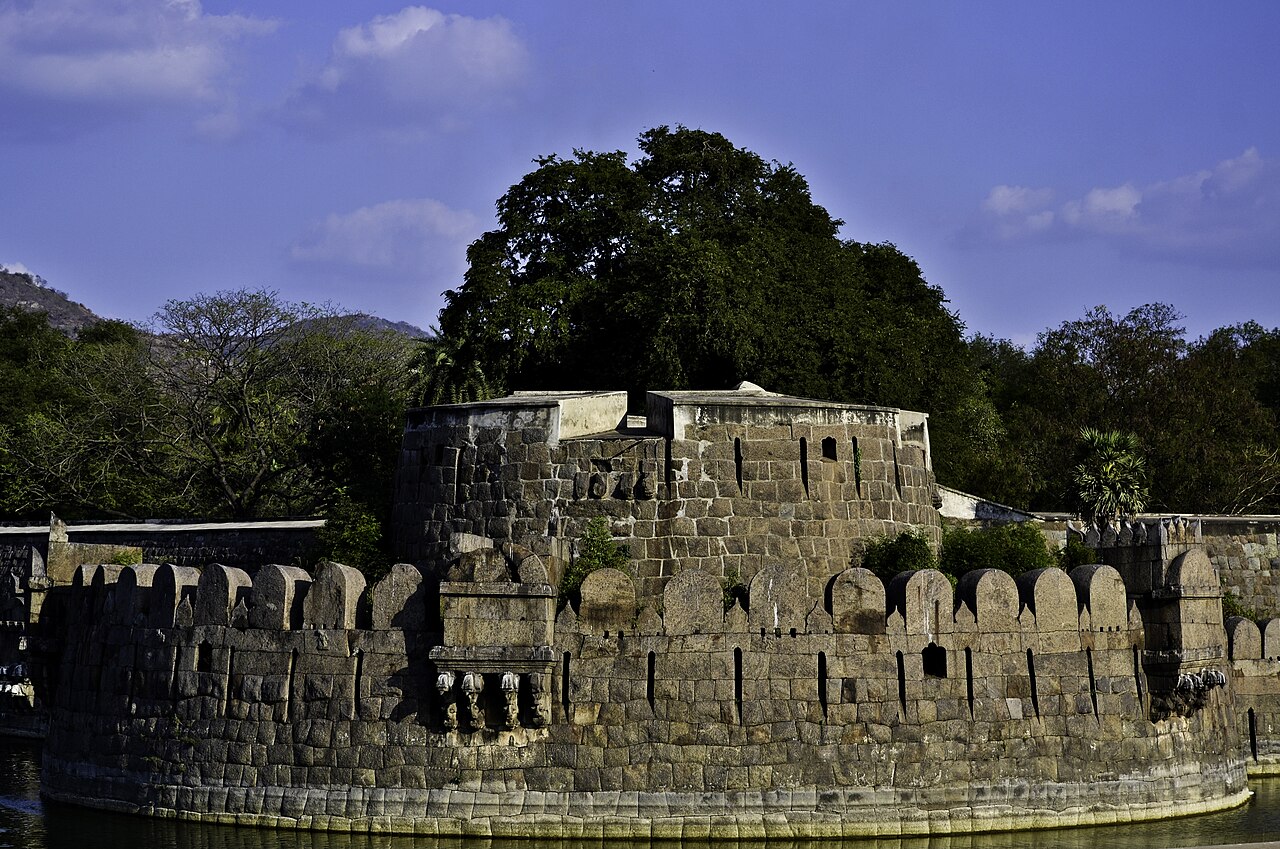
Vellore Fort is one of the better preserved forts in Tamil Nadu, and it makes a genuinely satisfying day trip from Chennai if you want history without the crowds that come with more famous sites. It is a solid, businesslike structure rather than an ornate palace, built for defence first, and that no nonsense character is part of what makes it interesting.
Built by the Nayaks, shaped by empires
The fort was constructed in the sixteenth century, generally attributed to Chinna Bommi Nayak and Thimma Reddy Nayak, local chieftains ruling under the Vijayanagara empire. It is built largely of granite, with massive ramparts and a wide moat that at one time could be filled with water, both features that reflect fairly advanced military engineering for its time. Control of the fort passed through several hands over the following centuries, including the Bijapur Sultanate, the Marathas, the Nawabs of Arcot and eventually the British East India Company, and each period left some mark on the site.
What to see inside the fort
The standout structure inside the fort walls is the Jalakandeswarar Temple, a Shiva temple built in Vijayanagara style with detailed stone carving on its pillars and gopuram, considered one of the finer examples of that architectural period in the region. There is also a small museum on the fort grounds covering the fort’s history and the wider story of the 1806 uprising, along with a church and a mosque within the fort complex, reflecting the different rulers who occupied it. Walking the ramparts and the area around the moat gives a good sense of the fort’s scale, and it is large enough that a proper visit takes a couple of hours if you want to see everything rather than rush through.
The Vellore Mutiny of 1806
Vellore Fort’s most significant historical moment came in 1806, when Indian sepoys stationed there rose up against the British East India Company. The mutiny is generally considered one of the earliest organised uprisings against British rule in India, predating the much larger 1857 revolt by more than fifty years. It was triggered partly by new uniform regulations seen as offensive to religious practice, and though it was suppressed within a day, it is remembered as an important early sign of resistance to colonial authority. The fort also has an earlier claim to historical fame as the place where Tipu Sultan’s family was held in captivity by the British after his defeat at Srirangapatna.
Getting there from Chennai
By car, Vellore is roughly 140km from Chennai, and the drive typically takes around three hours via NH48 and then NH234, traffic depending. The roads are generally in good condition and it is a manageable self drive or hired car trip. By train, regular services run from Chennai Central to Katpadi Junction, one of the region’s major railway hubs, and from there it is a short auto rickshaw ride of around fifteen to twenty minutes to the fort itself. By bus, frequent government and private services run from Chennai’s CMBT bus terminus in Koyambedu to Vellore, usually taking around three to four hours depending on the route and traffic.
Combining it with other Vellore sights
Most visitors sensibly pair Vellore Fort with the Sripuram Golden Temple, a modern Mahalakshmi temple a short drive from the fort that has become a major draw in its own right thanks to its gold plated structure and landscaped grounds. Combining the two makes for a full and satisfying day trip, mixing centuries old military history with a striking contemporary religious site. Vellore also has a well known medical college and hospital that draws visitors from across the country, though that is obviously not a tourist attraction as such.
Practical tips for visiting
The fort is typically open from around 9am to 5pm, though it is worth checking current timings locally before you set off since these things can shift. Entry fees are nominal, generally a modest amount for Indian visitors and somewhat more for foreign nationals, in line with how most Archaeological Survey of India protected monuments are priced. Wear comfortable shoes, as there is a fair amount of walking across uneven stone, and carry water, particularly if you are visiting outside the cooler months between October and March. Given the travel time involved, setting off early from Chennai and treating this as a full day out, rather than a rushed half day trip, will let you see the fort properly and still leave time for Sripuram or a relaxed lunch in Vellore town before heading back.