Guide details
Best time to visit
Mid-January, usually 14 to 17 January each year
How to get there
Citywide, best experienced in residential neighbourhoods like Mylapore, Triplicane and T. Nagar, and at major temples
Highlights
Kolam art, the milk-boiling-over ritual, temple pujas, sweet pongal, cultural performances
Good for
Families, culture seekers, photographers
Price range
Free to watch in public spaces; temple offerings are optional and modest
If you happen to be in Chennai in mid-January, you’ll notice something shift in the air a few days before the actual festival. Shops start selling fresh turmeric stalks tied with mango leaves, sugarcane stacks appear on street corners, and by the time the sun sets on the third night, entire neighbourhoods smell faintly of bonfire smoke. This is Pongal, Tamil Nadu’s harvest festival, and it’s arguably the most important few days on the local calendar. It marks the end of the harvest season and the start of the Tamil month of Thai, and it unfolds over four distinct days, each with its own name and its own small rituals.
The four days explained
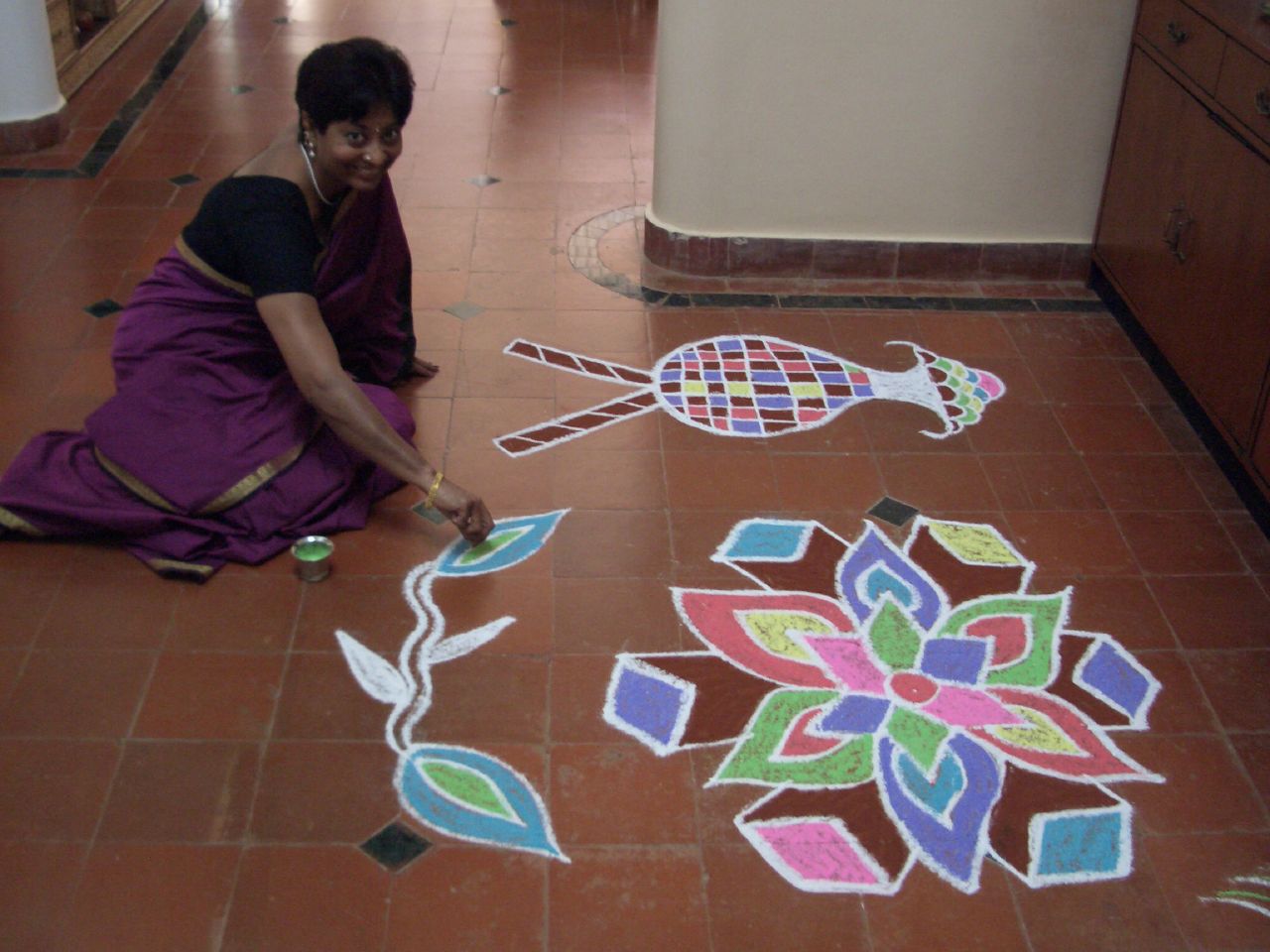
The festival opens with Bhogi, when households clear out old or broken belongings and burn them in small bonfires early in the morning, a symbolic clearing of the old to make way for the new. Homes get a proper clean before this, and you’ll see fresh kolam (rice flour patterns) being drawn on doorsteps that evening.
The second day, Thai Pongal, is the main event and the one most visitors picture when they think of the festival. Families cook rice with fresh milk and jaggery in a new clay pot, traditionally outdoors, and wait for it to boil over the rim. When it does, everyone calls out “Pongalo Pongal”, a phrase that roughly means “let it overflow”, and it’s taken as a sign of abundance for the year ahead. The dish itself, sweet pongal or sakkarai pongal, made with rice, moong dal, jaggery, cashews and ghee, is then offered to the sun god Surya before being shared.
Mattu Pongal, the third day, is dedicated to cattle, in recognition of the role bullocks and cows play in farming life. Animals are washed, their horns painted in bright colours, and they’re decorated with garlands and bells. This is also the day associated with Jallikattu, the traditional bull-taming sport, though that’s practised in rural pockets of Tamil Nadu such as Madurai, Pudukkottai and Tiruchirapalli rather than in Chennai itself. In the city, Mattu Pongal tends to be a quieter, more domestic affair.
The final day, Kaanum Pongal, is essentially a day for visiting relatives and friends, short family outings, and general socialising before everyday routines resume.
How Chennai marks it
Chennai’s version of Pongal is less agricultural than in the villages, naturally, but it’s still deeply felt. Kolam competitions are common in residential streets, particularly in older areas like Mylapore, where you’ll see elaborate, colourful designs stretching across entire lanes. Temples such as Kapaleeshwarar and Parthasarathy hold special pujas through the festival days, and some cultural organisations put on Pongal-themed music and dance events. New clothes are a tradition too, much like at Diwali, and you’ll notice families dressed up for temple visits.
Where to experience it as a visitor
Temple courtyards are a good starting point if you want to see the festival’s more public side, especially in the early morning during Thai Pongal. Walking through residential lanes in Mylapore or Triplicane around dawn, when kolams are freshly drawn and the boiling pots are out on the street, gives a genuine sense of the occasion without intruding on anyone’s home. Some cultural centres and hotels also run small Pongal exhibitions or food events during the week.
Practical notes
Do bear in mind that Pongal is a genuine holiday period, not just a festive backdrop for tourists. Many small shops, offices and even some restaurants shut for two or three days, and a good portion of the city’s working population travels back to their native villages, so roads and public transport can feel noticeably quieter than usual, which is actually rather pleasant if you’re trying to see the city without traffic. Larger hotels, malls and major tourist sites generally stay open, though with reduced staff on the main day. If you want to try sweet pongal yourself, most sweet shops sell it ready-made in the days around the festival, so you don’t need an invitation to someone’s home to taste it.
Pongal isn’t a spectacle staged for outsiders, and that’s exactly what makes it worth experiencing. It’s Chennai at its most unguarded, families cooking on the pavement, kolams drawn before sunrise, and a citywide mood that’s genuinely warm rather than performed.