Guide details
Best time to visit
October to March is the most pleasant window across most of South India, with cooler, drier weather for temples, cities and beaches alike. The hill stations stay pleasant for much of the year. The southwest monsoon, roughly June to September, brings heavy rain especially to Kerala and the west coast, while the northeast monsoon, October to December, affects the Tamil Nadu and Andhra coast. Summer, April to June, is hot across the plains, so the hills are the better choice in those months.
How to get there
South India is served by major international airports at Chennai, Bengaluru, Hyderabad, Kochi and others, along with an extensive rail network and good highways. Chennai is a key gateway to the wider region. Given its size, South India is best explored state by state or theme by theme rather than in one single trip.
Highlights
Tamil Nadu temples, Kerala backwaters, Hampi, Mysore, Munnar, Ooty, Tirupati, Hyderabad, Pondicherry, the beaches and hill stations
Good for
first-time visitors to South India, temple and heritage travellers, backwater and hill lovers, food and culture enthusiasts, trip planning
Price range
South India suits every kind of budget, from simple homestays and family-run lodges to backwater houseboats and heritage or luxury hotels, with a full range of options across every state.
South India, the great peninsula that tapers away from the rest of the subcontinent into the Indian Ocean, is one of the most rewarding regions in the country to travel. It takes in the states of Tamil Nadu, Kerala, Karnataka, Andhra Pradesh and Telangana, the union territory of Puducherry, and the far-flung island groups of the Andamans and Lakshadweep. Within that stretch of land you will find some of the oldest living temples on earth, hill stations wreathed in mist and tea, quiet backwaters threaded through palm groves, golden beaches on two coastlines, distinct classical art forms, and a set of regional cuisines that could occupy a lifetime of eating. Compared with much of the north, South India tends to be greener, gentler on the traveller, and easier to move around, with good roads, reliable trains and a culture that is generally warm and welcoming to visitors.
Chennai, on the Tamil Nadu coast, makes an excellent gateway to the whole region, with an international airport, strong rail links in every direction, and easy striking distance of several of the places covered below. This article is meant as an overview, a starting point for planning, with links through to fuller guides on the individual places where you will want to spend your time.
For a deeper look at one of the most varied states in the south, see our guide to Karnataka tourist places.
Tamil Nadu: temples, shores and hills
If any state defines the idea of South India for most travellers, it is Tamil Nadu, the land of the great Dravidian temple, with towering gopurams that rise like carved cliffs above ancient towns. Madurai is the obvious centrepiece, home to the Meenakshi Amman temple, one of the most extraordinary religious buildings in India and a living centre of worship rather than a museum piece. Further north, Thanjavur and Tiruchirappalli hold the great Chola-era temples, monuments to a dynasty that ruled much of the south and left behind some of the finest bronze casting and temple architecture in the world.
On the coast south of Chennai, Mahabalipuram is unmissable, a UNESCO World Heritage site where the Pallava dynasty carved an entire complex of shore temples, rathas and rock reliefs directly out of granite, right at the edge of the Bay of Bengal. A little further south again, the former French colonial town of Pondicherry offers a completely different flavour, with its neat grid of pastel-coloured townhouses, bougainvillea-draped streets and seafront promenade, plus the nearby experimental township of Auroville.
Tamil Nadu also climbs into the hills. Ooty, up in the Nilgiris, was the summer retreat of the British administration and remains one of South India’s best-loved hill stations, with tea gardens, a toy train and a cool climate that comes as a relief after the plains. And at the very southern tip of the Indian mainland, where the Arabian Sea, the Bay of Bengal and the Indian Ocean are said to meet, Kanyakumari is a place travellers come to specifically to watch the sun rise and set over open water, and to stand, quite literally, at the end of the country.
Kerala: God’s Own Country
West across the Western Ghats lies Kerala, a state that markets itself, not unfairly, as God’s Own Country. It is the lushest and greenest part of the south, a narrow strip of land squeezed between the mountains and the Arabian Sea, criss-crossed by rivers, lagoons and canals. The signature Kerala experience is the backwaters around Alleppey and Kumarakom, where you drift for a day or two on a converted rice barge, a houseboat, past paddy fields, coconut groves and small riverside villages, watching life go by at an entirely different pace.
Up in the hills, Munnar is Kerala’s answer to Ooty, a tea-growing hill station wrapped in undulating green plantations that seem to fold into one another for miles, with cool weather and some genuinely spectacular viewpoints. On the coast, Kovalam and Varkala offer clifftop and crescent beaches that are among the most attractive in the south, while the historic port city of Kochi rewards a couple of unhurried days, particularly the old quarter of Fort Kochi, with its Chinese fishing nets silhouetted against the harbour, Portuguese and Dutch colonial buildings, and a genuinely cosmopolitan trading history stretching back centuries.
Inland, the Periyar reserve near Thekkady is one of South India’s better-known wildlife destinations, set around a large lake and known for its elephant sightings, while the spice-growing hills of Wayanad combine plantation stays with trekking and wildlife. Kerala is also the best place in the country to try genuine Ayurvedic treatment, and Kochi is a good place to catch a Kathakali performance, the dramatic, heavily made-up classical dance form the state is famous for. Altogether it is a slower, more relaxed state than its neighbours, and one that rewards a bit of unhurried time.
Karnataka: ruins, palaces and coffee hills
Karnataka is arguably the most varied of the southern states, and deserves more time than most visitors give it. Its single greatest sight is Hampi, the ruined capital of the Vijayanagara empire, a UNESCO World Heritage site scattered across a surreal boulder-strewn landscape on the banks of the Tungabhadra river, with temples, market streets, elephant stables and royal enclosures spread across several square kilometres of granite terrain.
Mysore, now officially Mysuru, is Karnataka’s other great historic draw, built around the opulent Mysore Palace, still lit up on Sunday evenings and during the Dasara festival. Bengaluru, still widely known as Bangalore, is the state capital and India’s tech hub, a modern garden city with a lively food and pub scene that works well as an arrival or departure point.
For hill country, Coorg, officially Kodagu, is Karnataka’s coffee-growing district, a misty range of hills covered in coffee and cardamom plantations, with homestays that are among the most relaxing in the south. On the coast, Gokarna has become a firm favourite for travellers after a quieter beach scene than Goa just up the coast. And for temple architecture, the Hoysala temples of Belur and Halebidu, with their extraordinarily detailed stone carving, and the cave temples of Badami nearby, are among the finest and least crowded historic sites in the country.
Andhra Pradesh and Telangana: pilgrimage, biryani and heritage
Andhra Pradesh and Telangana were, until 2014, a single state, and together they cover the eastern side of the southern peninsula. The single biggest draw here, by any measure, is Tirupati, home to the Venkateswara temple at Tirumala, one of the most visited pilgrimage sites on earth, drawing enormous numbers of devotees every year to a hilltop shrine considered among the holiest in Hinduism. It is a serious pilgrimage town, and worth visiting with that in mind rather than as a casual sightseeing stop.
Hyderabad, the capital of Telangana, has a very different character, shaped by centuries of Nizam rule and a strong Deccan Muslim heritage layered over an older Hindu and Buddhist past. The Charminar and the surrounding old city bazaars, the vast hilltop fortifications of Golconda Fort, and the Qutb Shahi tombs are all worth a couple of days, and the city is, by common consent, the best place in the country to eat proper Hyderabadi biryani. Further east, the coastal city of Visakhapatnam, usually shortened to Vizag, offers beaches and hills running down to the sea, while the wider region also holds significant Buddhist heritage sites reflecting an era when this was a centre of early Buddhist learning.
Puducherry and the union territories
Beyond the five mainland states, the south also includes a scatter of union territories. Puducherry itself, covered above, is really a set of small former French and other European enclaves, of which the French Quarter of Pondicherry town is by far the best known, along with Auroville nearby. Further out to sea, the Andaman and Nicobar Islands offer some of India’s best diving and beaches along with a fascinating colonial history, and Lakshadweep, a cluster of coral atolls off the Kerala coast, is prized for its lagoons and marine life. Both island groups require more planning and time than a mainland trip, but reward those who make the effort.
Beaches, hills and wildlife across the south
Running down the western edge of the entire region is the Western Ghats, a mountain range and UNESCO-recognised biodiversity hotspot that shapes almost everything about South India, from its climate and rainfall to its tea and coffee industries and its wildlife. Along this range and its outlying hills you will find most of the south’s best hill stations: Ooty and Kodaikanal in Tamil Nadu, Munnar and Wayanad in Kerala, Coorg in Karnataka, and the lesser-known Yercaud, a quieter, smaller alternative in Tamil Nadu’s Shevaroy hills.
The coastline, meanwhile, runs on two sides, the Arabian Sea to the west and the Bay of Bengal to the east, giving the region an enormous range of beaches, from the resort strips of Kerala to the laid-back shores of Gokarna, the long open beaches of the Tamil Nadu coast, and the more remote sands of the Andamans. Inland, the wildlife reserves of the Western Ghats and the Deccan, including Periyar, Bandipur, Nagarhole and Mudumalai, form a connected corridor of forest that holds some of India’s healthiest populations of elephant and tiger, and can often be combined with a hill station visit on the same trip.
Culture, food and language
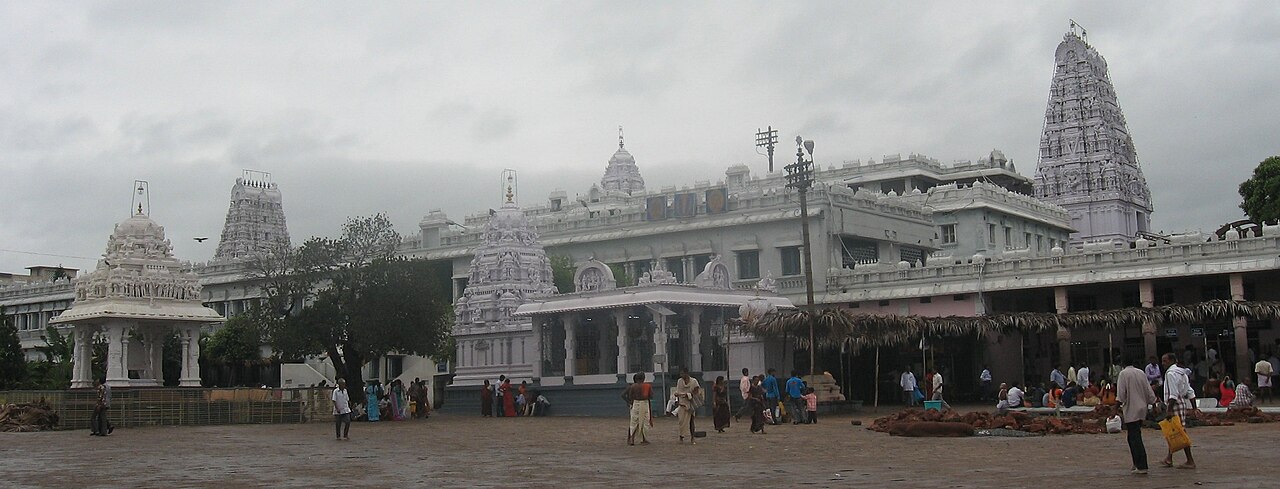
South India’s classical culture runs deep and remains genuinely alive rather than preserved for tourists. Bharatanatyam, the classical dance form most associated with Tamil Nadu, and Kathakali, Kerala’s dramatic storytelling dance, are both still performed regularly, and Carnatic music, the classical tradition of the south, has its spiritual home in Chennai, particularly during the winter music season. The temple architecture itself, with its distinctive stepped gopurams and pillared halls, is a visible thread running through the whole region, from the smallest village shrine to the great temple towns.
Food, too, varies enormously by state, and is one of the great pleasures of travelling here. Tamil food centres on rice, sambar and a proper filter coffee, Kerala cooking leans on coconut, seafood and the thin rice pancakes called appam, Andhra food is famously fiery, Hyderabadi cuisine gives the region its biryani, and Karnataka’s Udupi tradition has given India much of its dosa and idli repertoire. Add to that four major Dravidian languages, Tamil, Malayalam, Kannada and Telugu, each with its own script and literary tradition, and you begin to understand why South India feels less like one region and more like several distinct cultures sharing a peninsula. What unites them, in a traveller’s experience, is a generally warm and welcoming attitude to visitors and a real pride in showing off local food, temples and traditions.
Planning your trip: getting around
South India is large, and trying to see all of it on one trip is generally a mistake. It works far better to plan by state or by theme, rather than attempting a whistle-stop tour of everything at once. Connectivity across the region is good: Chennai, Bengaluru, Hyderabad and Kochi all have major international airports and serve as the main gateways, and from any of them you can reach most of the destinations above by a comfortable rail journey or a day’s drive. The rail network in particular is extensive and reliable, and road quality on the main highways has improved considerably in recent years.
A sensible approach is to pick one state, or one theme, per trip. A Tamil Nadu temple circuit, a Kerala backwaters and hills loop, a Karnataka heritage trip built around Hampi and Mysore, or a hill station and wildlife trip through the Western Ghats, all make satisfying trips in their own right, and each is covered in more depth in the individual guides linked throughout this article.
Best time to visit South India
As a broad rule, October to March is the most comfortable window across most of South India, with cooler, drier weather on the plains and pleasant conditions for temple visits, city sightseeing and beach time alike. The hill stations are something of an exception, since places like Ooty and Munnar stay pleasant for much of the year and offer a welcome escape from the heat of the plains in the hotter months.
The southwest monsoon, which runs roughly from June to September, brings heavy rain to the west coast in particular, so Kerala and coastal Karnataka see the most rainfall during this period, though the monsoon has its own considerable appeal for travellers who enjoy lush, dramatic scenery and don’t mind the wet. The northeast monsoon, arriving in October to December, affects the Tamil Nadu and Andhra coast instead, so it is worth checking conditions if your trip falls in that window. Summer, from April to June, is hot across the plains of the entire region, and is generally the best time to be up in the hills rather than down on the coast or in the cities.
South India rewards travellers who are willing to slow down. It is a region of ancient, still-living temples, green hills and quiet backwaters, golden beaches on two different seas, deep classical traditions in dance, music and architecture, and some of the best food anywhere in the country. Taken state by state, or theme by theme, it is one of the most rewarding and welcoming parts of India to explore, and Chennai is as good a place as any to begin.
Explore South India state by state
- Tamil Nadu – temples, hill stations and the Coromandel coast
- Karnataka – Hampi, coffee hills, palaces and beaches
- Kerala – backwaters, beaches and tea-scented hills
- Andhra Pradesh – temples, the Vizag coast and Araku hills
- Telangana – Hyderabad, Kakatiya heritage and the Deccan